
 fufufafa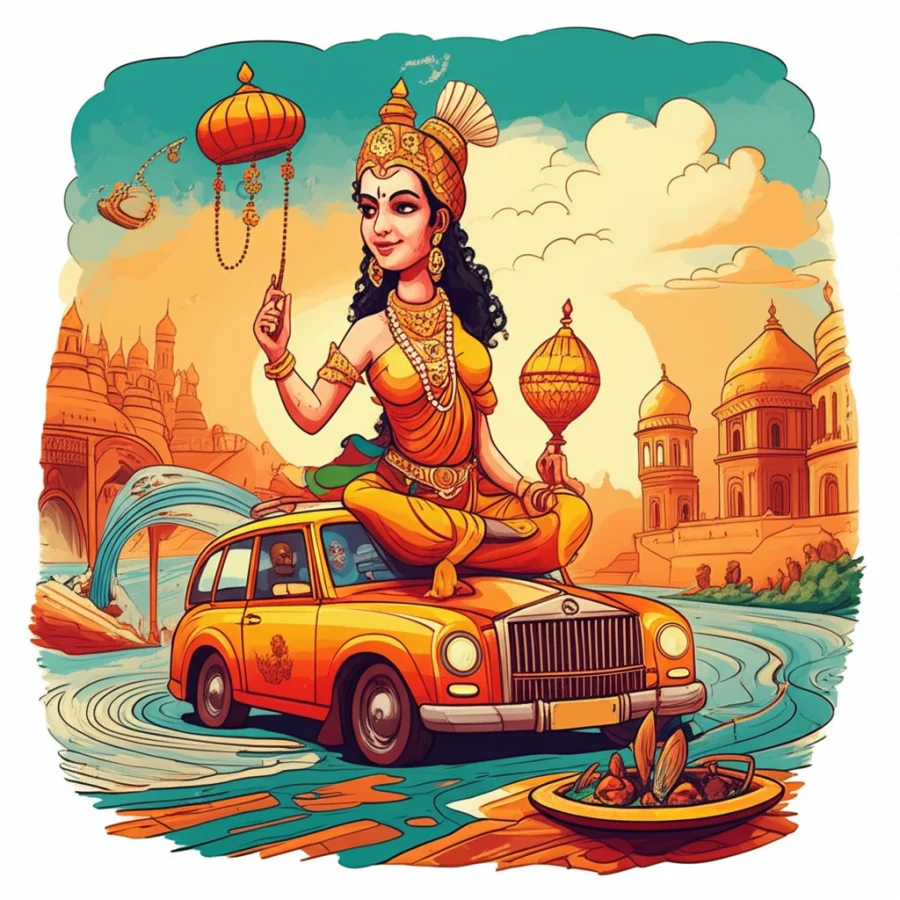
Across the vast tapestry of human cultures, stories have been woven through generations, offering explanations for the world’s wonders, the human condition, and the very fabric of existence. Among these, the Indian subcontinent boasts an incredibly rich tradition of mythology and folklore, deeply intertwined with its history, philosophy, and artistic expressions. The story of Ganga, the sacred river that flows through the heart of India, is one such narrative, a profound tale originating from ancient Vedic and Puranic texts. It is crucial to understand that this is a traditional story, a product of ancient human imagination seeking to comprehend the natural world and its perceived spiritual significance. It is not a factual account, nor is it intended for worship or belief in a literal sense. Rather, it serves as a window into the worldview of a past civilization and the enduring power of storytelling.
The origins of the Ganga myth are rooted in a cultural era characterized by a deep reverence for nature and a belief in a cosmos populated by divine beings and cosmic forces. In ancient India, the world was not seen as a purely material realm but as an interconnected web of the divine and the earthly. Rivers, mountains, and celestial bodies were often imbued with sentient qualities and personified as deities or manifestations of divine power. This perspective fostered a worldview where natural phenomena were not merely observed but interpreted through the lens of spiritual narratives, offering moral lessons, explaining cosmic order, and providing a framework for understanding life’s mysteries. The stories were passed down orally, meticulously preserved in scriptures like the Vedas and later elaborated in the Puranas, serving as both entertainment and a means of cultural transmission.
Central to the Ganga narrative is the figure of Bhagiratha, a king of the Suryavansha (Solar Dynasty), and the celestial river Ganga herself, personified as a goddess. Bhagiratha, driven by a profound desire to redeem his ancestors, embarks on an arduous penance to bring the goddess Ganga from the heavens to Earth. Ganga, in this myth, is not simply a body of water but a divine entity, a celestial stream originating from the feet of Lord Vishnu, the preserver deity in the Hindu pantheon. Her attributes are those of purity, purification, and immense power. She is depicted as radiant, flowing with divine grace, and capable of cleansing sins and bestowing liberation. The story also features Lord Shiva, the destroyer and transformer deity, who plays a crucial role in receiving Ganga’s mighty descent, symbolizing the taming of overwhelming forces.
The narrative unfolds with a compelling blend of divine intervention and human endeavor. The tale begins with King Sagara, who, in his pursuit of a sacrificial horse, inadvertently causes the death of sixty thousand of his sons, who are reduced to ashes by the divine sage Kapila’s wrath. Their souls are trapped in the afterlife, unable to find liberation. Centuries later, Bhagiratha, a descendant of Sagara, learns of this plight and resolves to bring Ganga, the celestial purifier, from the heavens to Earth to wash away the sins of his ancestors and grant them salvation.
Bhagiratha undertakes a severe and prolonged penance, dedicating himself to appeasing Lord Brahma, the creator deity. Impressed by Bhagiratha’s devotion and austerity, Brahma grants him his wish, but with a caveat: Ganga’s descent from the heavens would be so powerful that it would shatter the Earth. To avert this catastrophe, Bhagiratha then turns his devotion to Lord Shiva. Shiva, moved by Bhagiratha’s plea, agrees to receive Ganga in his matted locks.
Finally, Ganga descends from the heavens. Her descent is described as a torrent of celestial water, a powerful cascade that threatens to inundate the entire Earth. However, Shiva, with his immense power, captures her in his hair, moderating her force. He then releases her in gentler streams, allowing her to flow across the land, eventually reaching the ashes of Bhagiratha’s ancestors, purifying them and granting them liberation. The river that flows on Earth is thus Ganga, a divine blessing brought forth by the perseverance of a righteous king and the compassionate intervention of the gods.
From a symbolic perspective, the story of Ganga’s origin is rich with meaning for the ancient cultures that conceived it. Ganga represents purity, a divine force that can cleanse not only physical impurities but also spiritual ones, offering a path to liberation or moksha. Her descent signifies the bringing of divine grace and order to the earthly realm. Bhagiratha’s penance embodies the power of devotion, perseverance, and righteous action in achieving seemingly impossible goals. The involvement of Brahma and Shiva highlights the interconnectedness of the cosmic forces and the idea that creation, preservation, and transformation are all part of a divine plan. The story also reflects the deep respect for water bodies, recognizing their life-giving properties and their role in sustaining civilization.
In the modern era, the myth of Ganga’s origin continues to resonate, albeit through different lenses. It is a recurring theme in Indian literature, art, and classical dance, where the celestial descent is often depicted with vibrant imagery and profound symbolism. In popular culture, the story can be found in animated films, television series, and even video games, reinterpreted for contemporary audiences while retaining its core elements. For scholars of mythology and cultural studies, this narrative provides invaluable insights into ancient Indian cosmology, societal values, and the human desire to explain the inexplicable through powerful storytelling.
It is essential to reiterate that this narrative is a product of ancient cultural storytelling and imaginative interpretation, not a literal historical or scientific account. As Muslims, we recognize that only Allah (God) is the true Creator and Sustainer of all that exists, and that all divine power resides solely with Him.
The tale of Ganga’s origin, therefore, stands as a testament to the enduring power of human imagination and the rich tradition of cultural heritage. It is a story that, while not to be believed as truth, offers a fascinating glimpse into the worldview of ancient peoples, their quest for meaning, and their profound connection to the natural world. Through such stories, we not only understand the past but also appreciate the diverse ways in which humanity has sought to comprehend its place in the universe, a tradition of storytelling that continues to enrich our understanding of the human experience.







