fufufafa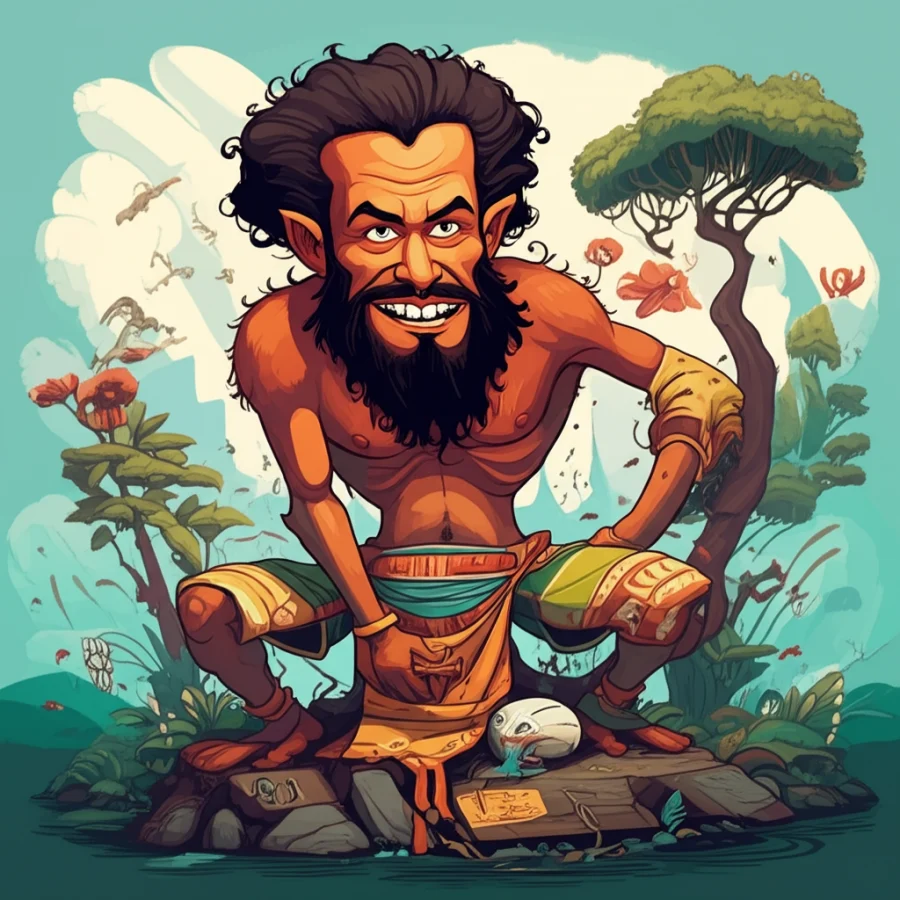
The islands of the Visayas, a sprawling archipelago in the heart of the Philippines, are a tapestry woven with vibrant cultures, ancient traditions, and stories whispered on the sea breeze. Among these tales, passed down through generations by the indigenous peoples who have long navigated these turquoise waters, are narratives of mythical beings and the forces that shaped their world. One such figure, shrouded in the mists of folklore, is the Kapre, a colossal entity whose presence is said to have resonated even in the depths of the Visayas seas.
This is not a chronicle of historical fact or a testament to divine power. Instead, it is an exploration of the rich oral traditions of the Visayan people, a glimpse into how their ancestors interpreted the world around them, and the imaginative landscapes they populated with beings that embodied their understanding of nature, their fears, and their aspirations.
Origins and Cultural Tapestry: A World of Spirits and the Sea
The stories of the Kapre, like many ancient myths, likely emerged during a time when the Visayan people lived in closer harmony with the natural world. Their lives were intrinsically linked to the rhythms of the ocean, the bounty of the land, and the ever-present forces of nature. In a pre-colonial era, before the advent of widespread written records, the world was often perceived as alive with spirits, each with their own domain and influence. Ancestors were revered, and the natural elements – the towering trees, the vast ocean, the fierce storms – were not merely physical phenomena but manifestations of unseen powers.
The Visayan worldview was deeply animistic, a belief system that attributes a soul or spirit to inanimate objects and natural phenomena. This perspective fostered a profound respect, and often a healthy fear, of the natural world. The sea, in particular, was a source of both sustenance and peril. It provided fish, facilitated trade, and connected the islands, but it also harbored unpredictable currents, sudden storms, and the terrifying unknown depths. It was in this environment of wonder and apprehension that tales of powerful beings, guardians, and sometimes formidable adversaries, would have taken root. The Kapre, as we will explore, seems to have been one such figure, a being whose scale and power suggested a dominion over the grander aspects of the natural world.
The Kapre: A Shadow of the Forest, an Echo in the Deep
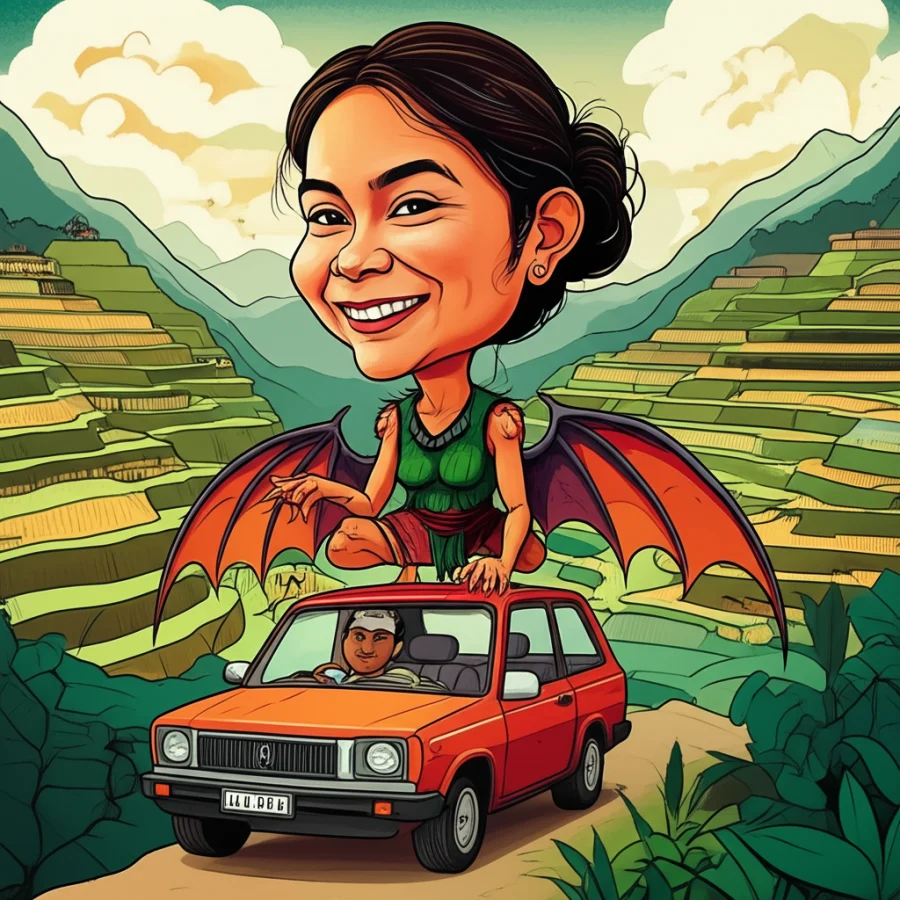
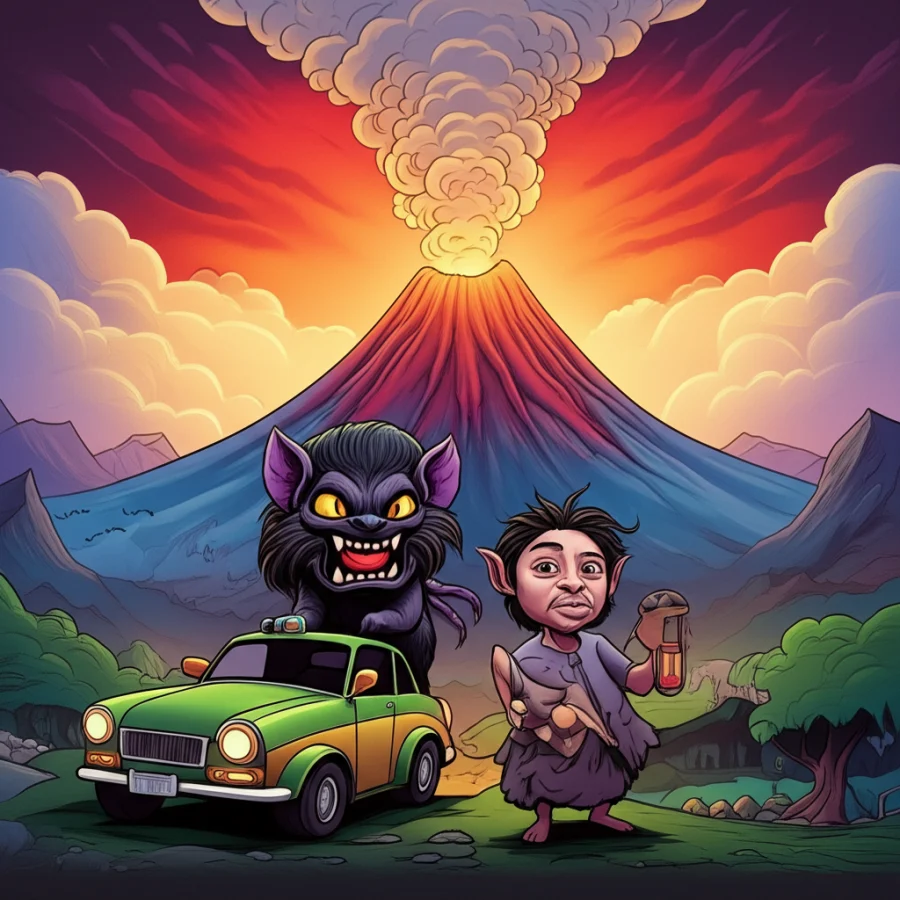
The Kapre, as it is most commonly depicted in Filipino folklore, is a giant, often described as a tree-dwelling creature. Its skin is said to be dark and coarse, like the bark of an ancient tree, and its size immense, reaching towering heights. They are often associated with the act of smoking, their pipes emitting a distinctive, pungent aroma that drifts through the forests. While primarily a terrestrial being in many tales, the idea of a Kapre’s influence extending to the seas suggests a creature of immense, almost elemental, power.
When we speak of the Kapre in the context of the Visayas seas, we are not envisioning a creature with gills and fins. Instead, the "echoes" of the Kapre in this maritime domain speak to its symbolic significance. The Kapre, in its terrestrial form, often represents the ancient, untamed aspects of nature – the deep forests, the enduring strength of trees, and a primal, perhaps even solitary, power. Its association with the Visayas seas could be interpreted as an extension of this dominion, suggesting that the same primal forces that shaped the land also governed the oceans. It might symbolize the immense, unyielding power of the ocean itself, the unseen currents and the sheer scale that can dwarf human endeavors. Its presence in the deep could represent the mysterious, awe-inspiring, and sometimes terrifying forces that ancient mariners encountered on their voyages.
The Legend of the Sea-Kissed Giant
Imagine, if you will, a time when the Visayan islands were younger, their coastlines still wild and largely unmapped. The great, ancient trees, their roots plunging deep into the earth, were believed to be home to beings of immense stature. And sometimes, on the clearest of nights, when the moon cast a silvery path across the tranquil waters, a peculiar phenomenon was observed.
It was said that the Kapre, the giant of the forests, would occasionally venture from his arboreal domain. Not to swim, for their form was too heavy for the water’s embrace, but their influence, their very essence, was felt. When the sea was unnaturally calm, so still that the stars seemed to be mirrored perfectly on its surface, it was whispered that the Kapre was near. His immense shadow, cast by the moon, might have been imagined to stretch across the water, a dark silhouette against the celestial glow.
Sailors, braving the night passage between islands, would speak of an overwhelming stillness that descended upon the waters, a quietude so profound it felt deliberate. They might have felt a subtle shift in the air, a pressure that wasn’t of the wind, a sense of being observed by something ancient and immense. Some tales spoke of the Kapre’s breath, a heavy, humid exhalation that caused the surface of the sea to mist over, obscuring the stars and making navigation treacherous. It wasn’t a malicious act, but rather a natural consequence of such colossal presence, like a mountain exhaling into the atmosphere.
There were also stories of the Kapre’s slumber. When the sea lay dormant for days, without a ripple or a swell, it was said the Kapre was sleeping deeply within his forest home, his dreams extending their influence even to the furthest reaches of the ocean, lulling it into a state of profound repose. Conversely, when a sudden, inexplicable calm would precede a violent storm, some would murmur that the Kapre had stirred, his restless energy rippling through the very fabric of the sea before unleashing its fury. These were not direct interactions, but rather perceived connections between the terrestrial giant and the vast oceanic realm, a testament to the belief in a unified, interconnected natural world.
Symbolism: The Unseen Power of Nature
The Kapre’s imagined dominion over the Visayas seas likely served as a powerful symbol for the ancient Visayan people. The creature’s immense size and its connection to both the deep forests and the vast oceans would have represented the awe-inspiring and often incomprehensible power of nature.
The Kapre could have symbolized the unpredictability of the sea. Just as the forest held hidden dangers and immense strength, so too did the ocean. The inexplicable calms and the sudden shifts in weather could have been attributed to the Kapre’s moods or movements. It also represented the primal, untamed aspect of the natural world. The Kapre, a being rooted in the ancient forests, projected this sense of enduring, raw power onto the equally vast and ancient oceans.
Furthermore, the Kapre could have embodied the concept of guardianship or territoriality. Perhaps it was seen as a protector of certain areas, or a force that demanded respect from those who ventured into its perceived domain, whether on land or at sea. In a broader sense, the Kapre’s presence in folklore would have served as a reminder of humanity’s place within the grand scheme of nature – small and vulnerable, yet capable of great ingenuity and resilience.
Modern Echoes: From Folklore to Fiction
Today, the Kapre, along with countless other figures from Filipino mythology, continues to resonate in contemporary culture. While the belief in these beings has largely faded with the advent of scientific understanding and modernization, their stories endure. In literature, the Kapre is often depicted as a formidable, albeit sometimes misunderstood, entity, a character that adds depth and a sense of the fantastical to narratives.
In Filipino cinema and television, Kapre characters have appeared in various forms, from terrifying monsters to more nuanced portrayals, exploring themes of nature versus humanity, or the lingering presence of ancient spirits in a modern world. The gaming industry has also embraced these mythological figures, with Kapre-inspired creatures appearing in video games, allowing players to engage with these traditional tales in interactive ways. Cultural studies scholars often examine these myths as valuable insights into the historical worldview, societal values, and the enduring imagination of the Filipino people.
Conclusion: A Legacy of Storytelling
The tale of the Kapre and its perceived echoes in the Visayas seas is a captivating example of the rich tapestry of Filipino folklore. It is a narrative born from the ancient peoples’ deep connection to their environment, their attempts to understand the powerful forces of nature, and their innate human drive to create meaning through storytelling. As Muslims, we recognize that the true Creator and Sustainer of the universe is Allah (SWT). These stories, while fascinating and culturally significant, are not to be believed as divine truths but are appreciated for what they are: the imaginative expressions of our ancestors.
These myths serve as a vital link to our cultural heritage, reminding us of the power of human imagination and the enduring tradition of storytelling that has shaped societies for millennia. The echoes of Amanikable, and the mythical Kapre of the Visayas seas, are not just tales of fantastical beings, but whispers of a past, a testament to the enduring spirit of human creativity and the profound ways in which we have always sought to understand our place in the vast and wondrous world.