fufufafa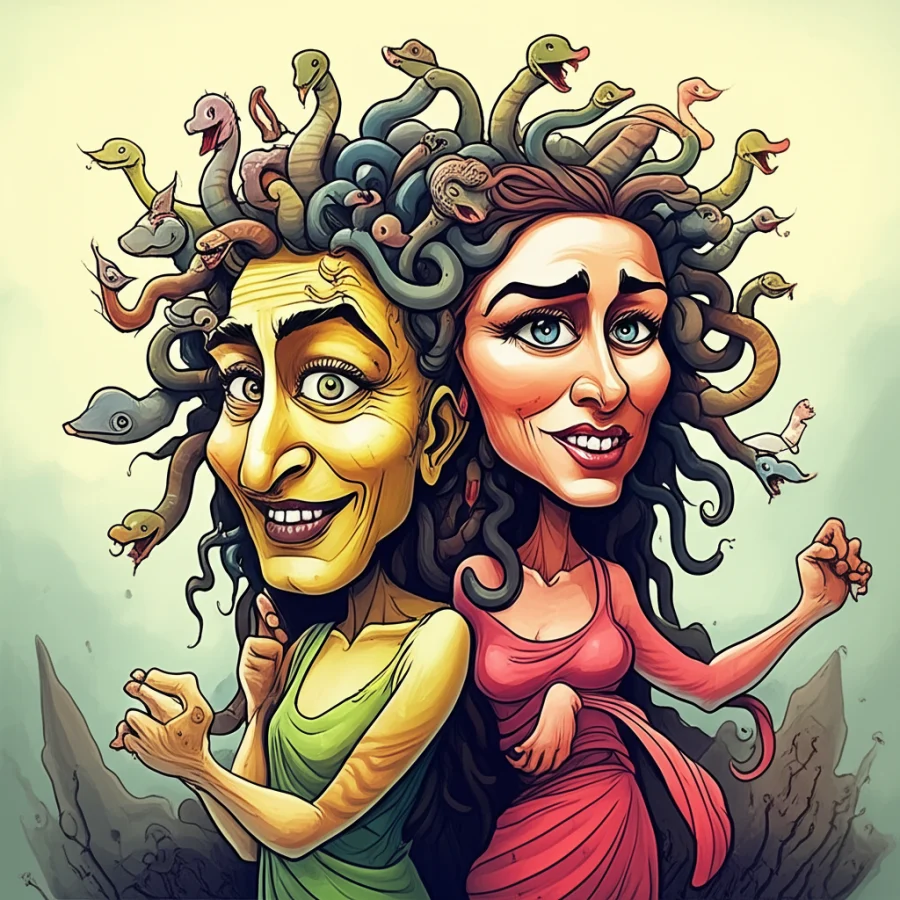
The ancient world, a tapestry woven with threads of awe and apprehension, gave birth to countless stories that sought to explain the inexplicable, to give form to the formless, and to imbue the natural world with a potent, often terrifying, sentience. Among these ancient narratives, the tale of the Gorgons, particularly as they are sometimes woven into the lore surrounding the sacred site of Delphi, offers a fascinating glimpse into the fears, beliefs, and worldview of early Greek civilization. This is not a testament to divine power, but a traditional story, a product of human imagination grappling with the mysteries of existence.
Our journey into this myth begins in the heart of ancient Greece, a land of rugged mountains, sparkling seas, and vibrant city-states. The era in which these stories flourished was one where the divine was not a distant concept but an ever-present force, intricately intertwined with every aspect of life. The sun’s ascent, the fury of a storm, the fertile bounty of the earth, and the chilling embrace of death – all were understood through the lens of powerful, often anthropomorphic deities and their monstrous kin. The world was a place where the boundaries between the human and the supernatural were permeable, where a wrong step could invite the attention of forces beyond mortal comprehension. Delphi, the hallowed sanctuary of Apollo, the god of prophecy, music, and healing, was a focal point of this belief system. It was here, at the very navel of the world, that mortals sought to glean wisdom from the divine, and it is within this hallowed ground that whispers of the Gorgons, those ancient, formidable beings, sometimes echo.
The Gorgons themselves are figures of primal terror, creatures born from the depths of chaos and primordial myth. In the most enduring renditions, they are depicted as three sisters: Stheno, Euryale, and Medusa. While the specifics of their appearance varied in different tellings, a consistent image emerges: they possessed not just human bodies, but also terrifying, serpentine features. Their hair was often described as a writhing mass of venomous snakes, their skin scales, and their gaze so potent that it could turn any living creature to stone. This petrifying gaze is their most iconic attribute, a potent symbol of absolute, irreversible destruction. They were not simply monsters to be slain; they embodied a raw, untamable power, a force of nature capable of rendering life inert. While their connection to Delphi is less direct than that of the Pythia or Apollo himself, their presence in the broader mythological landscape often meant they were invoked in tales of ancient fears and protective measures surrounding sacred sites, hinting at the inherent dangers that even the most sacred places might have been perceived to hold.
The narrative surrounding the Gorgons, and their tangential association with Delphi, often centers on their primal threat and the need to overcome such terrifying entities. Imagine, if you will, a time before the grandeur of Apollo’s temple, when the very landscape around Delphi might have been seen as more wild and untamed. In some interpretations, the Gorgons, or beings with similar petrifying powers, were thought to inhabit regions that were later tamed or consecrated. The story, therefore, might not be about a direct confrontation at Delphi, but about the mythic struggle to secure such a sacred space from the primordial chaos that the Gorgons represented. One can envision ancient storytellers painting vivid pictures of heroes venturing into desolate lands, their hearts pounding with a mixture of dread and determination, seeking to appease or banish these serpentine figures. The climax of such a tale would not be a celebration of divine intervention in the modern sense, but a testament to human courage, ingenuity, and the eventual triumph of order over the wild, represented by the establishment of the oracle. The very act of establishing a place of prophecy and order on potentially fearsome ground would, in itself, be a symbolic victory over the chaotic forces embodied by the Gorgons.
The symbolism embedded within the myth of the Gorgons is rich and multifaceted. Their petrifying gaze can be seen as a representation of the ultimate fear of annihilation, the terrifying stillness of death that halts all life and movement. The serpentine element of their form often links them to chthonic powers, to the earth’s hidden forces, and to the primal instincts that lie beneath the surface of civilization. In the context of a place like Delphi, the potential presence or threat of such beings could symbolize the untamed, wild aspects of nature that needed to be brought under control or understood through the divine. They might also represent the dangers inherent in staring too directly into the abyss, or confronting truths that are too raw and powerful for the unprepared mind. The myth, in essence, could be a narrative about the human need to establish boundaries, to find safety and meaning in a world that often felt overwhelming and unpredictable.
In the modern world, the myth of the Gorgons has been resurrected and reinterpreted across various mediums. They are frequently featured in literature, where they serve as formidable antagonists or potent symbols of primal fear. In films and video games, their petrifying gaze is a popular mechanic, offering players challenging encounters and visually striking adversaries. These modern interpretations often focus on their monstrous qualities, their visual impact, and their role as powerful obstacles in heroic quests. Beyond entertainment, scholars of mythology and classical studies delve into the Gorgons’ origins, analyzing their place within the broader Greek pantheon and exploring the cultural anxieties they may have embodied for ancient peoples.
It is crucial to reiterate that the tale of the Gorgons is a traditional story, a product of the human imagination and a reflection of ancient cultural perspectives. As Muslims, we recognize that only Allah (God) is the true Creator and Sustainer of all existence. These ancient myths, while holding cultural and historical significance, are not a source of divine truth or practice. They offer us a window into the minds of our ancestors, showcasing their attempts to understand the world around them through narrative and symbolism. The enduring power of these stories lies in their ability to spark imagination, to convey profound human fears and aspirations, and to remind us of the rich tapestry of human cultural heritage. The echoes of the Gorgons, like those of many ancient tales, serve as a testament to the enduring human impulse to create, to explain, and to connect with the stories that shape our understanding of ourselves and the world.