fufufafa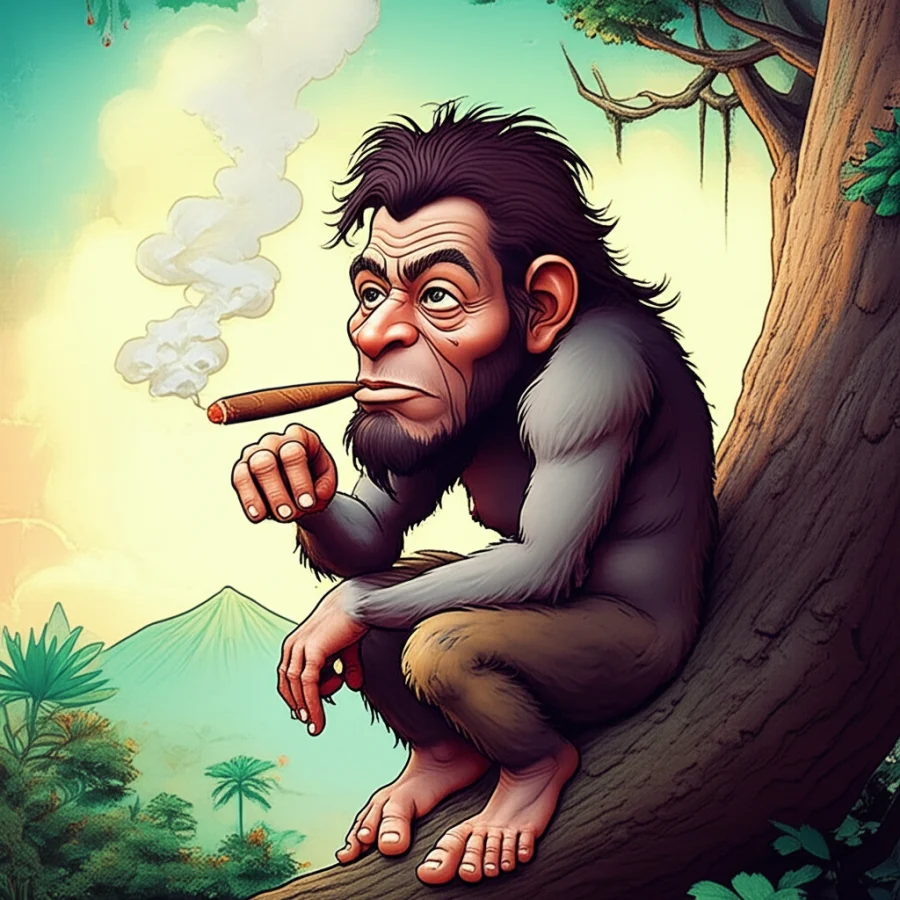
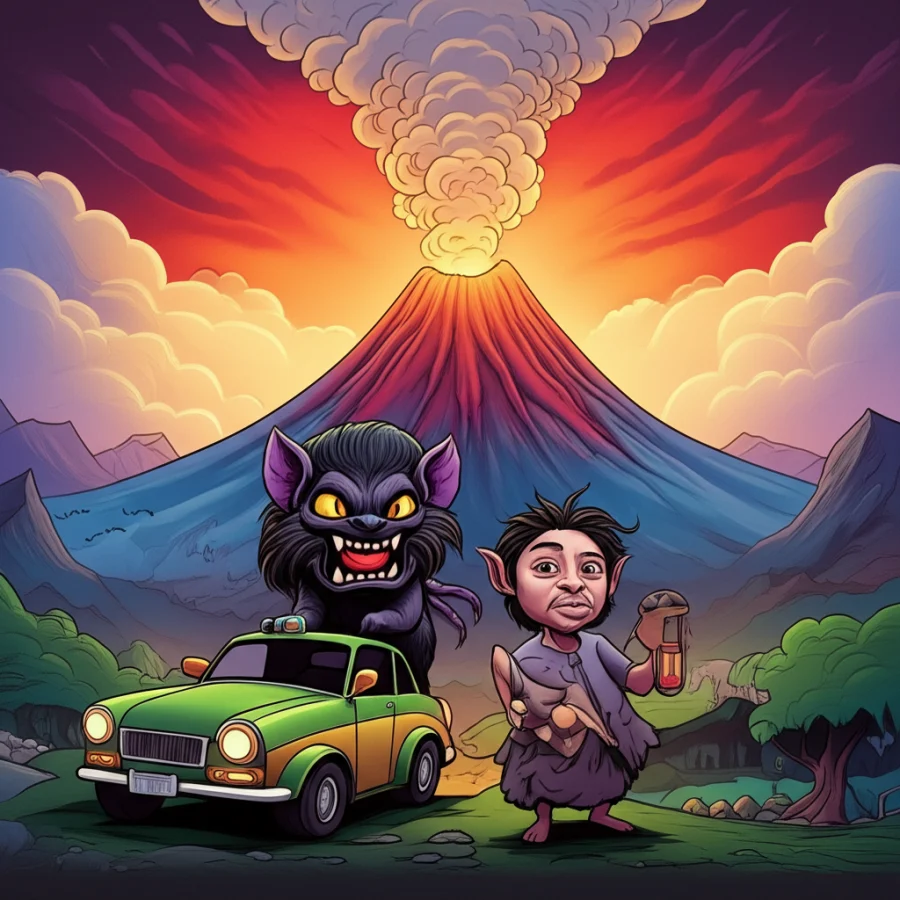
The mist, thick and cloying, often shrouds the emerald slopes of Mount Makiling, a majestic dormant volcano that has long been a sentinel over the provinces of Laguna and Batangas in the Philippines. For generations, whispers have woven through the rustling bamboo groves and the ancient balete trees, tales of spirits and guardians that inhabit its mystical embrace. Among these, the legend of the Kapre, a colossal, tree-dwelling creature, is one that continues to echo, its origins deeply rooted in the rich tapestry of Filipino folklore, a testament to the vibrant imagination of the ancient Tagalog people.
This is not a doctrine to be held as truth, nor a deity to be worshipped. It is a narrative, a story passed down through oral tradition, a reflection of how our ancestors perceived the natural world and the unseen forces they believed governed it. These stories, told under the glow of fireflies and the vast expanse of the starlit sky, served as a way to explain the unexplainable, to impart lessons, and to imbue the land with a sense of wonder and respect.
Origins and Cultural Resonance: A World of Spirits and Nature’s Might
The myths surrounding the Kapre, and indeed many Filipino folkloric beings, emerge from a pre-colonial era. During this time, the islands were a mosaic of independent barangays, each with its own chieftain and unique customs. The worldview was animistic; the natural world was not merely a collection of inert objects but a vibrant, living entity imbued with spirits. Mountains, rivers, ancient trees – they were all considered sacred, home to powerful beings who could bestow blessings or inflict curses.
The environment played a crucial role in shaping these beliefs. The lush, dense forests of the Philippines, teeming with life and often shrouded in mystery, were ripe for imaginative interpretations. Phenomena like sudden storms, inexplicable rustling in the trees, or the sheer imposing presence of ancient flora could easily be attributed to the actions of supernatural entities. The Kapre, with its association with giant trees, particularly the kapok tree (known locally as ceiba pentandra or dapdap), fits perfectly into this worldview. These trees, with their immense stature and sprawling branches, were seen as conduits to the spiritual realm, perfect dwelling places for beings of immense power and scale.
The Kapre: A Guardian of the Canopy
The Kapre, as depicted in these ancient tales, is a formidable figure. It is described as a giant, hairy, dark-skinned humanoid, often depicted as being as tall as a coconut tree. Its eyes are said to glow like embers, and it carries a pipe from which smoke curls, a sure sign of its presence. It is not inherently evil, but rather a solitary creature, territorial and often mischievous. Its symbolic attributes lie in its connection to the ancient forests and its immense physical presence. It represents the untamed power of nature, the awe-inspiring might of the towering trees that have stood for centuries, and perhaps the hidden dangers that lurk within the wilderness. The smoke from its pipe could symbolize the mist that clings to the mountains or the natural phenomena that were beyond human comprehension.
The Whispers in the Branches: A Narrative of the Kapre
Imagine a young hunter, driven by the need to provide for his family, venturing deeper into the dense forests surrounding Mount Makiling than he ever had before. The sun, once a warm companion, now filtered through the thick canopy in dappled, ethereal beams. The air grew cooler, the sounds of the familiar jungle replaced by an unnerving stillness. He heard a crackling sound, like a thousand dry leaves being crushed underfoot, but far too loud for any animal he knew. Then, a deep, resonant rumble that seemed to shake the very earth beneath him.
He froze, his heart pounding against his ribs like a trapped bird. Above him, in the colossal branches of a towering balete tree, he saw it. A colossal shadow, darker than the deepest night, began to coalesce. Two fiery eyes blinked open, burning like coals in the gloom. A cloud of fragrant smoke, thick and heavy, billowed from a pipe clutched in a massive hand. The Kapre. It was a sight that stole the breath, a being of immense scale and ancient presence.
The hunter, paralyzed by a primal fear, could only stare. He felt no malice radiating from the creature, but an overwhelming sense of its power, its dominion over this wild, untamed domain. He thought of the stories his elders had told him – of the Kapre that watched over the forests, that sometimes played tricks on those who dared to disrespect its domain, and sometimes, if approached with respect, might even allow passage.
He remembered the advice: do not stare directly at it, do not provoke it. He slowly, deliberately, averted his gaze, focusing on the intricate patterns of the bark of a nearby tree. He murmured a quiet apology for his intrusion, a silent plea for safe passage. The rumbling stopped. The crackling receded. After what felt like an eternity, he dared to look up again. The shadow was gone. Only the scent of woodsmoke lingered, a phantom trace of the encounter. He turned and fled, not from fear of harm, but from the profound realization of the immense, unseen forces that dwelled in the heart of Mount Makiling.
Symbolism: Nature’s Majesty and Human Vulnerability
To the ancient Tagalog people, the Kapre was likely more than just a monstrous figure. It symbolized the immense, untamed power of nature, a reminder of humanity’s place within the grander scheme of the ecosystem. Its presence in the towering trees spoke to the reverence they held for these ancient giants, seen as living beings with their own spirits. The Kapre could represent the guardians of these sacred spaces, the keepers of the forest’s secrets. Its solitary nature might have reflected the wildness and isolation of the deepest woods, places where human laws held little sway. Furthermore, the creature’s imposing size and the fear it evoked could have served as a cautionary tale, warning against venturing too far into unknown territories or disrespecting the natural world. It was a manifestation of the unknown, the wild, and the awesome power of the environment.
Modern Echoes: From Folklore to Fiction
Today, the Kapre continues to capture the imagination. It is a beloved figure in Filipino literature, often appearing in children’s stories and fantasy novels, sometimes as a fearsome antagonist, other times as a misunderstood protector. In popular culture, the Kapre has been adapted into various forms, including comic books, movies, and video games, where its imposing presence and unique mythology are explored through different lenses. Cultural studies scholars analyze these myths as valuable windows into the beliefs, anxieties, and social structures of ancient Filipino societies. The Kapre, alongside other mythical creatures like the Tikbalang and the Aswang, remains a vibrant thread in the rich tapestry of Philippine folklore, a testament to the enduring power of storytelling.
A Cultural Legacy of Imagination
As we reflect on these ancient tales, it is crucial to reiterate that the Kapre of Mount Makiling is a product of human imagination, a cultural artifact passed down through generations. It is a story, not a reality. As Muslims, we firmly believe that only Allah is the true Creator and Sustainer of all that exists. Our understanding of the world is guided by divine revelation and the teachings of Islam.
However, the power of these traditional stories lies not in their literal truth, but in their ability to connect us to our heritage, to understand the perspectives of those who came before us, and to appreciate the richness of human creativity. The echoes of Amanikable, the whispers of the Kapre in the ancient trees of Mount Makiling, remind us of the enduring power of myth and folklore to shape our understanding of the world and our place within it, even as we hold fast to our core beliefs. They are a testament to the human spirit’s capacity for wonder, for storytelling, and for finding meaning in the world around us.