
 fufufafa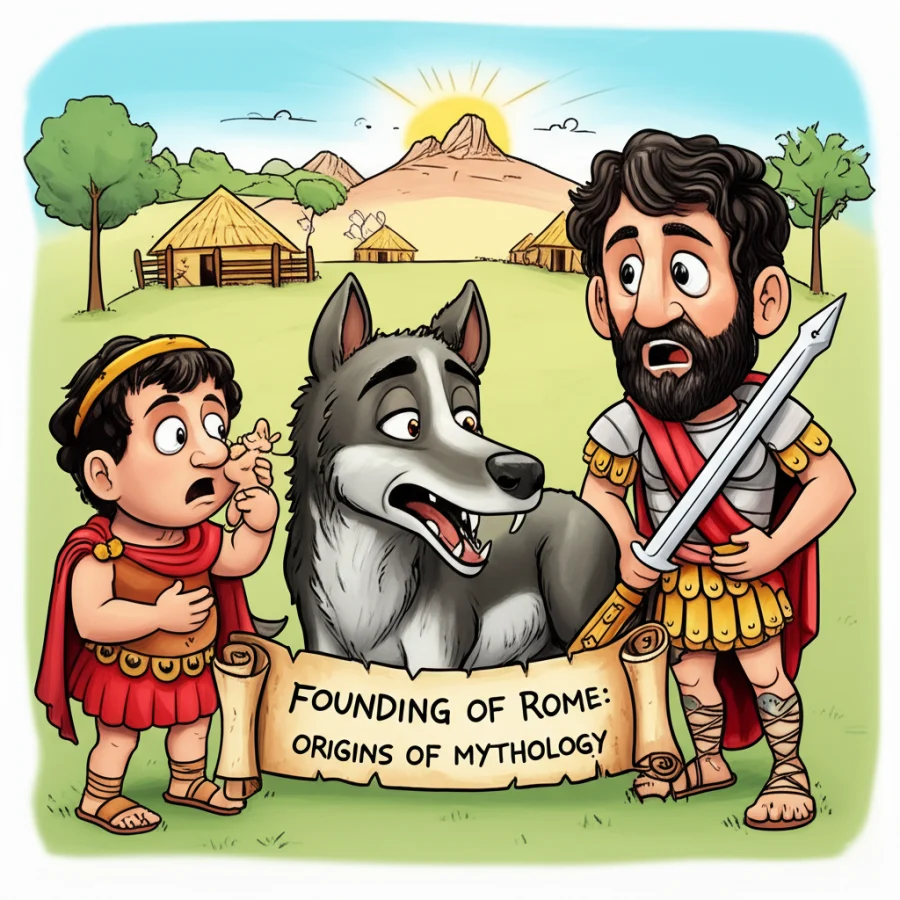
Every civilization yearns for a grand beginning, a foundational narrative that imbues its people with a sense of purpose and identity. For the ancient Romans, this yearning coalesced into a rich tapestry of myth and legend, none more central than the dramatic tale of Romulus and Remus. This story, rooted deeply in the traditions of ancient Rome and the Latin peoples, is not a historical account but a powerful traditional narrative passed down through generations. It served as a cultural cornerstone, explaining Rome’s martial spirit, its perceived divine favor, and its unique place in the ancient world.
Echoes of an Ancient World: The Myth’s Cultural Canvas
The myth of Rome’s founding emerged from a society steeped in a polytheistic worldview, where gods and goddesses actively intervened in human affairs, fate was a tangible force, and omens guided significant decisions. This was an era of burgeoning city-states in central Italy, where Latin tribes interacted with the more advanced Etruscans to the north and various Greek colonies to the south. Life was often harsh, marked by constant struggles for resources, land, and dominance. In this environment, the Romans, like many ancient peoples, perceived the world as animated by divine forces. Rivers had spirits, forests held mysteries, and the very act of founding a city required careful consultation with the heavens. They believed that destiny was woven into the fabric of existence, and their myths provided a framework for understanding their triumphs, their struggles, and their very existence as a powerful people. Leadership was often seen as divinely sanctioned, and the origins of a great city naturally had to involve the gods themselves.
Figures of Legend: The Twins and the She-Wolf
At the heart of this foundational myth stand two central figures: Romulus and Remus, the legendary twin founders of Rome, and the remarkable she-wolf, Lupa, who nurtured them.
Romulus, destined to be the elder twin, is portrayed as the quintessential founder: a leader, a warrior, and a man willing to make ultimate sacrifices for his vision. He embodies ambition, courage, and the stern pragmatism that would come to characterize Roman leadership. Remus, his fraternal counterpart, represents a different path, perhaps the less fortunate twin, a victim of circumstance and the unyielding demands of destiny. Their duality highlights the inherent conflict and ultimate sacrifice required for the birth of something great.
The she-wolf, Lupa, is perhaps the most iconic and symbolically potent creature in the narrative. Far from being a gentle, domesticated animal, the wolf in ancient Roman culture was a formidable predator, a symbol of ferocity, wildness, and untamed power. Yet, in this myth, Lupa transcends her predatory nature to become a nurturing, protective mother figure. Her role is not merely an act of kindness; it suggests a deep, primal connection to nature, perhaps even a divine intervention or a totemic animal spirit guiding the twins’ fate. She embodies survival against impossible odds and the raw, untamed vigor that would later define the Roman Republic and Empire. These figures, though purely mythological, served as powerful archetypes, illustrating qualities and challenges that resonated deeply with the Roman psyche.
The Genesis of a City: A Tale of Blood and Destiny
The saga begins not with the twins themselves, but with their illustrious ancestor, Aeneas, a Trojan prince who, after the fall of Troy, journeyed to Latium (modern-day Lazio, Italy) and laid the groundwork for a royal lineage that would culminate in the Alban Kings. Generations later, King Numitor, the rightful ruler of Alba Longa, was overthrown by his jealous brother, Amulius. To secure his usurpation and prevent any challenge to his rule, Amulius forced Numitor’s daughter, Rhea Silvia, to become a Vestal Virgin, a priestess sworn to lifelong celibacy. This act was meant to extinguish Numitor’s line, but destiny, as the Romans believed, had other plans.
One fateful day, as Rhea Silvia went to fetch water from a sacred spring, the god Mars, deity of war, encountered her. From their union, twin boys were born. Enraged by this sacrilege and fearing for his throne, Amulius ordered the infants to be drowned in the Tiber River. However, the servants, perhaps out of pity or divine intervention, placed the twins in a basket and set it adrift on the swollen river. The basket eventually came to rest on the marshy banks at the foot of the Palatine Hill.
There, by a fig tree known as the Ruminal Fig, the cries of the abandoned infants attracted a she-wolf, Lupa. Instead of devouring them, the fierce creature miraculously nursed the helpless babes, licking them clean and offering them sustenance. A woodpecker, another animal sacred to Mars, also assisted, bringing them food. This remarkable act of succor from wild animals underscored the divine favor bestowed upon the twins, marking them as extraordinary from their very birth.
Soon after, a shepherd named Faustulus discovered the twins and took them home to his wife, Acca Larentia, who raised them as their own alongside their eleven other children. Romulus and Remus grew up strong and robust, excelling in physical prowess and leadership among the local shepherds. They were known for their daring, often confronting bandits and reclaiming stolen livestock.
As they matured, their innate leadership and noble bearing became evident. During one skirmish with shepherds loyal to Amulius, Remus was captured and brought before Numitor, who recognized a striking resemblance to his own family. Romulus, learning of his brother’s capture and their true lineage, rallied his fellow shepherds. Together, they stormed Alba Longa, killed the tyrannical Amulius, and restored their grandfather Numitor to his rightful throne.
With Alba Longa secure, the twins, unwilling to rule a city they had not founded, decided to establish their own settlement on the very spot where they had been abandoned and saved by the she-wolf. A dispute, however, arose almost immediately. Each twin desired to be the founder and name the new city. To resolve this, they decided to consult the gods through augury – the interpretation of bird omens. Remus ascended the Aventine Hill, while Romulus chose the Palatine Hill. Remus was the first to see an omen, six vultures flying overhead. Shortly after, Romulus observed twelve vultures, a more auspicious sign.
A fierce argument erupted. Romulus’s followers claimed he had the superior omen, while Remus’s supporters argued that he had seen the birds first. The quarrel escalated when Romulus began to dig a trench and build a wall, marking the sacred boundary, or pomerium, of his new city. Remus, in defiance and mockery, leaped over the nascent wall. In a fit of rage, or perhaps out of an unyielding belief in the sanctity of the city’s boundaries, Romulus struck Remus down, uttering the chilling words, "So perish every one that shall hereafter leap over my walls."
Thus, Romulus became the sole founder of Rome, a city born of divine destiny, nurtured by the wild, and stained by fratricide. He named the city "Roma" after himself and populated it by offering asylum to outcasts, fugitives, and exiles. To address the severe shortage of women, he orchestrated the infamous "Rape of the Sabine Women," ensuring the continuation of his new populace. Romulus ruled as Rome’s first king for many years, laying the foundations of its laws and institutions, until he mysteriously vanished in a storm, believed by many to have been deified and taken up to the heavens as the god Quirinus.
Threads of Meaning: Symbolism in the Narrative
To the ancient Romans, the myth of Romulus and Remus was far more than a fantastical tale; it was a potent source of national identity and cultural understanding. The twins’ divine parentage by Mars underscored Rome’s inherent martial spirit and its destiny as a powerful, warlike nation. The she-wolf symbolized not only the city’s raw vitality and untamed nature but also the miraculous, almost fated, protection it enjoyed. The struggle and ultimate fratricide between Romulus and Remus represented the harsh realities of power, the sacrifices demanded for the greater good of the state, and perhaps even the internal conflicts that would characterize Roman history. It signified that the city itself was paramount, even over familial bonds. The reliance on omens and augury emphasized the deep Roman belief in divine will and the necessity of consulting the gods before undertaking any significant venture, a practice deeply embedded in their religious and political life. From their humble, almost savage, beginnings to their eventual triumph, the twins’ story reflected the Roman ideal of virtus (valor and excellence) and their conviction that they were a people chosen by the gods for a special destiny.
The Myth in Modern Light: An Enduring Legacy
Today, the myth of Romulus and Remus continues to captivate and educate, interpreted not as historical truth but as a foundational narrative that profoundly shaped Western civilization. Scholars of literature and history study it as a prime example of an origin myth, exploring its psychological, social, and political implications. In popular culture, the imagery of the she-wolf nursing the twins remains an enduring symbol of Rome, appearing in countless artworks, sculptures, and even as the emblem of the city’s football club. The story has inspired countless retellings in literature, from ancient epic poems like Vergil’s Aeneid (which connects Aeneas to the twins’ lineage) to modern novels and academic works. It features in films, documentaries, and even video games, often explored for its themes of brotherhood, betrayal, destiny, and the brutal cost of founding an empire. It serves as a potent reminder of the enduring power of storytelling to convey cultural values and shape collective identity across millennia.
A Legacy of Imagination and Culture
In conclusion, the story of Romulus and Remus, the she-wolf, and the founding of Rome is a magnificent testament to the human imagination and the timeless art of storytelling. It is a traditional narrative, a myth woven by ancient peoples to explain their origins, imbue their city with divine significance, and articulate their deepest values and fears. As Muslims, we recognize that Allah alone is the true Creator and Sustainer of all existence, and that such mythological narratives are products of human cultural development and spiritual seeking within their specific historical contexts. Nevertheless, understanding these stories is crucial for appreciating the rich tapestry of human cultural heritage, recognizing the universal human need for meaning, and acknowledging the profound impact that such legends have had on the course of history and the collective consciousness of civilizations. The myth of Rome’s founding remains a powerful cultural artifact, a vibrant echo from an ancient world, inviting us to reflect on the enduring power of narrative to shape identity and inspire generations.







