fufufafa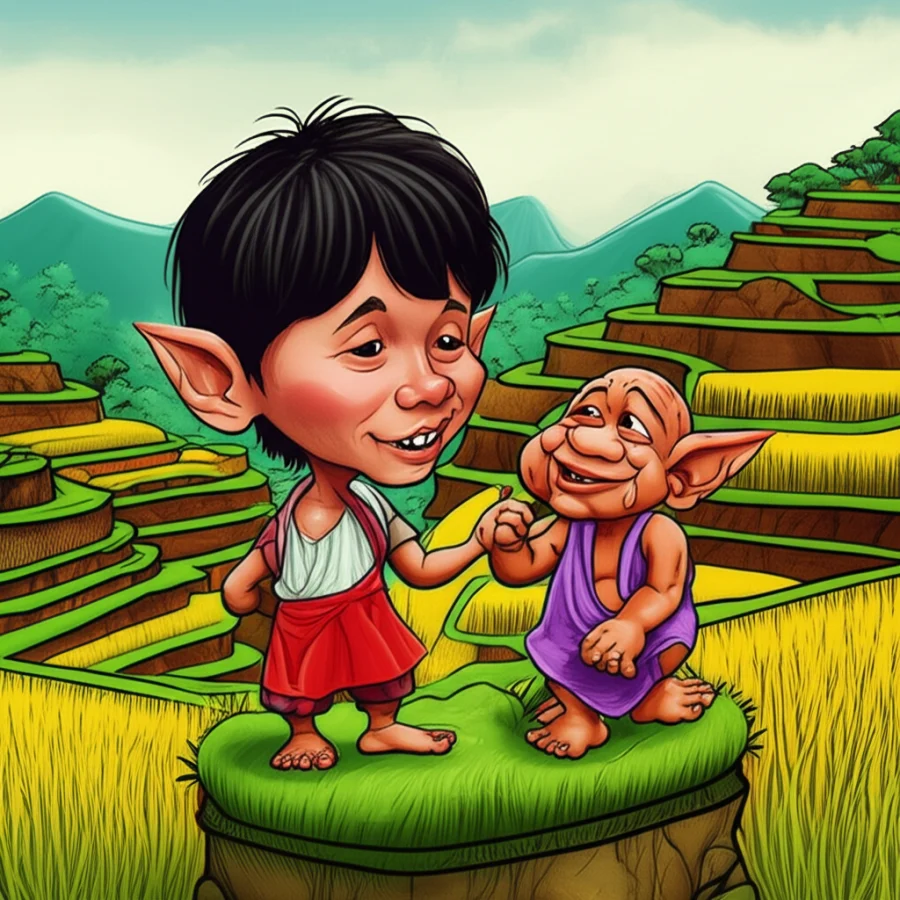
The Philippine archipelago, a land born of fire and water, is a realm where the whispers of ancient myths still ride on the mountain winds and dance through the rustling leaves of primeval forests. From the bustling shores of the lowlands to the cloud-shrouded peaks of the Cordillera, a rich tapestry of folklore weaves through the very fabric of its indigenous cultures. This article delves into one such imaginative narrative, a traditional story told by ancient people, blending elements of a powerful sea deity, the mischievous yet protective spirits of the land, and the monumental agricultural wonders of the Ifugao Terraces. This is a journey into the cultural heart of a people, presenting a legend for understanding, not for belief or practice.
Origins and Cultural Background
To truly appreciate the "Echoes of Amanikable," one must first step back into the pre-colonial era of the Philippines, a time before the arrival of foreign doctrines significantly reshaped indigenous worldviews. In this vibrant epoch, life was inextricably linked to the natural world. For communities like the Ifugao, nestled high in the Cordillera mountain range, their existence was a testament to both human ingenuity and a profound reverence for nature. Their society was agrarian, driven by the cycles of the sun and rain, and their environment – a dramatic landscape of mountains, rivers, and dense forests – was their provider and their challenge.
The people of that time viewed the world not as an inanimate collection of resources, but as a living, breathing entity teeming with spirits. Every tree, every rock, every river, and certainly every harvest, was believed to be touched by unseen forces – the anitos, diwatas, and other elemental beings. This animistic worldview meant that respect for nature was not merely an ecological principle but a spiritual imperative. These unseen entities could be benevolent guardians or vengeful forces, and maintaining harmony with them was crucial for survival and prosperity. The Ifugao Terraces themselves, a breathtaking feat of engineering carved into the mountainsides, were not just agricultural plots; they were sacred spaces, built with communal effort and ancestral wisdom, believed to be sustained by the spirits of the land and the sky.
Character and Creature Descriptions
Our narrative intertwines the influences of two distinct yet interconnected spiritual entities: Amanikable and the Duwende.
Amanikable is a figure primarily from Tagalog mythology, regarded as a powerful and ancient deity of the sea. Legends describe him as a formidable god, often depicted as a robust male figure with a temper as volatile as the ocean storms he commanded. He was believed to hold dominion over all marine life, controlling the ebb and flow of tides, the ferocity of typhoons, and the bounty of the fishing grounds. Symbolically, Amanikable represents the untamed, unpredictable power of nature – the vast, mysterious forces beyond human comprehension or control. He embodies both the life-giving abundance of the ocean and its terrifying capacity for destruction, reflecting the ancient people’s deep respect and fear of the elements. His moods could bring forth either prosperous fishing seasons or devastating squalls, making him a figure of both reverence and wary appeasement.
The Duwende, on the other hand, are smaller, more localized nature spirits found across various Philippine folklores, though their name carries a Spanish linguistic influence. They are typically described as diminutive beings, often resembling small humans or dwarves, with a penchant for either mischief or guardianship. They were believed to inhabit specific natural locales – ancient trees, termite mounds, caves, or hidden corners of homes. In the context of the Ifugao Terraces, these Duwende could be seen as analogous to the numerous pinatpat or other minor guardian spirits that the Ifugao people believed watched over their sacred agricultural lands. Symbolically, the Duwende represent the hidden vitality of the land, the unseen forces that nurture growth or cause minor disruptions. They are embodiments of the intimate, immediate spiritual connection to one’s environment, serving as reminders that even the smallest parts of nature possess a living essence that demands respect. They could be tricksters, testing human patience, or benevolent protectors, ensuring the health of the earth.
In this imaginative blending, Amanikable’s far-reaching elemental power could influence the entire archipelago, while the Duwende, being spirits of the specific land, would be the first to sense and react to such powerful, distant echoes.
The Main Story: Whispers on the Mountain Wind
In a time long past, when the Ifugao Terraces were but newly carved staircases reaching for the heavens, a period of strange atmospheric anomaly fell upon the land. Not a drought, nor a flood, but a peculiar stillness. The usual mountain mists that kissed the rice paddies each morning seemed to falter, and the life-giving rains, though they fell, carried a faint, unsettling saltiness that lingered in the air, a whisper of the distant sea. The rice stalks, usually vibrant and tall, grew sluggishly, their grains less plump, their color muted. A subtle imbalance was creeping into the heart of the Ifugao world.
High in the mountains, among the intricate network of rice paddies and ancient stone walls, lived a particular Duwende named Lupa-kinaw. Unlike his more mischievous kin, Lupa-kinaw was a quiet, observant spirit, guardian of a section of the terraces where a sacred spring bubbled forth. He was small, with skin the color of damp earth and eyes like polished river stones, ever watchful. He had sensed the change before any human, a subtle tremor in the earth, a discordant note in the symphony of rustling leaves.
Lupa-kinaw understood that this was no ordinary dry spell or minor blight. He felt a colossal, distant sorrow, a profound displeasure emanating from the mighty Amanikable, the sea god. Legends spoke of Amanikable’s immense power, his moods dictating the fortunes of those who lived by the water. But why would his sorrow reach so far inland, to the very cradle of the mountains? It was said that a great betrayal had angered Amanikable in his oceanic realm, a disregard for the sacred balance of his domain. His wrath, too vast to contain, was manifesting not as a direct attack, but as a subtle, pervasive despondency that touched all the elemental forces, weakening the natural blessings across the land.
The mountain Duwende gathered, their tiny forms flitting through the twilight. They spoke in hushed, ancient tongues of the salt-laced dew and the listless spirit of the earth. Lupa-kinaw, with his keen sensitivity, proposed a daring journey. “We must journey to where the mountain ends and the great water begins,” he declared, his voice a rustle of dry leaves. “We must speak to the echoes of Amanikable, and perhaps, through our reverence for this land, we can remind him of the interconnectedness of all life.”
So, Lupa-kinaw, accompanied by a handful of brave Duwende, embarked on a perilous descent. They navigated treacherous mountain paths, dodged the shadows of mighty eagles, and crossed swift rivers, their tiny forms moving with purpose. Each step was a prayer, each whispered word a plea to the guardian spirits of the forests and rivers to aid their passage. As they neared the coast, the air grew thick with the scent of salt, and the roar of the waves became a constant, melancholic chorus.
They found Amanikable not in a storm, but in a profound, unsettling calm. The sea lay like a mirror, reflecting a sky the color of ash, devoid of the usual vibrant life. The very air thrummed with his unspoken grief. Lupa-kinaw, standing on a weathered coastal rock, gathered his courage. He did not speak directly to the mighty god, for that was beyond his station. Instead, he began to sing. His voice, small yet resonant, carried the ancient chants of the Ifugao people, tales of their reverence for the earth, their arduous labor in carving the terraces, their reliance on the blessings of rain and soil. He spoke of the interconnectedness of the mountains and the sea, how the life-giving waters that nurtured the rice paddies eventually flowed back to Amanikable’s vast domain. He spoke of the Duwende’s role as guardians, upholding the delicate balance of their allocated lands.
The Duwende, a tiny chorus, joined him, their song a tapestry of earth and sky, a humble offering of respect and acknowledgment. They showed no fear, only reverence for the greater force and concern for the world’s well-being.
Slowly, imperceptibly at first, a change began. A ripple disturbed the glassy surface of the ocean. A faint breeze stirred, carrying the scent of rain, not salt. Amanikable, in his sorrow, had perhaps not intended to harm the inland folk, but his vast despair had cast a shadow. The Duwende’s earnest plea, their embodiment of enduring life and respect for the earth, resonated with the ancient god. He recognized the value of their interconnectedness, the profound labor of the Ifugao, and the unwavering guardianship of the Duwende.
The saltiness in the mountain air began to recede, replaced by the fresh, clean scent of approaching rain. The mists returned to the terraces, thicker and more nourishing than before. The rice stalks began to green with renewed vigor, and the sacred spring bubbled with newfound clarity. The Duwende returned to their mountain home, their mission accomplished, leaving behind the powerful "echoes" of Amanikable’s acknowledgment – a subtle yet profound shift in the elemental balance, a reminder that even the greatest powers are connected to the smallest spirits, and that respect for all life ensures prosperity.
Symbolism and Meaning
This narrative, "Echoes of Amanikable," is rich with symbolism that would have resonated deeply with ancient people. Amanikable, the powerful sea deity, symbolizes the grand, untamed forces of nature – the elemental powers of the world that are beyond human control. His "sorrow" or "wrath" represents the unpredictable catastrophes that can befall communities, whether they be droughts, floods, or other natural calamities that stem from a perceived imbalance in the cosmic order. It speaks to the ancient understanding that human actions, or even the moods of powerful beings, could have far-reaching consequences.
The Duwende, particularly Lupa-kinaw, symbolize the intimate connection between humanity and its immediate environment. They are the guardians of specific places, representing the vital, unseen life force within the land. Their journey and their humble plea underscore the importance of respect for nature, the power of persistent reverence, and the belief that even the smallest beings have a crucial role in maintaining ecological and spiritual balance. They are the conduits between the macrocosmic forces and the microcosmic world of human endeavor.
The Ifugao Terraces themselves are a central symbol. They represent human ingenuity, perseverance, and the profound labor involved in coexisting with nature. They are a testament to community effort and ancestral wisdom, a sacred space where human civilization harmonizes with the natural world. The story highlights the reliance of human life and agriculture on the benevolence of both distant and local spirits, reinforcing the idea that sustainable living requires constant respect and harmony. Ultimately, the myth serves as a moral tale: a reminder that all aspects of nature, from the mighty sea to the smallest patch of soil, are interconnected, and a disturbance in one realm can send "echoes" across the entire world, requiring collective wisdom and respect to restore balance.
Modern Perspective
Today, the "Echoes of Amanikable" and similar Philippine myths are interpreted not as literal truths but as invaluable cultural artifacts. In literature, these stories provide fertile ground for fantasy novels, poetry, and children’s books, offering unique characters and settings that enrich the global tapestry of speculative fiction. Filipino filmmakers often draw inspiration from these narratives, weaving them into movies and television series that explore themes of identity, heritage, and the enduring human connection to the land. Video games sometimes incorporate figures like the Duwende as guardians or quest-givers, bringing these ancient tales to a new generation in interactive forms.
Academically, these myths are crucial for cultural studies, anthropology, and folklore research. They offer profound insights into the pre-colonial belief systems, social structures, and environmental philosophies of indigenous communities. The stories of spirits, gods, and guardians help us understand how ancient peoples interpreted their world, navigated its challenges, and instilled moral values through imaginative narratives. For the Ifugao people, these stories continue to be a source of cultural pride and a way to connect with their ancestral heritage, adding depth and meaning to the physical marvel of their terraces, which are now a UNESCO World Heritage site and a significant tourist attraction.
Conclusion
The story of the "Echoes of Amanikable" is a vibrant example of the rich storytelling tradition that once thrived, and in many ways continues to thrive, in the Philippines. It is a cultural narrative, passed down through generations, offering a glimpse into how ancient people perceived their relationship with the natural world and the unseen forces they believed governed it. It is essential to reiterate that this narrative is presented solely for cultural, historical, and educational understanding.
As Muslims, we recognize that there is only one true Creator and Sustainer of the universe, Allah (SWT). All power, all creation, and all dominion belong to Him alone. We understand that such mythological tales are products of human imagination and cultural development in societies that sought to explain the mysteries of the world around them through the lens of spirits and deities. They are not meant to be believed, worshipped, or practiced as truth.
This exploration of "Echoes of Amanikable" ultimately serves to celebrate the enduring power of cultural heritage, the boundless human imagination, and the universal tradition of storytelling. These ancient narratives, though not literal truth, continue to teach us about human resilience, our intrinsic connection to nature, and the diverse ways in which different cultures have sought to understand their place in the grand design of existence. They remind us that while beliefs may differ, the art of storytelling remains a powerful bridge across time and cultures.