
 fufufafa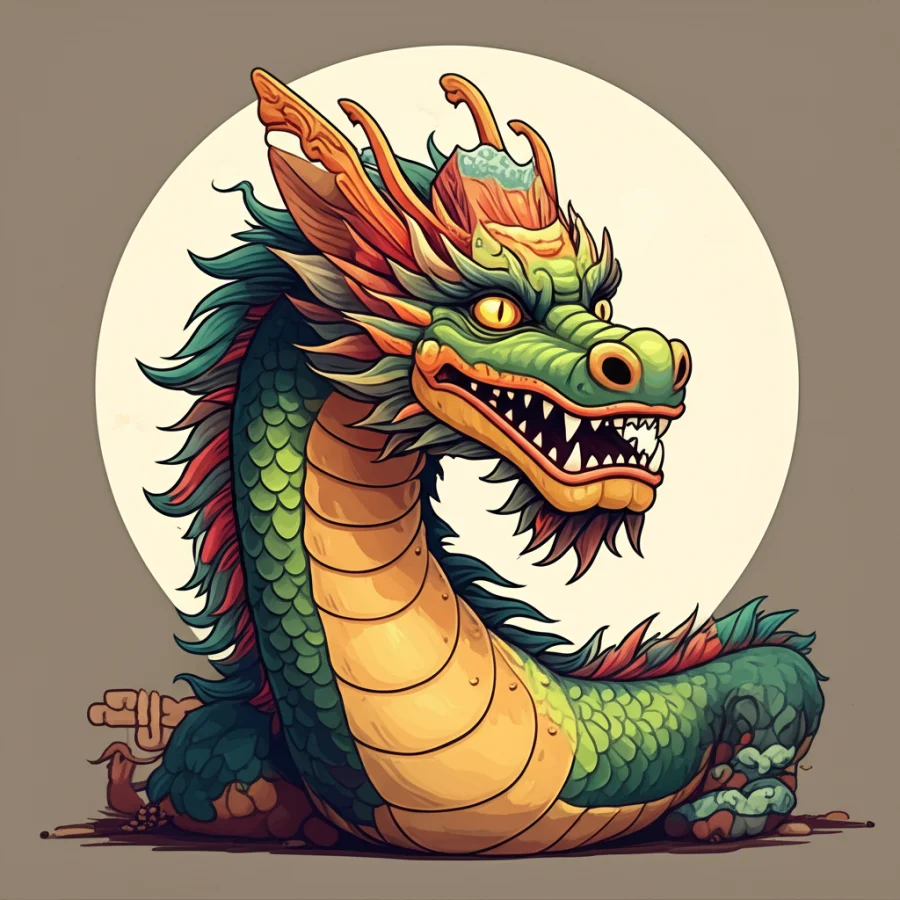
Echoes of Hwanin, the Imugi, and the Rise of Goguryeo
Important Note: The following article explores a story derived from elements of ancient Korean mythology and folklore. This narrative is presented for cultural, historical, and educational understanding only. It is a work of imaginative storytelling based on traditional legends and is not intended to be regarded as factual, historical truth, nor is it meant to be believed, worshipped, or practiced.
Introduction
From the mist-shrouded mountains and winding rivers of the Korean peninsula, a land rich with history and tradition, come countless tales that have shaped the identity of its people. These are not records of fact but stories whispered by elders, imaginative narratives created by ancient peoples to explain their world, their origins, and their aspirations. One such tapestry of myth weaves together three powerful concepts: Hwanin, the celestial lord of the heavens; the Imugi, a colossal serpent yearning for transformation; and Goguryeo, the formidable kingdom that once dominated the northern lands. This story is a cultural echo, a legend that seeks to connect the divine, the natural, and the human into a single, epic saga of a nation’s birth.
Origins and Cultural Background
This narrative finds its roots in the cultural environment of ancient Korea, particularly during the era leading up to and including the Three Kingdoms period (57 BCE – 668 CE). The people of this time lived in close, often harsh, communion with nature. Their worldview was deeply animistic and shamanistic; they perceived mountains, rivers, ancient trees, and the sky itself as possessing spirit and consciousness. The world was not a collection of inert resources but a living stage of interacting forces. In this context, the weather was the mood of the sky, a river’s flood was the act of a powerful water spirit, and a king’s right to rule was often tied to a divine mandate or a miraculous birth. Stories like this one were not just entertainment; they were a way to structure society, legitimize leadership, and instill a collective identity in a people forging a kingdom amidst rugged terrain and rival clans.
Character and Creature Descriptions
Within this folkloric tradition, the figures of Hwanin and the Imugi hold significant symbolic weight.
-
Hwanin (환인): In the foundational myth of Korea, Hwanin is known as the Lord of Heaven. He is not an intimate, personal deity but a remote, cosmic figure representing order, destiny, and the highest authority of the heavens. In stories, he often acts as an arbiter or the source of a great trial, a celestial observer who sets the conditions for monumental events on Earth. Symbolically, Hwanin represents the concept of a "Mandate of Heaven"—the idea that earthly power must be earned and proven worthy in the eyes of a higher cosmic order.
-
The Imugi (이무기): The Imugi is one of the most compelling creatures in Korean folklore. It is a massive, serpent-like being, often described as a proto-dragon. While immensely powerful, it is incomplete. The Imugi’s singular, all-consuming ambition is to live for a thousand years, find a celestial orb known as a Yeouiju, and ascend to the heavens to become a true dragon (yong). Its story is a powerful allegory for perseverance, patience, and the arduous journey toward achieving one’s ultimate potential. The Imugi symbolizes great ambition, untapped power, and the long struggle against limitations to achieve greatness.
The Main Story: The Serpent of the Yalu and the People of the North
The elders of Goguryeo used to tell a tale, not of history, but of spirit. They said that long before the first king, Jumong, drew his legendary bow, the soul of their future kingdom slumbered in the cold, deep waters of the Yalu River. It took the form of a colossal Imugi, its scales the color of jade and river stone, its eyes holding the patience of a thousand winters.
For centuries, this Great Imugi had one desire: to become a dragon. It had felt the tremors of the earth, commanded the currents of the river, and watched the stars wheel overhead. It knew it possessed the power, but the final trial, ordained by the celestial lord Hwanin, had never been revealed. Impatient, the Imugi would sometimes thrash in the river’s depths, causing floods that swept away the humble settlements of the small tribes living along the banks. It saw the fledgling people as insignificant, mere distractions from its grand, cosmic purpose.
One day, as a storm of celestial magnificence brewed in the heavens, a voice, calm and vast as the sky itself, echoed not in the Imugi’s ears, but in its very essence. It was Hwanin.
"You possess the strength of mountains and the force of rivers," the voice declared. "But power without purpose is chaos. Your trial is not one of might, but of wisdom. On the lands you see as a distraction, a great people will rise. They are hardy and fierce, like the northern winds, yet they are vulnerable. Your ascension to the heavens is now bound to theirs on earth. You will not become a dragon by conquering the sky, but by guarding the land. Protect these people. Nurture their growth. When they become a kingdom worthy of a dragon’s guardianship, only then will your path be clear."
The Imugi was confounded. To serve mortals? To delay its glorious transformation for the sake of creatures who lived and died in the blink of an eye? Resentment coiled in its heart. Yet, the decree of Hwanin was absolute.
And so, its long watch began. The Imugi learned patience. When rival clans from the plains swept in to attack the northern tribes, the Imugi would rise from the river, its immense form a terrifying silhouette against the grey sky, turning back the invaders with a fearsome roar and a great wave. When droughts withered the crops, it would guide the river’s currents to irrigate the fields. It learned to distinguish between the cries of fear and the shouts of triumph from the people it watched over. Slowly, its resentment turned to a strange sense of connection. It saw in their resilience—their ability to build, to fight, to endure the harsh winters—a reflection of its own long, patient struggle.
Generations passed. The scattered tribes united, their spirit forged in the crucible of the rugged land. They called themselves the people of Goguryeo. They built fortresses on the hills and trained warriors whose skill with the bow became legendary. The Imugi was no longer just a force of nature to them; it was a guardian, a legend whispered around their fires.
The final test came without warning. A cataclysmic winter fell upon the land, colder and more brutal than any in memory. The Yalu River froze solid, trapping the Imugi beneath a thick ceiling of ice. At the same time, a massive horde of invaders, seeing their chance, descended upon the weakened Goguryeo. The battle was desperate. The warriors of Goguryeo fought with unmatched courage, but they were outnumbered and weakened by famine.
Beneath the ice, the Imugi felt the vibrations of the desperate struggle. It heard the sounds of its people—its people—facing annihilation. In that moment, its thousand-year ambition to reach the heavens was eclipsed by a fierce, protective instinct. With a roar that shattered the silence of the frozen world, it summoned every ounce of its ancient power. It did not just break the ice; it vaporized it in a cloud of steam, sending a shockwave that cracked the very earth.
The Imugi rose, not as a serpent, but as a tempest of righteous fury. It did not kill the invaders but shielded the Goguryeo warriors, its body a living wall of jade scales. It unleashed a controlled flood that washed away the enemy encampments and created an impassable moat around the Goguryeo fortress. It was an act not of selfish power, but of profound, selfless guardianship.
As the last of the invaders fled, the sky cleared. A single, brilliant beam of light pierced the clouds and struck the water before the Imugi. There, floating and pulsing with pure energy, was the Yeouiju, the celestial orb. The voice of Hwanin returned, filled with approval. "True strength is not in seeking glory, but in giving protection. You have learned."
The Imugi reverently took the orb in its mouth. A blinding light enveloped it. Its serpentine body thickened, its legs sprouted, and magnificent antlers grew from its head. It had become a true dragon, a celestial yong of immense grace and power. With a cry of triumph that echoed with the cheers of the Goguryeo people, it ascended into the storm clouds, forever to watch over the kingdom it had helped to forge.
Symbolism and Meaning
To the people of Goguryeo, a story like this would have served multiple purposes. It was a powerful foundation myth that legitimized their kingdom. Their right to rule was not won by mere conquest but was divinely sanctioned and intertwined with the very spirit of the land.
- The Imugi’s Journey: This was a metaphor for Goguryeo’s own history—a long, difficult struggle from a collection of disparate tribes (the incomplete serpent) into a unified, powerful empire (the fully realized dragon).
- Hwanin’s Test: This reinforced the Confucian-adjacent idea of benevolent leadership. A true king, like the Imugi, earns his place not through tyranny but by protecting and nurturing his people. Power must be tied to responsibility.
- National Identity: The story fostered a deep sense of pride and destiny. The people of Goguryeo were not just inhabitants of a piece of land; they were a people chosen and protected by a celestial dragon, born from the very river that gave them life.
Modern Perspective
Today, these mythological elements continue to thrive in Korean culture, albeit in new forms. The Imugi is a popular figure in modern fantasy, appearing frequently in webtoons, video games, and television dramas like Tale of the Nine-Tailed. Its story of the underdog striving for greatness resonates strongly with contemporary audiences. The legacy of Goguryeo is a cornerstone of Korean historical identity, celebrated in epic historical dramas and revered as a symbol of national strength and resilience. Hwanin remains a more classical figure, part of the foundational Dangun story taught to every Korean child, representing the ancient, celestial origins of their nation.
Conclusion
The tale of Hwanin, the Imugi, and Goguryeo is a testament to the enduring power of storytelling. It is a cultural artifact, a product of human imagination used to make sense of the world and to forge a shared identity. These myths are not presented as literal truths but as rich, symbolic narratives that offer a window into the worldview of an ancient people.
As Muslims, we recognize that only Allah is the one true Creator and Sustainer of the universe, and all power and authority belong to Him alone. These folkloric tales are studied and appreciated as part of human heritage, reflecting the diverse ways cultures have historically sought to understand concepts of power, destiny, and belonging through the art of storytelling. They remain a vibrant part of a nation’s cultural memory, imaginative echoes from a distant past that continue to inspire and entertain in the present.







