fufufafa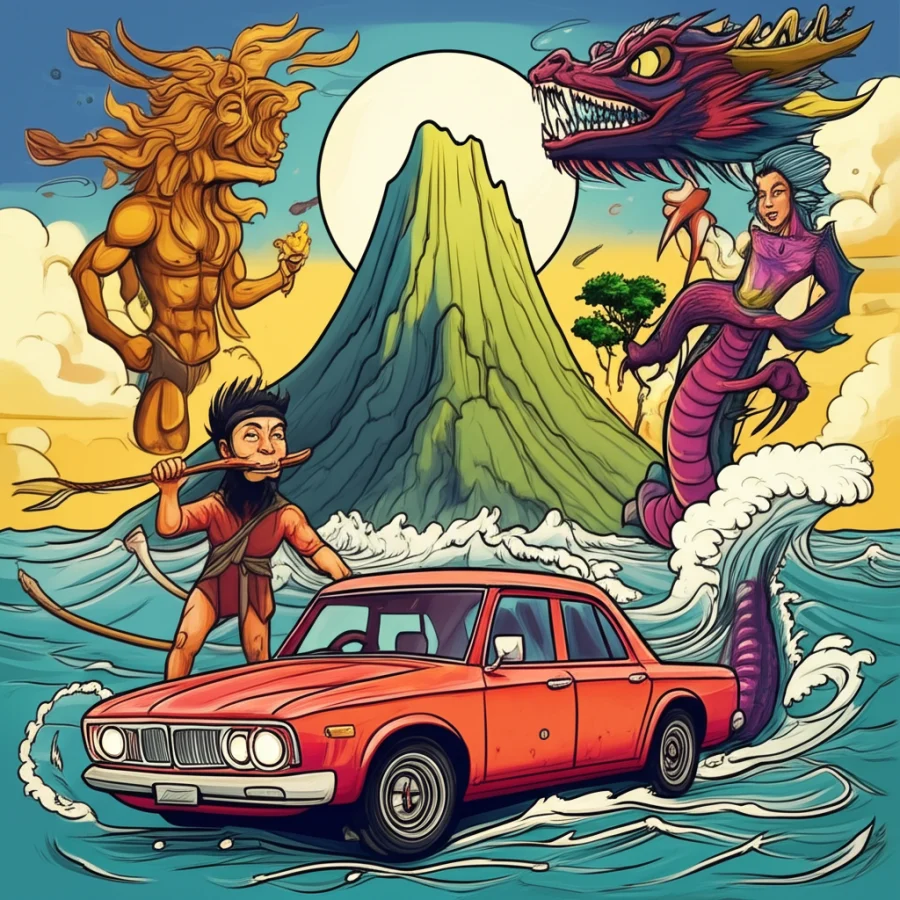
An Important Note for the Reader: The following article explores a narrative inspired by figures from Philippine mythology and folklore. This story is a creative retelling for cultural, historical, and educational understanding. It is not real and is not intended to be believed, worshipped, or practiced. It is presented as a window into the imaginative traditions of ancient peoples.
Introduction
In the sun-drenched archipelago that would one day be known as the Philippines, ancient communities lived in profound intimacy with the natural world. Their lives were governed by the rhythm of the tides, the temperament of the volcanoes, and the cycles of the moon. To make sense of their existence, they wove intricate tapestries of stories, populated by powerful beings who embodied the forces of nature. This is a retelling of one such imagined epic, a story that echoes from the deepest seas to the highest peaks, connecting the sea deity Amanikable, the celestial serpent Bakunawa, and the guardian spirit of Mount Makiling. This is a traditional story, a product of human imagination seeking to explain the world long before the advent of modern science.
Origins and Cultural Background
This narrative draws from the animistic beliefs of various pre-colonial Filipino cultures. In an era where survival depended on understanding the environment, the world was seen as vibrantly alive. The sea was not merely water, but a domain ruled by a powerful will. The mountains were not just landforms, but the sacred homes of guardians. The sky, with its sun and seven moons, was a celestial canvas telling its own divine story. These myths were not written in books but were passed down through generations by oral tradition, shared by elders around a fire, solidifying community bonds and imparting wisdom about the balance between humanity and nature. The stories explained phenomena like eclipses, storms, and earthquakes, attributing them to the actions of colossal, unseen forces.
The Figures of the Myth
In this grand theater of nature, three key figures stand out, each a powerful symbol.
-
Amanikable: According to some Tagalog myths, Amanikable was the ruler of the seas. He was not depicted as a benevolent deity but as a figure embodying the ocean’s duality. His moods could shift like the tides; one moment, he offered a bountiful catch to the fishermen, and the next, he could unleash tempestuous waves in a fit of rage. He was a symbol of the sea’s untamable power—a source of life and a bringer of destruction. His form was imagined as being one with the ocean, his hair like tangled seaweed and his skin the color of the deep blue, holding a trident carved from jagged coral.
-
Bakunawa: A creature of primordial dread, the Bakunawa was a colossal sea serpent, its scales the color of obsidian and its eyes glowing like dying embers. It was said to dwell in the deepest, darkest trenches of the ocean. In Visayan folklore, this magnificent beast was the cause of eclipses. Driven by an insatiable envy for the beauty of the seven moons that once lit the night sky, it would rise from the abyss to swallow them one by one. The Bakunawa symbolized cosmic chaos, the fear of darkness, and the terrifying, unknown forces that could disrupt the natural order.
-
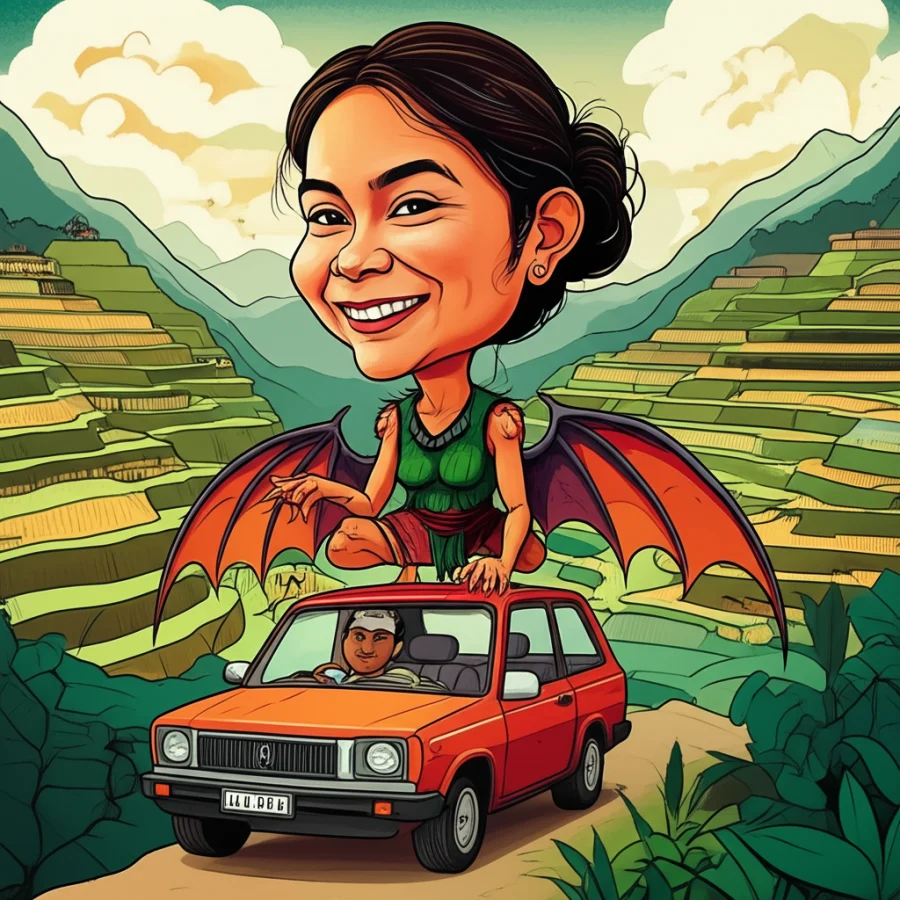
The Spirit of Mount Makiling: Rising from the fertile plains of Laguna is the dormant volcano, Mount Makiling, shaped like a reclining woman. Ancient lore tells of a spirit, a diwata or guardian, who protected this mountain. Often named Maria Makiling in later, more Hispanized folklore, this spirit was the embodiment of the land’s bounty and serenity. She was the protector of the forest, its flora, and its fauna. Her presence represented life, stability, and the gentle but formidable strength of the earth. She was a symbol of nature’s generosity, but also of its wrath when violated.
The Narrative: When the Sea Tried to Swallow the Sky
The elders told of a time when the world knew a fragile peace. Amanikable reigned over his vast blue kingdom, his moods dictating the fortunes of the coastal villages. On the land, the spirit of Mount Makiling nurtured her emerald domain, her gentle breath rustling through the ancient trees. And in the sky, seven silver moons danced, their collective light turning the darkest night into a soft, ethereal twilight.
But in the sunless depths, a primal hunger stirred. The Bakunawa, who had slumbered for eons, was awakened by the radiant glow of the moons filtering down into its abyss. An ancient envy took hold—a desire to possess that light, to consume it. Uncoiling its immense body, it began its ascent.
The sea itself recoiled. Amanikable felt the disturbance, a cold, ancient power rising from a part of his domain he rarely touched. His waters grew turbulent, and the fishermen hurried back to shore, sensing the sea king’s displeasure. But this was not his anger; it was his fear.
With a roar that was a storm and a tidal wave in one, the Bakunawa breached the surface. Its colossal head blotted out the stars as it lunged for the lowest of the seven moons. The people on the shore cried out in terror as the serpent swallowed the celestial body whole. Darkness flooded the world, sudden and absolute.
The effect was catastrophic. With one moon gone, the cosmic balance faltered. Amanikable’s tides raged uncontrollably, crashing against the shorelines and flooding the lowlands. The sea, his kingdom, was in chaos, no longer under his command. He gripped his coral trident, his own power feeling insignificant against this primordial force of consumption.
On her mountain, the spirit of Makiling felt the land shudder. The sudden, unnatural darkness caused the flowers to close and the nocturnal animals to hide in confusion. The lifeblood of her forest—the moonlight—had been stolen. The mountain groaned, a deep, resonant tremor that was the spirit’s own sorrow and anger. She saw the ocean’s rage spilling onto her foothills and knew the world was on the brink of ruin.
As the Bakunawa prepared to lunge for a second moon, a desperate alliance was formed without a single word. The people on the land, remembering the old ways, began to bang pots, pans, and drums. They shouted and wailed, creating a cacophony meant to startle the beast, to make it release its prize.
From the heart of her mountain, Makiling focused her energy. The peak of the volcano began to glow with a soft, green light—the concentrated life force of the forest. The light pulsed, a beacon of terrestrial power aimed at the shadowy beast in the sky.
In the sea, Amanikable marshaled his own strength. He could not fight the Bakunawa head-on, but he could command his domain. He summoned the currents, creating a colossal whirlpool around the serpent’s body, attempting to drag it back down into the depths from which it came. He struck the water with his trident, sending shockwaves of concussive force to disorient the creature.
Caught between the maddening noise from the land, the blinding light from the mountain, and the relentless pull of the sea, the Bakunawa faltered. The combined defiance of the land, the sea, and humanity was a force it had not anticipated. With a final, frustrated roar, it regurgitated the moon.
Light, brilliant and silver, flooded the world once more. The serpent, defeated for the moment, slithered back into the ocean, disappearing into the crushing blackness of the trench.
Symbolism and Meaning
This story, woven from disparate mythological threads, is rich with symbolism. The Bakunawa’s attempt to swallow the moon is a clear allegory for a lunar eclipse—a terrifying event for ancient people who depended on the moon for light and to measure time. The noise made by the villagers represents the power of community and collective action in the face of a crisis. The struggle between Amanikable and Bakunawa symbolizes the internal chaos of the natural world—the sea fighting against its own darkest impulses. The intervention of Mount Makiling’s spirit represents the land’s role in maintaining balance, a reminder that the sea and the earth are interconnected. The entire narrative is a powerful metaphor for the struggle between light and darkness, order and chaos, and the delicate equilibrium required to sustain the world.
Modern Perspective
Today, these figures of Philippine mythology are experiencing a vibrant renaissance. Amanikable, Bakunawa, and Maria Makiling are no longer just characters in forgotten oral tales. They have been re-imagined in contemporary Filipino literature, graphic novels, and epic fantasy books. They appear as powerful bosses or summons in video games and are the subject of breathtaking digital art that circulates globally online. Scholars study their origins to better understand the pre-colonial Filipino worldview. This modern revival serves as a way for a new generation to connect with their cultural heritage, celebrating the creativity and imaginative depth of their ancestors.
Conclusion
The tale of the sea king, the moon-eater, and the mountain guardian is a testament to the enduring power of storytelling. It is a cultural artifact, a glimpse into how ancient people in the Philippines perceived their world. It is crucial to remember that this is a myth—a product of human imagination created to explain the unexplainable, not a reality to be believed.
As Muslims, we recognize that the true power over the heavens and the earth, the seas and the land, belongs only to Allah, the one true Creator and Sustainer of all things. There is no deity but Him.
These ancient stories, however, remain a valuable part of human heritage. They teach us about the fears, hopes, and wisdom of our predecessors. They are echoes from a different time, reminding us of the timeless human need to find meaning in the world around us through the beautiful, intricate, and powerful tradition of the story.