fufufafa
Introduction:
The Philippines, an archipelago of breathtaking beauty and diverse cultures, is a land rich in folklore and mythology. These ancient stories, passed down through generations, offer glimpses into the worldview of our ancestors, their fears, their hopes, and their understanding of the natural world. One such story, intertwined with the majestic yet volatile presence of Mayon Volcano, features the god of the sea, Amanikable, and the feared creature of the night, the Aswang. It is crucial to remember that this is a traditional story, a product of ancient beliefs, and should be appreciated as a cultural artifact, not as a factual account.
Origins and Cultural Background:
The mythos surrounding Amanikable, the Aswang, and Mayon Volcano likely originated in the pre-colonial Philippines, a time when animism and polytheism were prevalent. Before the arrival of Islam and Christianity, Filipinos believed in a multitude of deities and spirits inhabiting the natural world. Their understanding of events like volcanic eruptions, typhoons, and disease was often attributed to the actions or emotions of these supernatural entities.
Life was closely tied to the land and the sea. Survival depended on understanding the cycles of nature and appeasing the spirits believed to control them. Fear of the unknown was a powerful force, shaping beliefs and rituals designed to protect communities from harm. The Aswang, a shape-shifting creature of the night, embodied this fear, representing the dangers lurking in the darkness and the vulnerability of human life. Mayon Volcano, with its unpredictable eruptions, served as a potent symbol of the raw, untamed power of nature, a force both awe-inspiring and terrifying.
Character / Creature Description:
Amanikable, the god of the sea, is often depicted as a powerful and virile figure, responsible for the tides and the bounty of the ocean. He represents the vital connection between the people and the sea, a crucial source of food and livelihood. He is a force of nature, neither inherently good nor evil, but simply powerful and potentially dangerous if angered.
The Aswang, on the other hand, is a far more sinister figure. Described as a shape-shifting creature, capable of transforming into animals like dogs, cats, or birds, the Aswang is said to prey on the vulnerable, particularly pregnant women and young children. They are often portrayed as having a separate torso that can detach and fly, allowing them to search for victims under the cover of darkness. Symbolically, the Aswang represents the fear of the unknown, the dangers of the night, and the potential for evil to lurk within one’s own community. The belief in Aswang can also be interpreted as a way to explain unexplained illnesses and deaths, particularly those affecting infants.
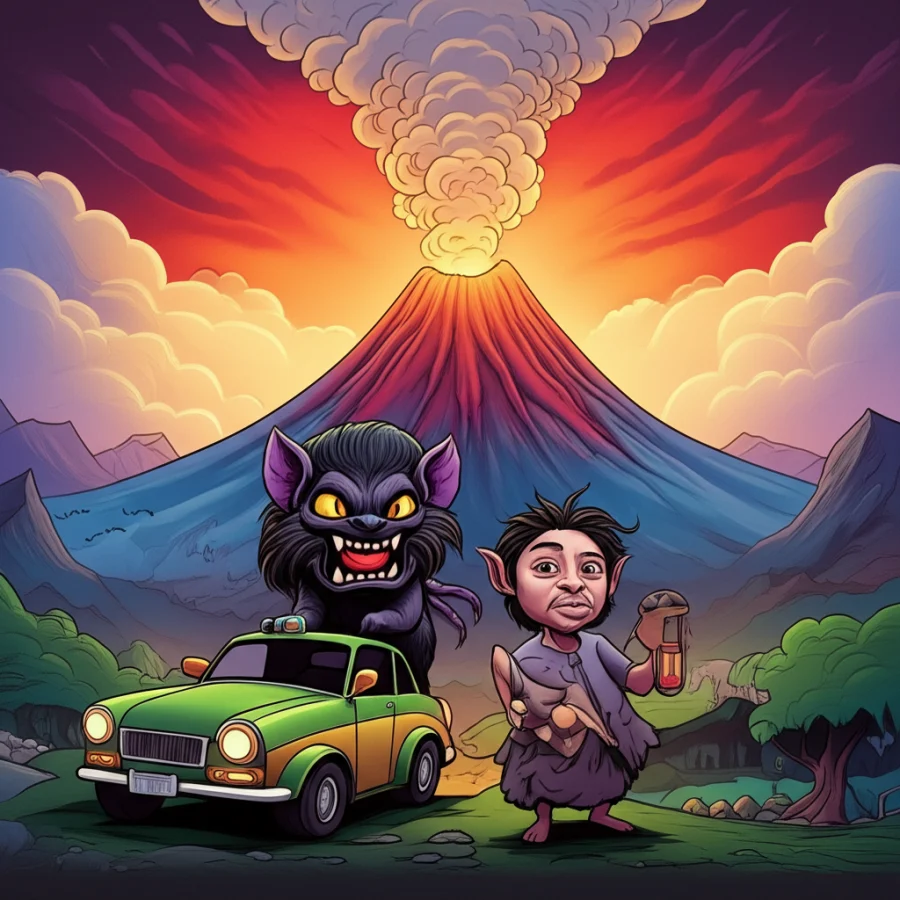
Mayon Volcano, a geological entity, is not a creature but a powerful symbol in the myth. Its perfect cone represents beauty and danger, creation and destruction. It can be seen as a manifestation of the gods’ power or, in some interpretations, a prison for a vengeful spirit.
Main Story / Narrative Retelling:
Legend tells of Amanikable, the proud god of the sea, and his love for a mortal woman named Magayon. She was known throughout the land for her unparalleled beauty, her kindness, and her grace. Many sought her hand in marriage, but Magayon remained unmoved, her heart belonging to no one.
One day, while bathing in a secluded stream, Magayon was startled by the appearance of Amanikable. He was captivated by her beauty and, forgetting his divine status, declared his love for her. Magayon, though initially fearful, was drawn to his strength and the power he commanded. They fell deeply in love, meeting in secret by the shores of the sea.
News of their affair reached the ears of an envious Aswang, a creature of the night who desired Magayon for itself. The Aswang, fueled by jealousy and malice, plotted to destroy their happiness. It spread rumors and whispers throughout the villages, poisoning the minds of the people against Magayon and Amanikable.
One night, as Amanikable and Magayon met beneath the watchful gaze of the moon, the Aswang attacked. In its monstrous form, it lunged at Magayon, intending to steal her away. Amanikable, enraged, battled the creature with all his might, summoning the power of the sea to his aid.
The battle raged throughout the night, shaking the very foundations of the land. In the chaos, Magayon was struck by a stray blow and fell to the ground, gravely wounded. Amanikable, heartbroken and consumed by grief, could not bear to live without her. He plunged his sword into his own heart, joining her in death.
The gods, witnessing the tragedy, were moved by their love and their sacrifice. They transformed Magayon and Amanikable into a magnificent volcano, its perfect cone a testament to their enduring love. The volcano, now known as Mayon, stands as a reminder of their tragic tale.
However, the Aswang, though defeated, was not destroyed. Its evil spirit remained, forever bound to the slopes of the volcano, waiting for an opportunity to wreak havoc and destruction. Legend says that during volcanic eruptions, the Aswang is at its strongest, its malevolent presence fueling the fiery rage of Mayon.
Symbolism and Meaning:
This story, while fictional, offers insights into the beliefs and values of ancient Filipinos. The love between Amanikable and Magayon represents the beauty and power of nature, while the Aswang embodies the ever-present threat of the unknown and the dangers of unchecked jealousy and malice. The volcanic eruptions can be interpreted as a manifestation of the gods’ anger or as a reminder of the destructive forces that lie dormant within the natural world. The story also highlights the importance of courage, sacrifice, and the enduring power of love in the face of adversity. It explores themes of love, loss, and the eternal struggle between good and evil.
Modern Perspective:
Today, the myth of Amanikable, the Aswang, and Mayon Volcano continues to resonate in Philippine culture. The story has been adapted into various forms of media, including literature, movies, and video games. It serves as a source of inspiration for artists and writers, who draw upon the rich imagery and symbolism of the myth to explore contemporary themes. The Aswang, in particular, remains a popular figure in Philippine horror, representing the fears and anxieties of modern society. Cultural studies scholars analyze the myth to understand the historical and social context in which it originated, examining its role in shaping cultural identity and values.
Conclusion:
The tale of Amanikable, the Aswang, and Mayon Volcano is a captivating example of Philippine folklore, a window into the beliefs and imagination of our ancestors. It is important to remember that this is a cultural story, not a statement of belief. As Muslims, we recognize that Allah is the only true Creator and Sustainer, and we seek guidance and strength only from Him.
This story, however, holds value as a cultural heritage, a reminder of the power of storytelling and the richness of the human imagination. It invites us to reflect on the values and beliefs of those who came before us and to appreciate the enduring power of myth to shape our understanding of the world. It is through these stories that we connect with our past, celebrate our cultural identity, and pass on the legacy of imagination to future generations, always remembering that the true source of power and guidance lies with Allah alone.