fufufafa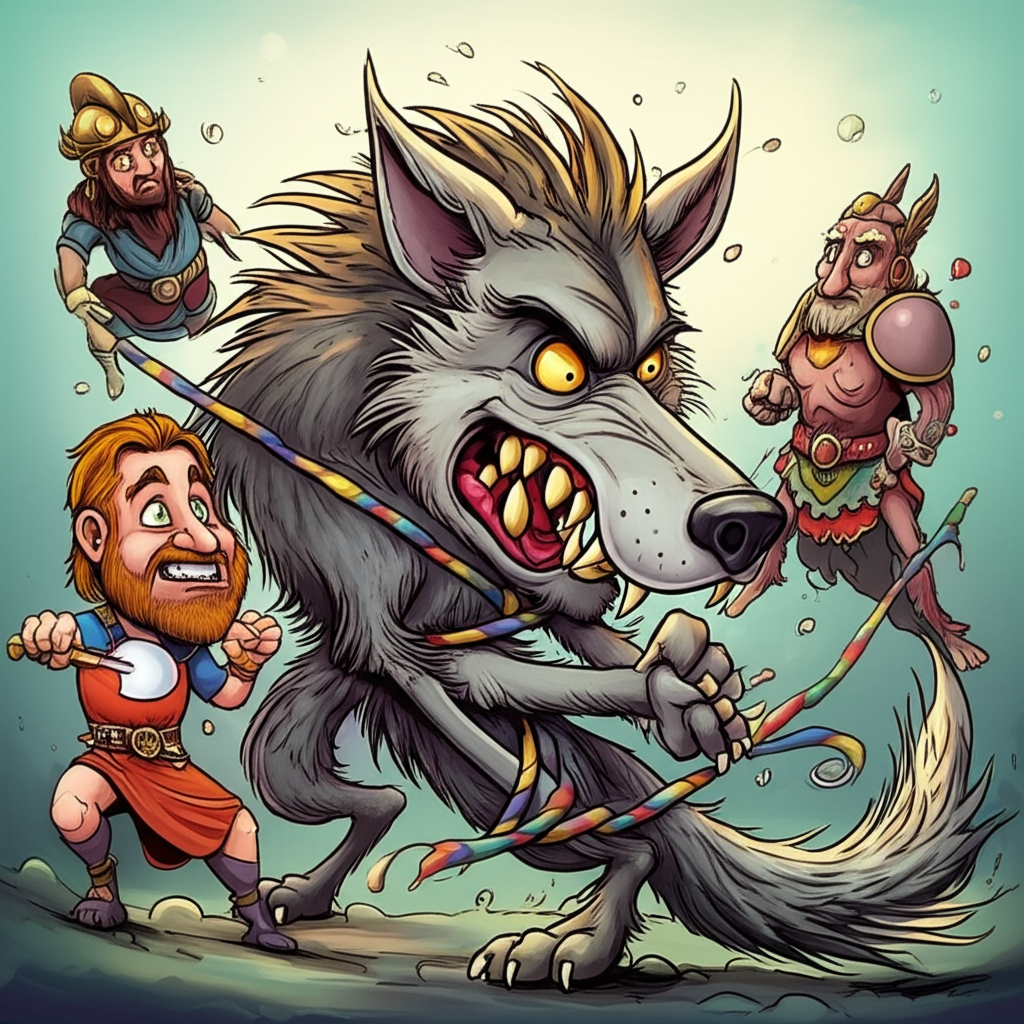
From the icy realms of Norse mythology, amidst tales of gods and giants, comes the saga of Fenrir, the monstrous wolf whose binding became a pivotal event in the cosmic drama leading to Ragnarok. This is a traditional story, recounted by the ancient Norse people, a cornerstone of their rich oral tradition. It offers a glimpse into their worldview, their fears, and their understanding of the forces that shaped their lives.
Origins and Cultural Background
The myth of Fenrir originates from Scandinavia during the Viking Age, roughly from the 8th to the 11th centuries. This was a time of exploration, warfare, and a deep connection to the natural world. The Norse people lived in a harsh environment, their lives dictated by the rhythms of the seasons and the constant threat of the elements. Their society was structured around kinship and loyalty, with a strong emphasis on honor and courage.
Their worldview was animistic, believing that spirits inhabited natural objects and phenomena. They saw the world as a battleground between order and chaos, represented by the gods and the giants, respectively. Fate, or wyrd, was a powerful concept, believed to be an inescapable force shaping the lives of both gods and mortals. The myths served as explanations for the world around them, providing moral lessons and entertaining stories for long winter nights.
Character Description: Fenrir, the Monstrous Wolf
Fenrir, also known as Fenrisúlfr, is no ordinary wolf. He is a creature of immense size and power, one of the three monstrous offspring of Loki, the trickster god, and the giantess Angrboða. His siblings are Jörmungandr, the Midgard Serpent, and Hel, the ruler of the underworld. Fenrir is described as having an insatiable hunger and a ferocity that inspires terror.
Symbolically, Fenrir represents the untamed forces of nature, the chaos that threatens to overwhelm the order of the cosmos. His immense size and power symbolize the destructive potential that lies dormant within the world. He is a representation of fear, of the unknown, and of the inevitable decay that awaits all things. He is not a creature to be worshipped, but rather a force to be respected and, if possible, contained.
Main Story: The Narrative Retelling
The story begins with a growing unease among the gods of Asgard. Prophecies foretold that Fenrir and his siblings would bring about the end of the world, Ragnarok. As Fenrir grew at an alarming rate, the gods realized they had to act. Odin, the Allfather, convened a council, and they decided that the only course of action was to bind the monstrous wolf.
They first attempted to bind him with a strong chain called Leding. Fenrir, confident in his strength, allowed the gods to bind him. But with a single flex of his muscles, he shattered the chain into countless pieces. The gods, dismayed but not defeated, forged a second chain, twice as strong, called Dromi. Again, Fenrir allowed them to bind him, boasting that this would be an easy task. And again, with a mighty roar, he snapped the chain effortlessly.
The gods were now filled with dread. They knew they could not overpower Fenrir through brute strength alone. Odin sent Skírnir, a messenger of the gods, to the realm of the dwarves, renowned for their craftsmanship. The dwarves, using ancient magic and secret ingredients, forged a silken ribbon called Gleipnir. This ribbon was deceptively thin, yet it was made of six impossible ingredients: the sound of a cat’s footfall, the beard of a woman, the roots of a mountain, the sinews of a bear, the breath of a fish, and the spittle of a bird.
The gods returned to Fenrir, presenting him with Gleipnir. Suspicious, Fenrir refused to be bound unless one of the gods placed their hand in his mouth as a guarantee of good faith. Only Týr, the god of law and courage, was willing to make this sacrifice.
The gods bound Fenrir with Gleipnir. As they tightened the ribbon, Fenrir struggled with all his might, but the silken thread held fast. Realizing he had been tricked, Fenrir bit off Týr’s hand. The gods then fastened Gleipnir to a large rock called Gelgja, and drove a sword into his mouth to keep it open.
Fenrir remains bound in this manner, drooling and howling until the coming of Ragnarok. The saliva from his jaws forms the river Ván. He awaits the day when the bonds will break, and he will finally be free to wreak havoc upon the world.
Symbolism and Meaning
The myth of Fenrir’s binding is rich with symbolism. It represents the struggle between order and chaos, the need to control destructive forces, and the price of maintaining order. The failure of the first two chains highlights the limitations of brute strength, while the success of Gleipnir underscores the power of cunning and ingenuity.
Týr’s sacrifice symbolizes the importance of justice, law, and courage. He knowingly sacrifices his hand to uphold his word and ensure the binding of Fenrir, demonstrating the willingness to make personal sacrifices for the greater good. The myth also serves as a cautionary tale about the dangers of unchecked power and the importance of foresight.
Modern Perspective
The myth of Fenrir continues to resonate in modern culture. He appears in numerous books, movies, and video games, often as a symbol of untamed power or a force of destruction. In literature, he might represent the inner demons that individuals struggle to control. In fantasy settings, he may embody the primal forces of nature.
The story also inspires academic study, particularly in fields like mythology, comparative religion, and folklore. Scholars analyze the myth to understand the beliefs and values of the ancient Norse people, and to explore the universal themes of fear, courage, and the struggle against chaos.
Conclusion
The binding of Fenrir is a compelling tale from Norse mythology, a story told and retold for generations. It is a cultural artifact, not a call to belief or worship. As Muslims, we recognize that only Allah is the true Creator and Sustainer of the universe, and that these myths are products of human imagination and cultural heritage.
These stories, however, offer valuable insights into the human condition. They remind us of the power of storytelling, the importance of understanding different cultures, and the enduring fascination with the forces that shape our world, real or imagined. The saga of Fenrir serves as a reminder of the rich tapestry of human history and the power of narratives to capture our imaginations and reflect our fears and aspirations.