fufufafa
From the rugged, mist-shrouded mountains and fertile river valleys of the Korean peninsula, a tapestry of ancient stories has been woven, passed down through generations. These are not tales of historical fact, but rather the enduring narratives of ancient peoples, their understandings of the world, and the forces they imagined shaping their lives. Among these, the legend of Dangun, the progenitor of the Korean nation, and the spectral presence of gwisin, particularly those tied to the grandeur of the ancient kingdom of Goguryeo, offer a fascinating glimpse into the cultural and spiritual landscape of early Korea.
This is a story told by our ancestors, a vibrant thread in the rich fabric of Korean folklore, offering insight into their worldview, their reverence for nature, and their attempts to comprehend the mysteries of existence. It is a narrative to be understood for its cultural significance, not for literal belief.
Origins and Cultural Background: A World Alive with Spirits
The stories of Dangun and the lingering echoes of Goguryeo emerge from a time when the natural world was perceived as profoundly animate. The people of that era, living in close proximity to the untamed forces of nature – the towering mountains, the unpredictable rivers, the deep forests, and the vast, star-filled skies – often attributed spirits and consciousness to these elements. Their lives were intimately tied to the cycles of agriculture, the hunt, and the changing seasons. Survival depended on understanding and appeasing these perceived forces.
In this worldview, the boundary between the physical and the spiritual was porous. The unseen was as real as the tangible, and the actions of humans were often seen as intertwined with the will of spirits, gods, and ancestral beings. This was a time of nascent kingdoms, of territorial disputes, and of a growing sense of collective identity. The myth of Dangun provided a foundational narrative, a shared origin story that bound people together. The powerful kingdom of Goguryeo, which flourished for centuries, leaving behind monumental tombs and tales of valiant warriors, naturally became a fertile ground for stories imbued with the spirits of its past.
The Spectral Presence: Gwisin – Echoes of the Unseen
Within this rich folklore, gwisin (귀신) are perhaps the most pervasive and varied supernatural entities. These are not necessarily malevolent demons in the Western sense, but rather spirits of the deceased, elemental forces, or beings that embody certain aspects of the natural or human experience. They can be benevolent, mischievous, or sorrowful, often tied to specific locations or events.
In the context of Goguryeo, gwisin can be imagined as the lingering presences of ancient warriors, fallen kings, or even the spirits of the land itself. They are not to be worshipped, but rather understood as potent forces that influence the world of the living. Their attributes are often symbolic: a gwisin of the mountain might embody its imposing strength and ancient wisdom, while a gwisin of the river could represent its ceaseless flow and transformative power. They are the embodiment of memory, of unresolved emotions, and of the enduring spirit of a place or a people. Their spectral nature signifies their existence beyond the physical realm, their ability to observe and perhaps influence the mortal world, often through subtle whispers or omens.
The Narrative of Echoes: Dangun, Gwisin, and the Spirit of Goguryeo
Imagine the rugged landscape of ancient Korea, a land where the wind carried whispers of old stories. Here, the legend of Dangun, the mythical founder of Gojoseon, the first Korean kingdom, unfolds. It is said that Hwanung, son of the Lord of Heaven, descended to Earth with a divine mandate. He brought with him knowledge of agriculture, medicine, and governance, and established a divine city. Among his followers were a bear and a tiger, who yearned to become human. Hwanung, in his wisdom, granted them their wish, with the condition that they endure a trial: to spend one hundred days in a cave, subsisting on garlic and mugwort. The tiger, impatient and restless, failed the test. The bear, however, persevered, and was transformed into a woman. This woman, Ungnyeo, then became the consort of Hwanung, and together they bore a son, Dangun Wanggeom. Dangun, it is told, ascended to the throne and founded his kingdom, laying the foundation for the Korean people.
Now, let us turn our gaze to the echoes that linger from the grand kingdom of Goguryeo, a realm known for its formidable military might and its ambitious spirit, which once dominated the northern Korean peninsula and parts of Manchuria. As the seasons turned and generations passed, the great cities of Goguryeo fell silent, their walls crumbling, their banners furled. Yet, in the vast plains and the imposing mountains that once bore witness to their glory, the presence of gwisin is said to linger.
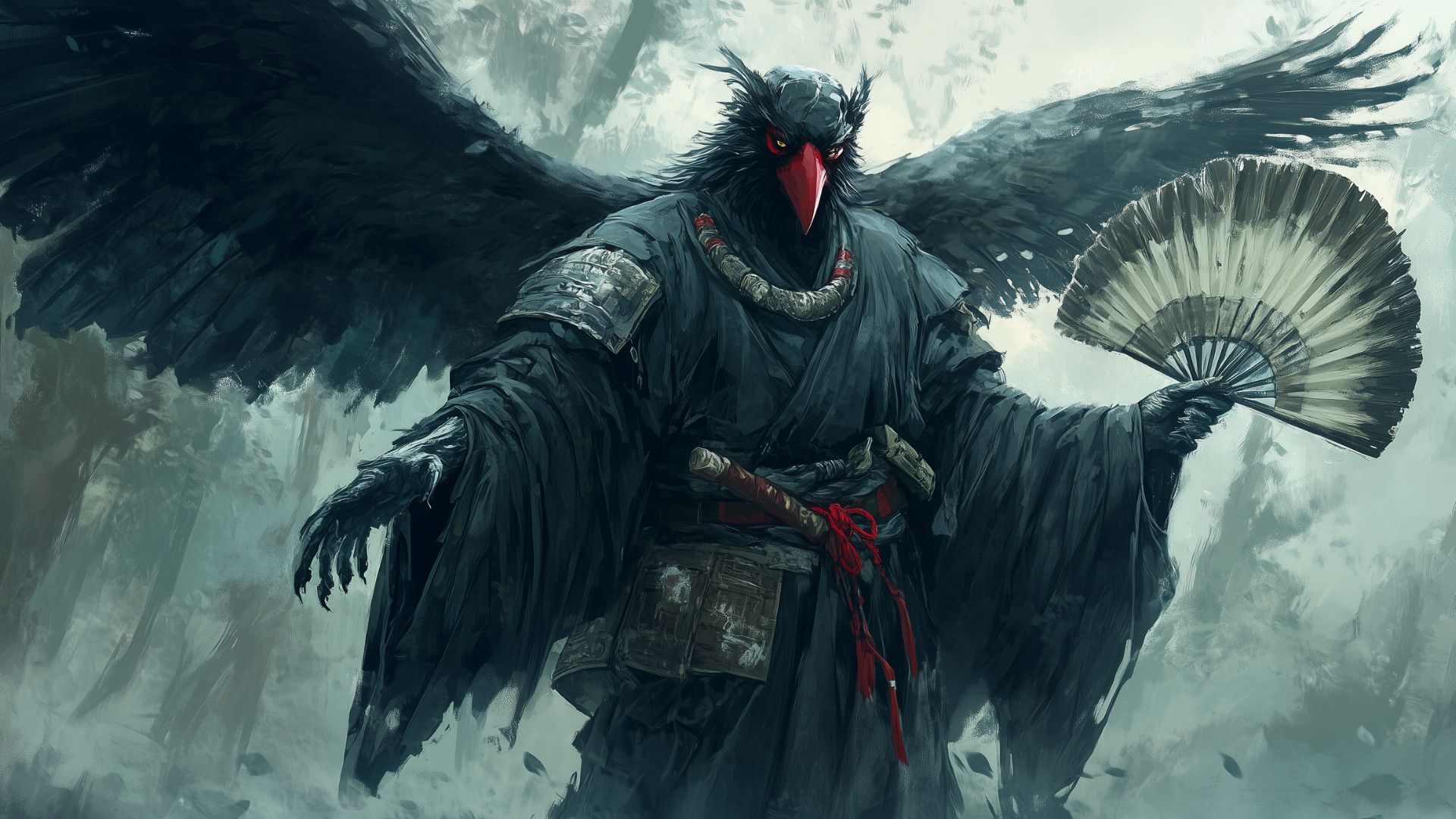
These are not the spirits of kings and queens in their regal attire, but rather the spectral remnants of the kingdom’s very essence. Imagine the gwisin of a Goguryeo warrior, forever patrolling the ancient battlements, their spectral armor glinting under a phantom moon, forever defending a land that no longer exists in its earthly form. Their silent vigil speaks of duty, of unfulfilled promises, and of the fierce pride that defined their civilization.
Consider the gwisin of the shamaness, her ethereal form still weaving through the mist-shrouded forests, her whispers carrying ancient incantations, a faint echo of her connection to the spirit world and her role in guiding her people. Or picture the gwisin of the land itself, the spirit of a mountain that once witnessed the rise and fall of Goguryeo, its rocky peaks now silent sentinels, its valleys holding the memory of bustling marketplaces and thundering hooves. These are the gwisin of Goguryeo – not entities to be feared or revered, but rather spectral reflections of a civilization’s triumphs, its struggles, and its enduring legacy, woven into the very fabric of the land. They are the whispers of a past that refuses to be entirely forgotten, a reminder of the vast human drama that has unfolded across these landscapes.
Symbolism and Meaning: Nature, Fear, and the Human Condition
To the ancient peoples who shared these stories, the legend of Dangun and the concept of gwisin served multiple symbolic purposes. Dangun’s origin, born of a divine father and a transformed earthly mother, represented the dual nature of human existence – our connection to the celestial and our rootedness in the earthly realm. His founding of a kingdom symbolized the human drive for order, civilization, and collective identity.
The gwisin, on the other hand, often embodied the unknown and the uncontrollable aspects of life. They could represent the fear of death and the uncertainty of the afterlife. Their presence in specific locations or their association with natural phenomena reflected the ancient understanding of the world as a place imbued with spiritual power. A gwisin tied to a treacherous mountain pass might symbolize the inherent dangers of the natural world, while a gwisin of a plague could represent the fear of disease and loss.
Moreover, these stories served as moral compasses. Tales of transformations and trials, like that of the bear and tiger, offered lessons in perseverance and the consequences of impatience. The actions and the lingering presence of gwisin could also be interpreted as reflections of past deeds, serving as a subtle reminder of the impact of human actions, both positive and negative, on the world and its unseen inhabitants. They were a way to process fear, to find meaning in the inexplicable, and to understand the complex relationship between humanity, nature, and the unseen forces that were believed to govern their existence.
Modern Perspective: Enduring Legends in Contemporary Culture
Today, the echoes of Dangun, gwisin, and the legacy of Goguryeo continue to resonate in various forms of modern Korean culture. In literature and historical dramas, the figures of Dangun and the warriors of Goguryeo are often reimagined, exploring themes of national identity, heroism, and the enduring spirit of the Korean people. The concept of gwisin has become a staple in horror films and folklore-inspired games, where these spectral beings are depicted with a wide range of characteristics, from terrifying apparitions to more nuanced portrayals of tormented souls.
In academic circles, these myths are studied as invaluable sources for understanding the social structures, belief systems, and worldview of ancient Korean societies. They offer insights into how people made sense of their environment, their anxieties, and their aspirations. Cultural studies delve into the symbolism embedded within these narratives, exploring their impact on Korean identity and artistic expression. The tales serve as a vital link to the past, allowing contemporary audiences to connect with the imagination and the storytelling traditions of their ancestors.
Conclusion: A Tapestry of Human Imagination
As we reflect on the narratives of Dangun, the spectral presence of gwisin, and the grand tales of Goguryeo, it is crucial to reiterate that these are enduring cultural stories, woven from the threads of human imagination and the attempts of ancient peoples to understand their world. They are not to be interpreted as literal truths or divine pronouncements.
As Muslims, we recognize that the ultimate Creator and Sustainer of all existence is Allah, the One and Only. Our faith teaches us to acknowledge His absolute power and sovereignty over all things, seen and unseen.
These ancient stories, however, hold immense value in understanding the rich tapestry of human heritage. They offer a window into the cultural landscape of the past, revealing the fears, hopes, and wisdom of those who came before us. They are a testament to the enduring power of storytelling, to our innate human need to create meaning, and to the vibrant, imaginative spirit that has shaped civilizations across the globe. The echoes of Dangun, the whispers of gwisin, and the grandeur of Goguryeo remind us of the profound and diverse ways in which humanity has sought to understand its place in the universe, a tradition that continues to inspire and captivate us today.