fufufafa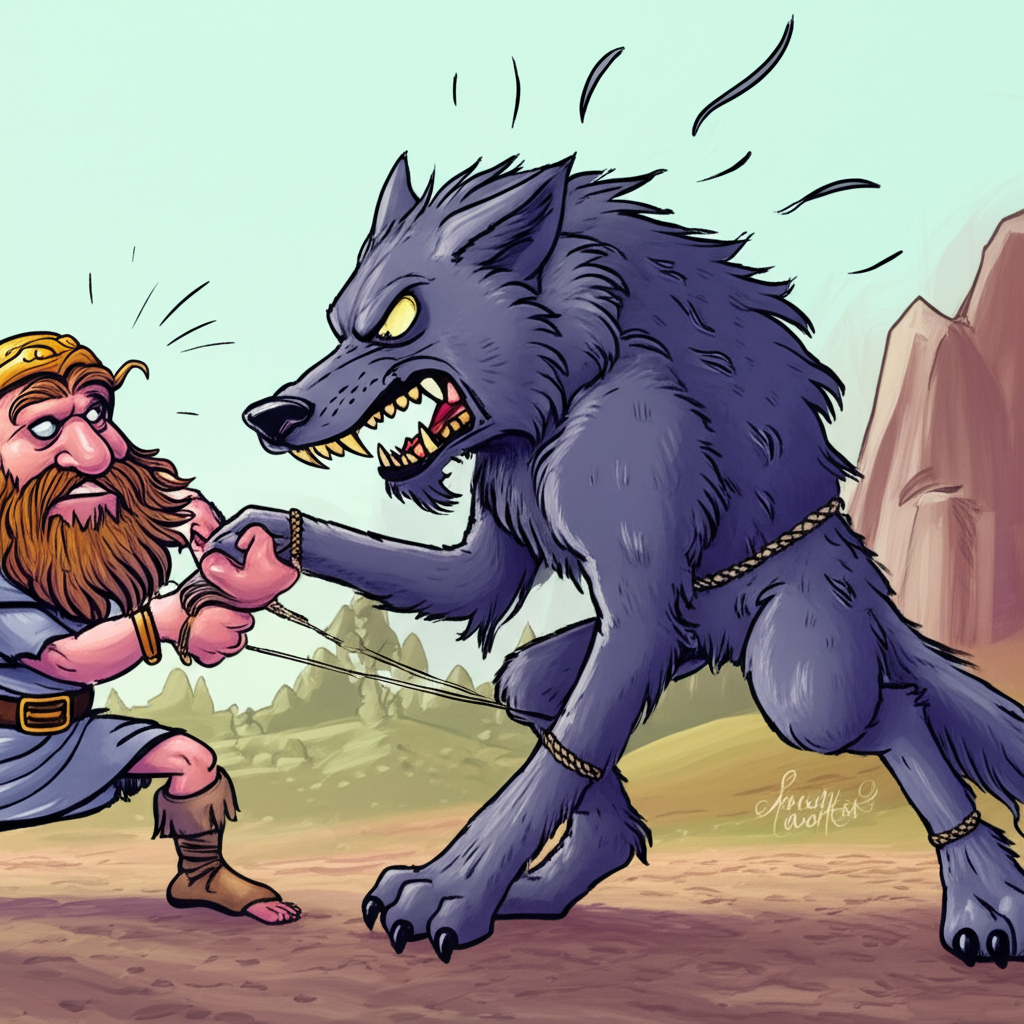
The windswept plains and the stark, snow-dusted peaks of ancient Scandinavia were once home to a rich tapestry of stories, woven by the hands of the Norse people. These sagas, passed down through generations, offered explanations for the world, the forces of nature, and the very essence of existence as they understood it. Among these enduring tales, the legend of Fenrir, the monstrous wolf whose destiny was intertwined with the very fabric of their cosmos, stands as a particularly potent example of their worldview. This is not a chronicle of divine decree, but rather a fascinating glimpse into the imaginative landscape of a people who sought to comprehend the vastness and the perils of their world through powerful narratives.
The era in which these myths flourished was one of harsh beauty and constant struggle. The Norse lived in a land of dramatic contrasts: the biting chill of long winters, the fleeting glory of summer, the fury of storms at sea, and the immense power of glaciers and volcanic fire. Their society was largely agrarian and seafaring, their lives shaped by the rhythms of nature and the need for communal resilience. They viewed the world as a precarious balance, populated by beings both benevolent and terrifying, gods and giants, spirits of the wild and creatures born of chaos. Their myths often reflected this understanding, portraying a universe in constant flux, where order was always threatened by primal forces. The binding of Fenrir, a story deeply embedded within this cultural context, speaks to their anxieties about uncontrollable power and the sacrifices deemed necessary to maintain a semblance of cosmic order.
At the heart of this particular saga lies Fenrir, a creature of immense, terrifying power. He is not simply a wolf, but a monstrous entity, a son of the trickster god Loki and the giantess Angrboda. His form is depicted as colossal, his jaws capable of swallowing the sun and the moon. His eyes are said to blaze with an untamable fury, and his howls are the very sound of impending doom. Symbolically, Fenrir represents unchecked primal force, the raw, destructive power of chaos that lies dormant but ever-present, threatening to engulf the ordered world. His insatiable hunger and relentless growth embody the fear of a force that, if allowed to run free, would consume everything. He is the embodiment of the wild, the untamed, the ultimate threat to the established order of the Nine Worlds.
The narrative of Fenrir’s binding unfolds as a chilling testament to the gods’ growing apprehension. In the early days, Fenrir was but a cub, but his strength and ferocity were already evident. The Aesir, the gods who resided in Asgard, the realm of the divine, watched him with increasing alarm. They saw in him a prophesied doom, a creature destined to break free and wreak havoc upon their existence. Attempts were made to shackle him, first with the mighty chain Læingr, which Fenrir easily snapped. Then came Drómi, a chain of even greater strength, but Fenrir, with a surge of his formidable power, shattered it as if it were mere thread. The gods, desperate and fearful, knew they needed something more.
It was the cunning dwarf-smiths of Svartalfheim, the dark realm of the dwarves, who devised a solution – a magical fetter named Gleipnir. This was no ordinary chain; it was crafted from six impossible ingredients: the sound of a cat’s footfall, the beard of a woman, the roots of a mountain, the sinews of a bear, the breath of a fish, and the spittle of a bird. These seemingly disparate and intangible elements, when woven together with potent magic, created a binding of unparalleled strength, a tether that even Fenrir’s immense power could not overcome.
The gods, however, knew that Fenrir would not willingly be bound by such a delicate-looking, yet magically potent, restraint. They devised a ruse. They invited Fenrir to a contest, a test of his legendary strength, proclaiming that they had forged a new chain, the strongest ever made, and wished to see if he could break it. Fenrir, fueled by arrogance and a deep-seated suspicion, agreed, but only if one of the gods would place their hand in his mouth as a pledge of good faith. If he could not break the fetter, the god would be lost. The other gods hesitated, their faces pale with fear. It was Tyr, the god of law and justice, who bravely stepped forward. He placed his right hand in Fenrir’s gaping maw, a gesture of trust and sacrifice.
As the gods tightened Gleipnir around Fenrir’s monstrous limbs, the wolf thrashed and roared, his fury echoing through the realms. He strained against the magical bonds, his muscles bulging, his teeth gnashing. But Gleipnir held. The more he struggled, the tighter the fetter became, its magical essence drawing strength from his very efforts. Finally, with a guttural roar of pure rage and despair, Fenrir realized he was trapped. In his ultimate act of defiance and vengeance, he bit off Tyr’s hand at the wrist. Tyr, though grievously wounded, stood firm, his sacrifice a stark symbol of the cost of protecting the world from primal chaos.
The gods then took a sword and wedged its hilt into Fenrir’s upper jaw and its point into his lower jaw, preventing him from opening his mouth further. There he remains, bound and gagged, his roars of fury the only sound, a constant reminder of the chaotic power that awaits its destined moment of release. The myth concludes with the grim prophecy that at Ragnarok, the twilight of the gods, Fenrir will break free and devour Odin, the Allfather, before being slain by Odin’s son, Víðarr, in a final, cataclysmic battle.
To the ancient Norse, the binding of Fenrir likely held profound symbolic meaning. It represented the eternal struggle between order and chaos. The gods, through their wisdom, sacrifice, and the cleverness of the dwarves, managed to temporarily contain a force of nature that was inherently destructive. Tyr’s sacrifice of his hand can be seen as a symbol of the difficult choices and personal costs often associated with leadership and the maintenance of societal stability. Fenrir himself embodies the untamed aspects of the natural world – the ferocity of storms, the destructive power of wild animals, and the ever-present threat of the unknown. The myth could also be interpreted as a cautionary tale about the dangers of unchecked ambition and the need for vigilance against forces that threaten to undermine the established order. The reliance on magic and cunning, rather than brute force alone, highlights a respect for ingenuity and the understanding that sometimes the most formidable challenges require more than just physical might.
In the modern world, the story of Fenrir continues to resonate, finding new life in literature, film, and video games. He is often portrayed as a formidable antagonist, a force of pure destruction or a tragic figure misunderstood. His image evokes a sense of primal power and an ancient, untamed spirit. Academics and enthusiasts of mythology study these tales to understand the cultural values, fears, and aspirations of the people who created them. The narrative offers a window into their cosmology and their attempts to grapple with the vast, often unforgiving, world around them.
It is important to reiterate that the story of Fenrir, like all mythological narratives, is a product of human imagination and cultural storytelling traditions. It is a fascinating exploration of human anxieties and desires, not a literal account of reality. As Muslims, we recognize that the true Creator and Sustainer of all existence is Allah, who is beyond any comprehension or comparison. These ancient stories, however, hold immense value as cultural heritage. They are echoes of a past, testaments to the enduring human need to understand our place in the universe, and powerful reminders of the rich tapestry of human imagination that continues to shape our world through the enduring art of storytelling. The songs of Jotunheim, in their raw power and stark imagery, continue to captivate, reminding us of the stories that have shaped civilizations and the timeless narratives that bind us to our shared human experience.