fufufafa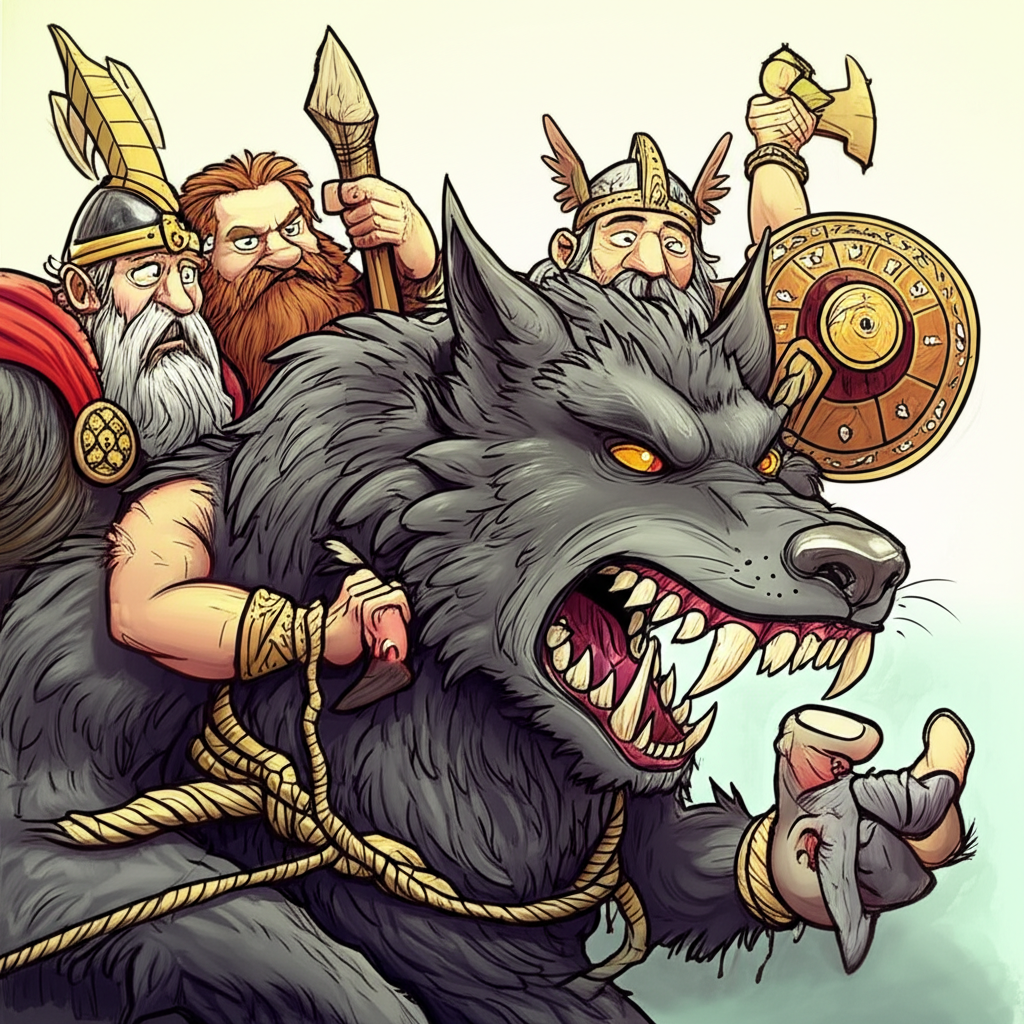
From the frost-kissed fjords and windswept plains of ancient Scandinavia, a rich tapestry of myths and legends emerged, woven from the experiences and imaginations of the Norse people. These tales, passed down through generations in spoken verse and later inscribed in the Eddas, paint a vivid picture of a world where gods walked among mortals, where mighty heroes faced impossible odds, and where the very forces of nature were personified by powerful beings. Among these enduring narratives is the story of the binding of Fenrir, a tale that resonates with primal fears and the complex relationship between order and chaos.
The cultural landscape of the Norse people, roughly spanning from the 8th to the 11th centuries, was one of rugged beauty and inherent danger. Their lives were shaped by the harsh northern climate, the constant threat of famine, and the ever-present possibility of conflict. This environment fostered a worldview that was both pragmatic and deeply spiritual. They observed the cyclical nature of the seasons, the raw power of storms, and the formidable strength of the natural world, interpreting these phenomena through a pantheon of gods and goddesses who governed different aspects of existence. They believed in a cosmic struggle between benevolent forces and destructive ones, and their stories often served as cautionary tales, moral compasses, and explorations of fate and free will. The myth of Fenrir is a product of this worldview, reflecting their understanding of untamed power and the human (or divine) struggle to contain it.
At the heart of this myth lies Fenrir, a creature born of immense, almost unimaginable power. He is not described as a typical beast of fur and fang, but rather as a wolf of colossal proportions, a monstrous entity whose very existence was a harbinger of disruption. His lineage is noteworthy: he is a son of the trickster god Loki and the giantess Angrboda. This parentage alone hints at his inherent wildness and capacity for mischief, or in Fenrir’s case, for utter devastation. Symbolically, Fenrir represents the untamed, the uncontrollable, and the destructive forces that lie dormant within nature and, perhaps, within existence itself. His ever-growing size and strength are not mere physical attributes but metaphors for the escalating nature of chaos and the difficulty of imposing order upon it. He embodies the primal fear of something so potent that it threatens to consume all that is known.
The narrative of Fenrir’s binding unfolds as a grim prophecy within the songs of Asgard, the celestial realm of the gods. The Æsir, the chief deities, learned through ancient prophecies that Fenrir, if left unchecked, would grow to such a size and ferocity that he would eventually devour Odin, the Allfather, and bring ruin to their world. This foreboding knowledge cast a long shadow over the gods, a constant reminder of the looming threat.
Their first attempt to secure Fenrir was with a strong chain named Læing, a testament to its supposed strength. Fenrir, however, with a mere flex of his mighty muscles, snapped it as if it were a fragile thread. Undeterred, the gods then forged an even more robust fetter, Dromi. Yet, Fenrir’s power had already grown, and this chain too proved insufficient, yielding to his brute force.
Realizing that mere physical strength would not suffice, the gods turned to more cunning means. They commissioned the dwarves, renowned for their craftsmanship, to forge a magical fetter unlike any seen before. This new chain was called Gleipnir, and it was made from six seemingly impossible ingredients: the sound of a cat’s footstep, the beard of a woman, the roots of a mountain, the sinews of a bear, the breath of a fish, and the spittle of a bird. These elements, abstract and intangible, contributed to Gleipnir’s extraordinary potency.
The gods then approached Fenrir, who had grown to an alarming size, his jaws agape, ready to swallow the sky itself. They presented Gleipnir to him, claiming it was a test of his prowess, a challenge to see if he could break the strongest of bonds. Fenrir, sensing the treachery and the unusual nature of the fetter, was hesitant. He agreed to be bound, but only on one condition: that one of the gods would place their hand in his mouth as a pledge. If he could not break free, he would be trapped, but if he could, he would be released.
A heavy silence fell upon Asgard. The other gods, aware of the grim prophecy, recoiled. It was Tyr, the god of war and justice, who stepped forward. With a brave heart, he placed his right hand into Fenrir’s gaping maw, a symbol of trust and a commitment to the gods’ endeavor.
The dwarves then secured Fenrir with Gleipnir. As the magical bonds tightened, Fenrir struggled with all his might. He thrashed and roared, the earth trembled, and the sky seemed to crack. But Gleipnir held firm, its impossible composition defying his monstrous strength. Fenrir’s struggles were futile. He was bound, unable to escape. In his rage and despair, he snapped at Tyr, severing the god’s hand.
The gods then drove a sword into Fenrir’s jaw, pinning it open, and left him to howl in his confinement, a chilling sound that echoed through the realms, awaiting the prophesied Ragnarök, the twilight of the gods, when he would finally be loosed.
The story of Fenrir’s binding is rich with symbolism. Fenrir himself represents the untamed forces of nature, the primal chaos that humanity and even the gods must contend with. His ever-increasing size and strength symbolize the escalating danger of unchecked power, whether it be natural disasters, destructive ideologies, or internal struggles. The inability of ordinary chains to restrain him highlights the inadequacy of conventional solutions when facing truly overwhelming forces. Gleipnir, forged from intangible elements, signifies that sometimes, wisdom, cunning, and an understanding of the subtle interconnectedness of things are more effective than brute force. Tyr’s sacrifice, the loss of his hand, is a powerful symbol of the price of maintaining order and protecting the community. It represents the personal cost of leadership and the sacrifices made to uphold justice. The act also underscores the grim nature of the gods’ struggle, where even victory comes with profound loss.
In the modern world, the myth of Fenrir continues to capture the imagination. It has been reinterpreted in countless works of literature, from epic fantasy novels to children’s stories, often appearing as a formidable antagonist or a symbol of raw, destructive power. In popular culture, Fenrir is a recurring figure in video games, board games, and films, where his monstrous form and the dramatic narrative of his binding are adapted for dramatic effect. Beyond entertainment, scholars of mythology and folklore analyze the story for its insights into the ancient Norse psyche, their understanding of the world, and their societal values. It serves as a case study in how ancient cultures grappled with universal themes of power, control, and the precarious balance between order and chaos.
It is crucial to reiterate that the binding of Fenrir is a traditional story, a narrative passed down through the ages by ancient peoples. It is a product of human imagination, a way for our ancestors to understand and articulate their experiences and their fears. As Muslims, we recognize that only Allah (God) is the true Creator and Sustainer of the universe, and that all power and dominion belong to Him alone. These ancient tales, while culturally significant and offering glimpses into the human capacity for storytelling and symbolic thought, are not to be mistaken for divine truth. They are, however, valuable components of our shared cultural heritage, reminding us of the enduring power of myths to explore fundamental aspects of the human condition and the diverse ways in which humanity has sought meaning and order in the world. The songs of Asgard, including the dramatic tale of Fenrir, remain a testament to the power of imagination and the timeless art of storytelling.