
 fufufafa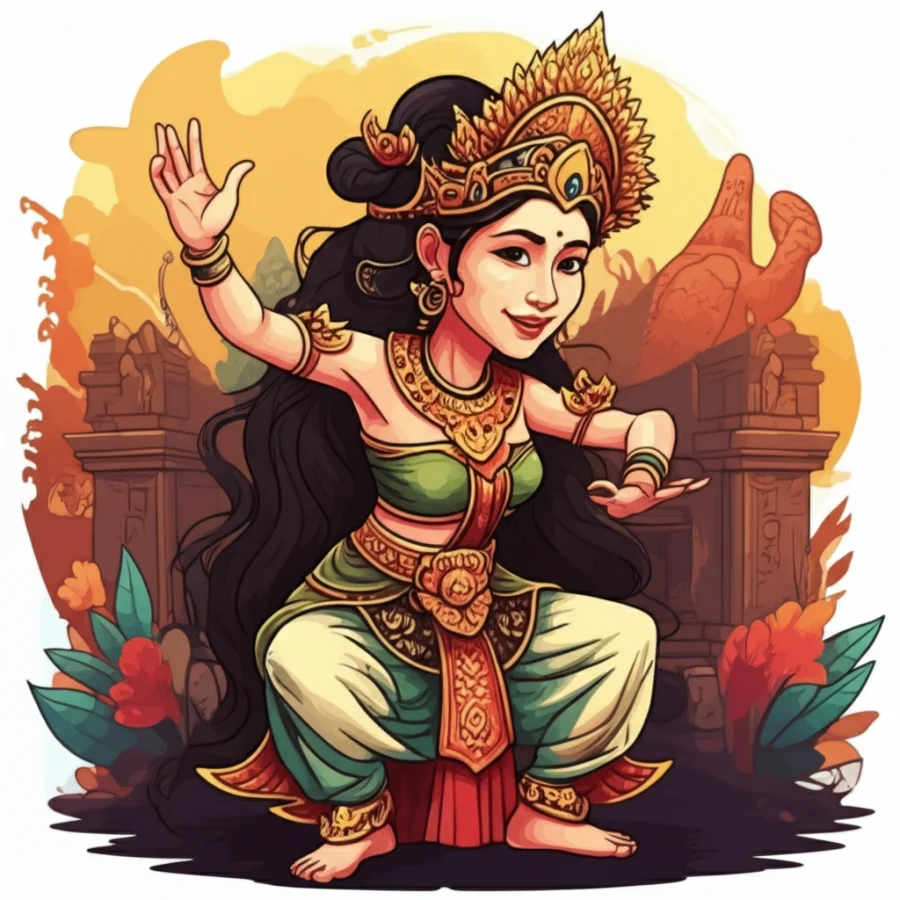
Across the verdant, rice-terraced landscapes of Java, Indonesia, where the emerald hues of paddy fields stretch towards volcanic peaks, ancient tales have long been woven into the fabric of daily life. Among these narratives, one figure resonates with a particular gentleness and profound significance: Dewi Sri, the revered goddess of rice and fertility. Her story, intertwined with the majestic grandeur of the Prambanan temple complex, offers a captivating glimpse into the worldview and cultural aspirations of the people who once called this land home. It is crucial to understand that this is a traditional story, a product of ancient imagination, passed down through generations as a cultural artifact, not as a declaration of divine truth.
The myths surrounding Dewi Sri likely emerged during the pre-Islamic eras of Java, a period characterized by the flourishing of Hindu-Buddhist kingdoms. In this era, the natural world was not merely a backdrop but a living entity, imbued with spirits and divine forces. The cycle of planting, growth, and harvest, so vital to their agrarian society, was seen as a continuous, often precarious, dance between human effort and the benevolent, or sometimes capricious, will of the cosmos. The Javanese people of that time viewed the world through a lens of interconnectedness, where the celestial realm, the earthly domain, and the very essence of life were intrinsically linked. The rhythms of nature – the sun’s warmth, the rain’s bounty, the earth’s fertile embrace – were interpreted as manifestations of powerful, unseen forces.
Dewi Sri herself is a figure of immense symbolic importance. She is often depicted as a beautiful woman, sometimes adorned with rice stalks, representing the very sustenance that nourished communities. Her presence embodies the life-giving power of the earth, the promise of abundance, and the delicate balance required to nurture life. She is not a deity demanding worship in the traditional sense, but rather a personification of the essential forces that allowed their society to thrive. Her attributes are those of a provider, a nurturer, and a symbol of the interconnectedness between the land and its people. The golden grains of rice, the swelling of the paddy, the gentle rustle of the stalks in the breeze – these were all seen as outward expressions of Dewi Sri’s benevolent influence.
The narrative of Dewi Sri, while rich in variations, often centers on her vital role in bringing rice to the people. One prominent legend speaks of a time when the earth was barren, and humanity struggled to survive. Dewi Sri, moved by their plight, descended to the mortal realm. In some tellings, she was accompanied by her consort, Sadana, who represented agriculture and prosperity. Their arrival brought forth the first rice seeds, transforming the parched land into a verdant paradise. Another recurring theme involves her sacrifice or a profound act of selflessness that ultimately led to the proliferation of rice. Her essence, it is said, became embodied in the very grains that fed the world.
The magnificent Prambanan temple, a testament to the architectural and spiritual achievements of the Mataram Kingdom, serves as a grand stage for these ancient narratives. While the primary focus of Prambanan is dedicated to the Trimurti of Hinduism – Brahma, Vishnu, and Shiva – the intricate reliefs adorning its walls also tell stories that reflect the broader cultural landscape. It is within the context of such sacred spaces, where the divine and the earthly were believed to converge, that tales of figures like Dewi Sri would have been shared and contemplated. Imagine the hushed awe of those who stood before these towering structures, their minds filled with the stories of gods and goddesses, of creation and sustenance, all woven into the very stone. The dance of Prambanan, in a metaphorical sense, is the dance of life itself, played out on a cosmic scale, with figures like Dewi Sri as vital participants.
The symbolism embedded within the myth of Dewi Sri is multifaceted. At its core, it represents the fundamental dependence of human civilization on agriculture and the earth’s bounty. Dewi Sri embodies the nurturing aspects of nature, the fertility of the soil, and the cycles of growth and renewal. Her story can be seen as an ancient attempt to explain and honor the forces responsible for their survival, fostering a sense of respect and gratitude towards the land. Furthermore, the narrative likely served to reinforce social harmony and communal responsibility, as the cultivation and distribution of rice were often communal endeavors. The myth also speaks to the human desire for abundance and prosperity, a universal aspiration that transcends time and culture.
In the modern era, the myth of Dewi Sri continues to hold a place in Javanese culture, though its interpretation has evolved. While formal worship has largely receded with the advent of Islam, Dewi Sri remains a significant cultural icon. Her image and stories are often found in literature, traditional performances, and even contemporary art. She appears in novels that explore Javanese folklore, in dances that re-enact ancient rituals, and in artistic depictions that celebrate the agrarian heritage of the island. In academic circles, her myth is studied as a valuable lens through which to understand the historical religious beliefs, social structures, and environmental perceptions of ancient Javanese societies. She has become a symbol of cultural identity and a reminder of the deep connection between people and their land.
In conclusion, the story of Dewi Sri and her connection to the grand narratives of Prambanan is a beautiful testament to the power of human imagination and the enduring legacy of storytelling. It is a cultural narrative, a product of ancient wisdom and observation, passed down through generations to explain the world as they understood it. As Muslims, we recognize that the ultimate Creator and Sustainer of all life is Allah (SWT). These ancient tales, however, offer us a valuable opportunity to appreciate the richness of human cultural heritage, to understand the diverse ways in which people have sought meaning and connection with the world around them, and to marvel at the enduring power of stories to shape our understanding and our collective memory. The whispers of rice, carried on the Javanese breeze, continue to remind us of the intricate dance of life and the stories that have shaped our world.







