fufufafa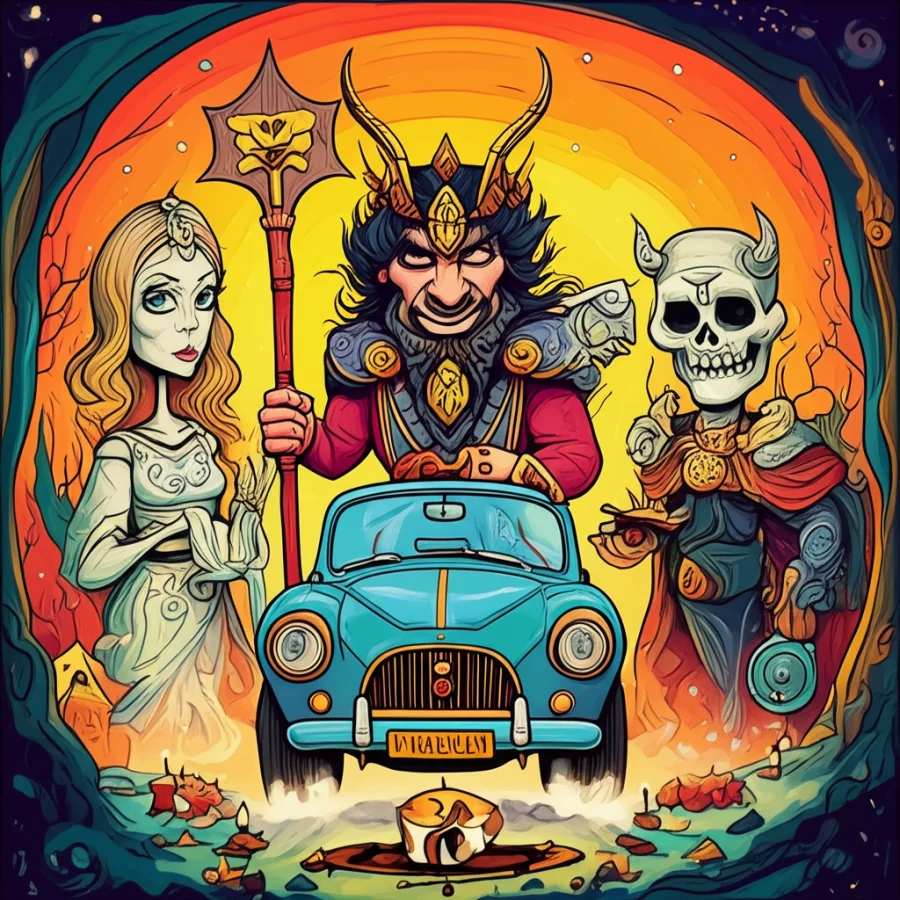
Introduction:
The tale of Samhain and the prophecy of Annwn originates from the Celtic peoples, specifically the Gaelic cultures of Ireland, Scotland, and the Isle of Man. This narrative, passed down through generations via oral tradition, reflects the beliefs and worldview of a society deeply connected to the rhythms of nature and the cyclical nature of life and death. It is important to understand that this story, like many myths and legends, is a product of human imagination, a traditional story told by ancient people to explain the world around them and explore profound themes of existence.
Origins and Cultural Background:
The era in which this myth gained prominence was a pre-Christian, agrarian society where life revolved around the agricultural calendar. These Celtic societies were deeply intertwined with the natural world, their lives dictated by the seasons and the success of their harvests. Their environment was one of rolling hills, dense forests, and unpredictable weather, fostering a sense of both awe and vulnerability.
The people of this time viewed the world as interconnected, with a thin veil separating the physical realm from the Otherworld, a supernatural domain inhabited by spirits, deities, and the dead. They believed in a cyclical view of time, where death was not an end but a transition to another phase. The festival of Samhain, marking the end of summer and the harvest and the beginning of the dark, cold winter, held particular significance as a time when the boundary between the worlds was believed to be at its thinnest, allowing for increased interaction between the living and the dead.
Character / Creature Description: Arawn, Lord of Annwn
Arawn is a prominent figure in Welsh mythology, often associated with the festival of Samhain due to his dominion over Annwn, the Otherworld. He is depicted not as a purely malevolent force, but as a powerful and enigmatic ruler. Instead of presenting him as a god, consider him more as a symbolic figure representing aspects of nature and human existence.
He is often described as a fearsome warrior, clad in dark armor, riding a pale horse, and accompanied by a pack of spectral hounds that hunt the souls of the dead. He is the Lord of Annwn, a realm that is sometimes depicted as a paradise and other times as a place of torment.
Symbolically, Arawn represents the untamed aspects of nature, the inevitability of death, and the hidden mysteries that lie beyond human comprehension. His hounds represent the unstoppable force of fate and the constant presence of mortality. Annwn itself can be seen as a representation of the subconscious mind, a realm of dreams, fears, and ancestral memories.
Main Story / Narrative Retelling: The Prophecy Unveiled
As the sun dipped below the horizon on the eve of Samhain, a chill wind swept across the land, carrying with it the scent of decaying leaves and the faint whispers of the Otherworld. The villagers of Caer Dathyl huddled around crackling bonfires, their faces illuminated by the flickering flames. This was the night when the veil between worlds thinned, when spirits roamed freely, and when the future, shrouded in mystery, could be glimpsed by those brave enough to seek it.
Among them was Branwen, a young woman known for her wisdom and her uncanny ability to interpret dreams. She sat quietly, her eyes closed, listening to the rustling of the wind and the murmur of the flames. As the night deepened, a vision began to unfold before her inner eye.
She saw a dark figure emerge from the swirling mists, his eyes like burning coals, his presence radiating an aura of ancient power. It was Arawn, Lord of Annwn, the realm of the dead. He stood before her, not in anger or malice, but with a somber gaze, and spoke in a voice that resonated with the weight of centuries.
"The balance is shifting," Arawn declared, his words carried on the wind. "The barrier between worlds weakens. The Wild Hunt grows restless. A prophecy unfolds, woven into the fabric of Annwn itself."
He showed her a vision of a time of great turmoil, when the land would be ravaged by war, when families would be torn apart, and when the ancient ways would be forgotten. He showed her the rise of new powers and the decline of the old.
Branwen trembled as she witnessed the unfolding of this dark future. Yet, amidst the chaos and despair, she also saw a glimmer of hope. She saw individuals rising to challenge the darkness, their hearts filled with courage and their spirits ignited by the flame of hope. She saw the power of unity and the enduring strength of the human spirit.
Arawn then revealed the key to averting the worst of the prophecy. "The fate of this world rests on the choices of mortals," he said. "Their actions, their beliefs, their courage will determine whether the darkness consumes all or whether the light prevails."
As dawn approached, Arawn faded back into the mists, leaving Branwen to grapple with the weight of her vision. She knew she had to share the prophecy with her people, not to instill fear, but to inspire them to action. She gathered the villagers and, with a voice filled with both dread and determination, she recounted the tale of Arawn’s warning and the prophecy of Annwn.
Symbolism and Meaning:
To the ancient Celtic people, this story likely represented several key concepts. The vulnerability of the boundary between worlds on Samhain highlighted their awareness of the unpredictable forces of nature and the constant presence of death. Arawn, as Lord of Annwn, embodied the unknown and the fearsome aspects of the Otherworld, reminding them of the power of the supernatural realm.
The prophecy itself may have symbolized the cyclical nature of history, the rise and fall of civilizations, and the constant struggle between order and chaos. It served as a cautionary tale, urging people to live in harmony with nature, to uphold their traditions, and to be prepared for the challenges that the future might bring. Ultimately, the story emphasized the importance of individual choices and the power of collective action in shaping the destiny of their community.
Modern Perspective:
Today, the myth of Samhain and the prophecy of Annwn continues to resonate in various forms of modern media. The festival of Samhain, now known as Halloween, has evolved into a secular celebration, but its origins as a time of spiritual significance are still evident in its themes of ghosts, spirits, and the supernatural.
Arawn and Annwn often appear in fantasy literature, movies, and video games, serving as inspiration for powerful villains or enigmatic realms. The themes of death, rebirth, and the struggle between good and evil continue to be explored in contemporary storytelling, drawing upon the rich symbolism and imagery of Celtic mythology. In cultural studies, the myth provides insights into the worldview, beliefs, and values of ancient Celtic societies, contributing to a deeper understanding of their history and culture.
Conclusion:
The tale of Samhain and the prophecy of Annwn is a powerful example of the enduring legacy of Celtic mythology. It is a cultural story, a product of human imagination, designed to explore profound themes of existence and to provide guidance and inspiration for generations to come. As Muslims, we understand that Allah alone is the true Creator and Sustainer of the universe. We recognize the importance of cultural heritage and the value of storytelling traditions, while maintaining our firm belief in the oneness of Allah. The myth of Samhain, like many other cultural narratives, serves as a reminder of the power of human imagination and the enduring quest to understand our place in the world. It is a testament to the human spirit’s capacity for creativity and the enduring need to make sense of the mysteries of life and death.