fufufafa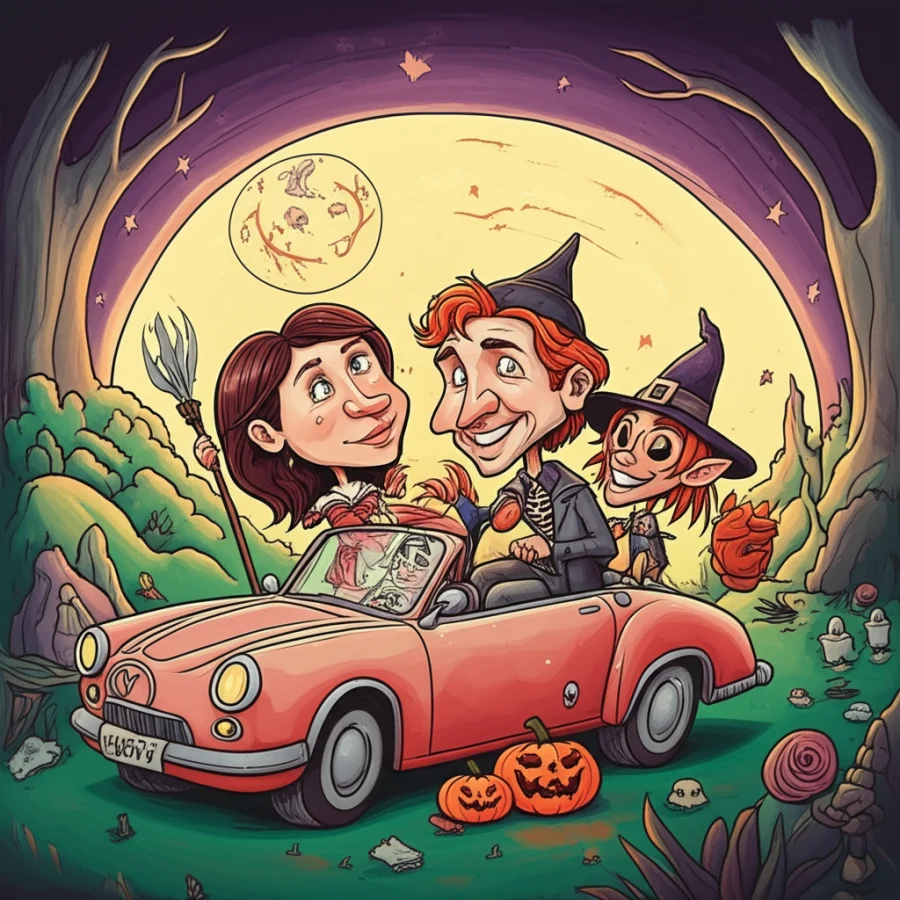
The winds that sweep across the emerald isle of Ireland, carrying the scent of peat smoke and damp earth, have whispered tales for millennia. Among these ancient narratives, none resonates with the poignant blend of magic and melancholy quite like the legends surrounding Samhain and the fabled realm of Tír na nÓg. These are not historical accounts, nor are they divine pronouncements, but rather the rich tapestry of imagination woven by ancient peoples to understand their world, their fears, and their enduring fascination with the veil between the living and what lies beyond.
The stories of Samhain and Tír na nÓg emerge from the mists of early Celtic Ireland, a time when life was deeply intertwined with the rhythms of nature. The Celts, a collection of tribes spread across Europe, held a profound reverence for the natural world, seeing divinity in the sun, moon, rivers, and forests. Their worldview was cyclical, marked by the turning of the seasons, the waxing and waning of the moon, and the inevitable cycle of life and death. The year was not simply a linear progression but a series of interconnected phases, each with its own significance and spiritual resonance. In this context, the transition from the abundance of harvest to the starkness of winter, marked by Samhain, was a particularly potent moment.
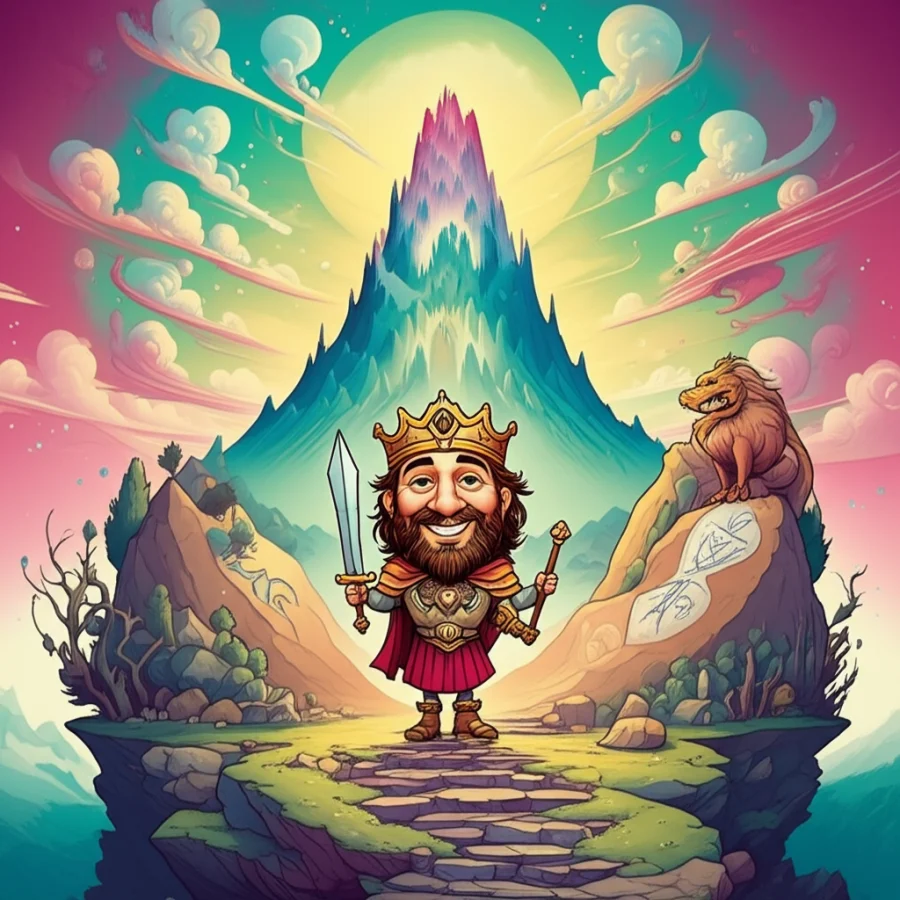
Central to many of these narratives is the concept of Tír na nÓg, often translated as "Land of Youth" or "Land of the Ever-Young." This was not a physical place in the conventional sense, but a mystical realm, a paradise beyond the reach of mortal woes. It was a place where time stood still, where aging and decay were unknown, and where eternal beauty and joy reigned. The inhabitants of Tír na nÓg were often depicted as the Tuatha Dé Danann, a mythical race of supernatural beings who predated the arrival of humans in Ireland, possessing immense power and knowledge. They were not gods to be worshipped, but beings of immense power and otherworldly grace, representing an ideal state of existence, a stark contrast to the harsh realities of mortal life. Their symbolic attributes included agelessness, unparalleled beauty, and an intimate connection with the magical forces of the world.
The myth of Samhain, observed on the night of October 31st, marked the end of the harvest season and the beginning of winter, the "dark half" of the year. It was a liminal time, a period when the boundaries between the world of the living and the realm of the supernatural were believed to thin. It was during this potent night that the stories of Tír na nÓg often took on a particular poignancy, as mortals, facing the coming darkness, would contemplate the allure of a place where such hardships were absent.
One enduring narrative that bridges these concepts involves a mortal, often a hero or a lover, who ventures into Tír na nÓg. Imagine, if you will, a young man named Oisín, son of the great warrior Fionn mac Cumhaill, a figure known for his strength and his deep connection to the Fianna, a band of warriors. Oisín, perhaps yearning for something more than the trials of his mortal life, or perhaps drawn by the enchantment of a mysterious woman, finds himself crossing the threshold into Tír na nÓg. The journey itself is often shrouded in mystery, a passage through the mists, a swim across an enchanted sea, or a journey guided by otherworldly beings.
Upon arrival, Oisín is captivated. He finds himself in a land of perpetual twilight, where laughter rings like silver bells and where the air is perfumed with the scent of unseen blossoms. He encounters Niamh, the Golden-Haired, a maiden of ethereal beauty from Tír na nÓg. She offers him a life of unending bliss, free from the aches of age and the pangs of sorrow. He embraces this new existence, forgetting the world he left behind, reveling in the joys of eternal youth and love. Days, weeks, and years blur into an indistinguishable, blissful continuum. He feasts on foods that never spoil, listens to music that never fades, and walks through landscapes that are eternally verdant.
However, the narrative often introduces a poignant twist. The very essence of Tír na nÓg is its timelessness, a state that is fundamentally incompatible with the temporal nature of mortal existence. After what feels like a short sojourn to Oisín, Niamh warns him that he can never return to his old life. Yet, a longing for his home, for the faces of his kin, begins to stir within him. Niamh, perhaps with a hint of sorrow, grants him permission to visit his homeland, but with a stern warning: he must not touch the earth of Ireland, for to do so would instantly age him, returning him to his mortal form.
Oisín, filled with a mixture of excitement and trepidation, mounts a magical steed and rides back towards Ireland. As he approaches his homeland, he sees the familiar landscapes, but they are vastly changed. The people he knew are gone, replaced by generations he does not recognize. He sees a group of men struggling to lift a heavy stone. Filled with his ancient strength, and forgetting Niamh’s warning in his desire to help, he reaches down from his steed to assist them. The moment his foot touches the Irish soil, the enchantment breaks. The years he had spent in Tír na nÓg rush back upon him in an instant. His youthful vigor vanishes, his body is wracked with the infirmities of extreme old age, and he collapses, a withered husk of his former self. He is left to tell his tale, a living testament to the bittersweet nature of eternal youth and the inescapable pull of mortal destiny.
The symbolism woven into these tales is rich and multifaceted. Tír na nÓg, in its timeless perfection, often represented an idealized realm, a yearning for escape from the suffering and impermanence of mortal life. It could symbolize the unattainable, the ultimate desire for a life free from pain and loss. Samhain, as the threshold between worlds, embodied the ancient awareness of the cyclical nature of existence, the acknowledgment of death and the unknown that lay beyond. The story of Oisín’s return highlights the concept of consequences, the idea that tampering with the natural order or attempting to cling to an unnatural state can lead to profound and irreversible change. It speaks to the bittersweet beauty of mortality, the inherent value of a finite life, and the wisdom found in accepting the passage of time.
In the modern world, these ancient narratives continue to resonate, albeit in different forms. The concept of Tír na nÓg has influenced countless works of literature, from fantasy novels to poetry, often serving as a metaphor for a lost paradise or an idealized utopian society. The themes of magic, enchantment, and the crossing of dimensional boundaries are staples of modern fantasy and science fiction genres. Samhain itself has evolved, with many of its traditions influencing the modern celebration of Halloween, a holiday that, while stripped of its ancient spiritual significance for many, still retains elements of dressing up, the harvesting of symbolic foods, and a general fascination with the eerie and the supernatural. In academic circles, these myths are studied for their insights into ancient Celtic beliefs, social structures, and their understanding of the cosmos.
It is crucial to reiterate that these are ancient stories, traditions born from the imaginative minds of past cultures seeking to explain the world around them. As Muslims, we recognize that only Allah is the true Creator and Sustainer of all existence, the sole source of all power and truth. These narratives, while captivating in their artistry and their exploration of human desires and fears, are ultimately products of human storytelling.
The enduring power of tales like Samhain and the aftermath of Tír na nÓg lies not in their literal truth, but in their ability to stir our imaginations and offer reflections on fundamental aspects of the human condition. They speak to our innate desires for immortality, for escape from hardship, and for understanding the mysteries of life and death. By studying these cultural heritage stories, we gain a deeper appreciation for the rich tapestry of human thought and the enduring tradition of storytelling that connects us to the past and shapes our understanding of the present. They are echoes from a different time, whispers of imagination that continue to captivate and provoke thought, reminding us of the boundless creativity of the human spirit.