fufufafa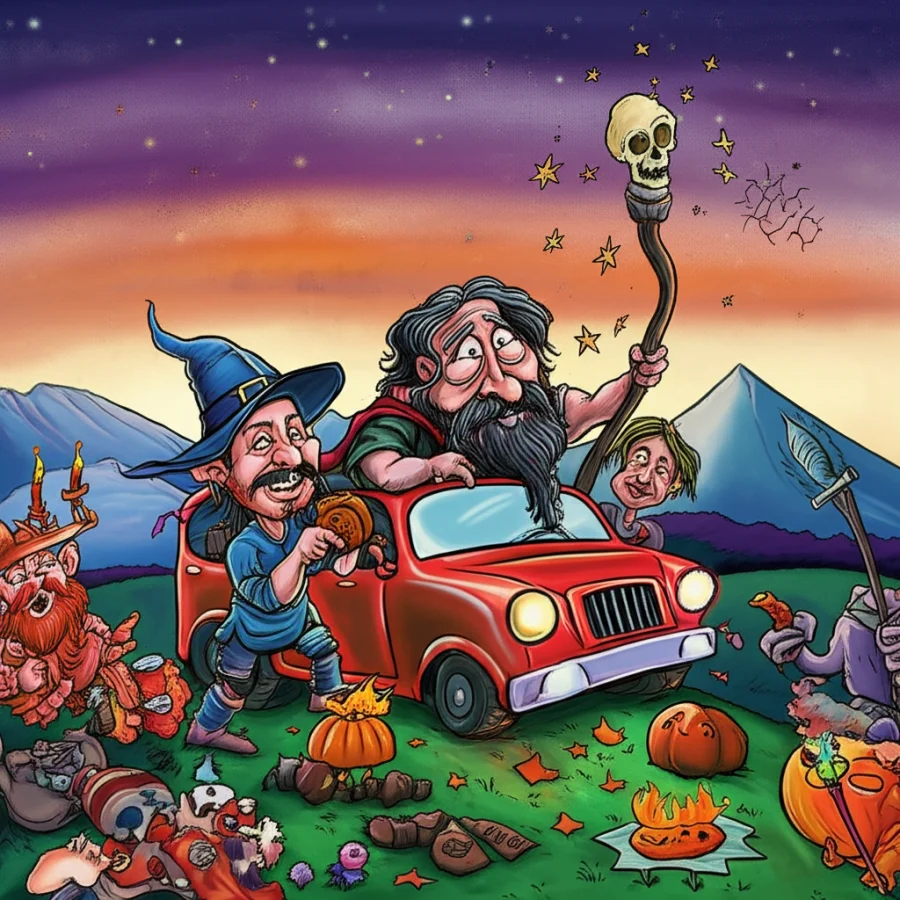
The mists that cling to the emerald hills of Ireland have long been woven with tales of ancient times, of gods and heroes, and of the veil between worlds thinning. Among these narratives, the myth surrounding Samhain, the end of harvest and the beginning of winter, and its dramatic climax on the sacred Hill of Tara, stands as a potent reminder of how our ancestors sought to understand the cycles of life, death, and the unseen forces they believed governed their world. This is not a testament to divine power, but a window into the rich tapestry of human imagination and storytelling that has been passed down through generations.
The story of Samhain on Tara originates from the rich cultural heritage of ancient Ireland, a land steeped in Celtic traditions. These myths were not mere bedtime stories; they were the bedrock of a worldview held by people living in a society deeply connected to the land and its rhythms. Their lives were dictated by the turning of the seasons, the success of the harvest, and the harsh realities of winter. In this environment, the natural world was imbued with a potent spiritual significance. They believed that the boundaries between the physical world and the realm of spirits, the sidhe, were permeable, especially during liminal times like Samhain. This era, roughly from the Iron Age into the early Christian period, saw a society structured around clans and chieftees, where the land was paramount and the interconnectedness of all things was a core tenet of their understanding.
At the heart of this Samhain narrative lies a powerful, if fearsome, entity: the Púca. The Púca, in the folklore of Ireland, is not a singular, fixed being, but rather a shapeshifter, a creature of considerable power and often capricious nature. It could appear in various forms – a black horse with glowing eyes, a goat, a dog, or even a dark, vaguely human figure. Its presence was often associated with the wild, untamed aspects of nature, with forests and lonely moors. Symbolically, the Púca represents the unpredictable forces of the wild, the uncanny, and the transformative power that lies beyond human control. Its shifting forms speak to the fluidity of the spirit world and the inherent uncertainty of existence. It embodies the fear and awe that ancient peoples felt towards the unknown, the forces that could bring prosperity or ruin with equal measure.
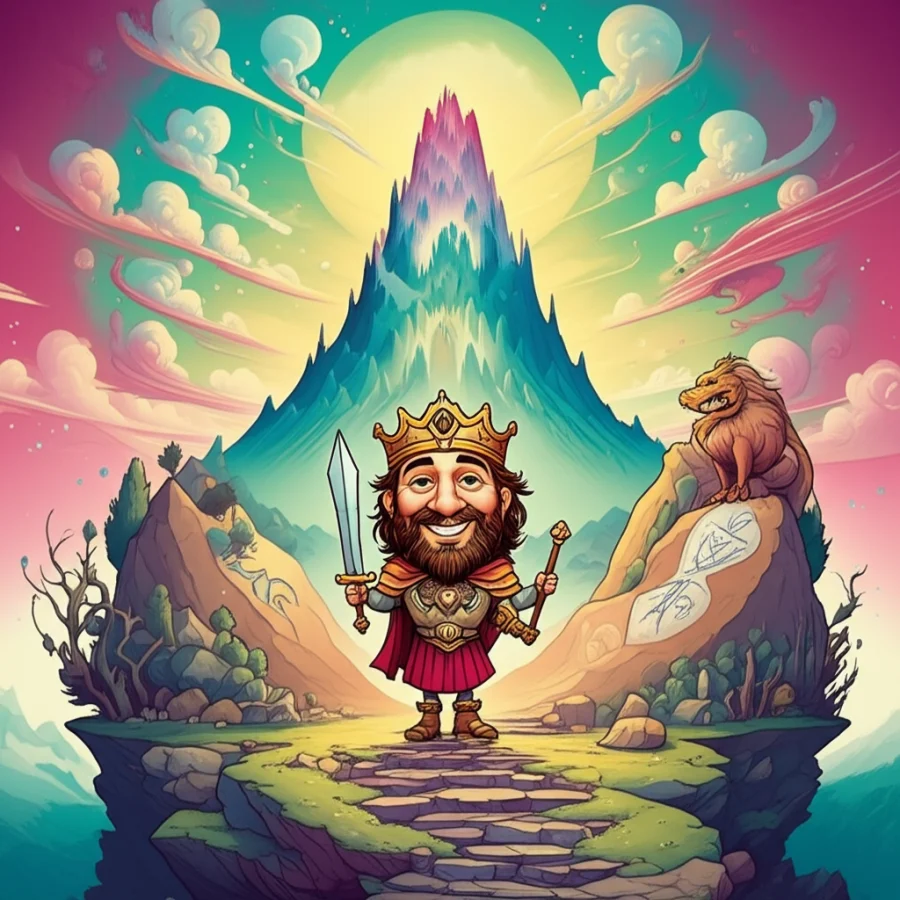
The myth recounts that during Samhain, when the harvest was gathered and the nights grew long and cold, the veil between the worlds grew thin. It was believed that spirits of the dead, as well as other otherworldly beings, could traverse into the land of the living. The Hill of Tara, the ancient seat of the High Kings of Ireland, was considered a nexus of spiritual power, a place where the earthly and the ethereal were particularly close.
One particular Samhain night, according to the tale, the Púca, in its most terrifying guise, descended upon the Hill of Tara. Imagine the scene: the crackling fires of the great halls casting flickering shadows on the stone walls, the wind howling like a mournful spirit, and the scent of woodsmoke and damp earth heavy in the air. The Púca, a creature of shadows and primal fear, emerged from the encroaching darkness. Its eyes, like burning embers, pierced the gloom, and its form, shifting and indistinct, instilled a primal dread in all who beheld it. It was said to be a test, a challenge thrown down by the spirit world, or perhaps a manifestation of the raw, untamed power of the season itself. The narrative would describe the terror that gripped the inhabitants of Tara, the chieftains and their retinues, as this formidable entity made its presence known. It wasn’t a battle in the conventional sense, but a confrontation with the unknown, a moment where the fabric of reality seemed to fray. The Púca’s power lay not in brute force, but in its ability to inspire fear and to disrupt the established order, reminding mortals of their vulnerability.
The symbolism embedded within this Samhain myth is profound and multi-layered. The Púca, as a shapeshifter, can be seen as representing the inherent uncertainty and unpredictability of life. Its appearance during Samhain, the transition from abundance to scarcity, speaks to the cyclical nature of existence – the death of the old to make way for the new. The Hill of Tara, as a sacred site, symbolizes leadership, sovereignty, and the connection between the earthly realm and the spiritual. The Púca’s disruption of this sacred space could represent the challenges faced by leaders, the need to confront and overcome fear, and the constant need to maintain balance between the visible and invisible forces at play. It may have served as a cautionary tale about respecting the boundaries of the natural and supernatural worlds, and the potential consequences of hubris.
In the modern world, the echoes of Samhain and its associated myths continue to resonate. While the Púca is no longer perceived as a literal threat, its imagery and symbolic power find expression in contemporary literature, film, and popular culture. The concept of the thinning veil between worlds during Samhain has influenced the supernatural genres, inspiring stories of ghosts, spirits, and otherworldly encounters. The Púca itself, as a creature of folklore, has been reimagined in various forms, often as a mysterious or menacing entity in fantasy novels and video games. Furthermore, academic studies of mythology and folklore continue to explore the cultural significance of these ancient narratives, offering insights into the beliefs, fears, and aspirations of past societies.
It is important to reiterate that the tale of Samhain and the Púca on the Hill of Tara is a product of ancient human imagination and storytelling. As Muslims, we recognize that only Allah (God) is the true Creator and Sustainer of all existence, the ultimate source of power and authority. These ancient myths, while fascinating for their cultural and historical insights, do not hold divine truth. They are remnants of a past, expressions of how our ancestors grappled with the mysteries of life and the universe. Reflecting on these stories allows us to appreciate the enduring power of human creativity, the richness of cultural heritage, and the universal human desire to understand our place in the grand narrative of existence, a narrative that, for us, is ultimately guided by the divine wisdom of Allah. The whispers on the wind from the Hill of Tara serve as a reminder of the stories we tell, and the enduring legacy of human storytelling traditions.