fufufafa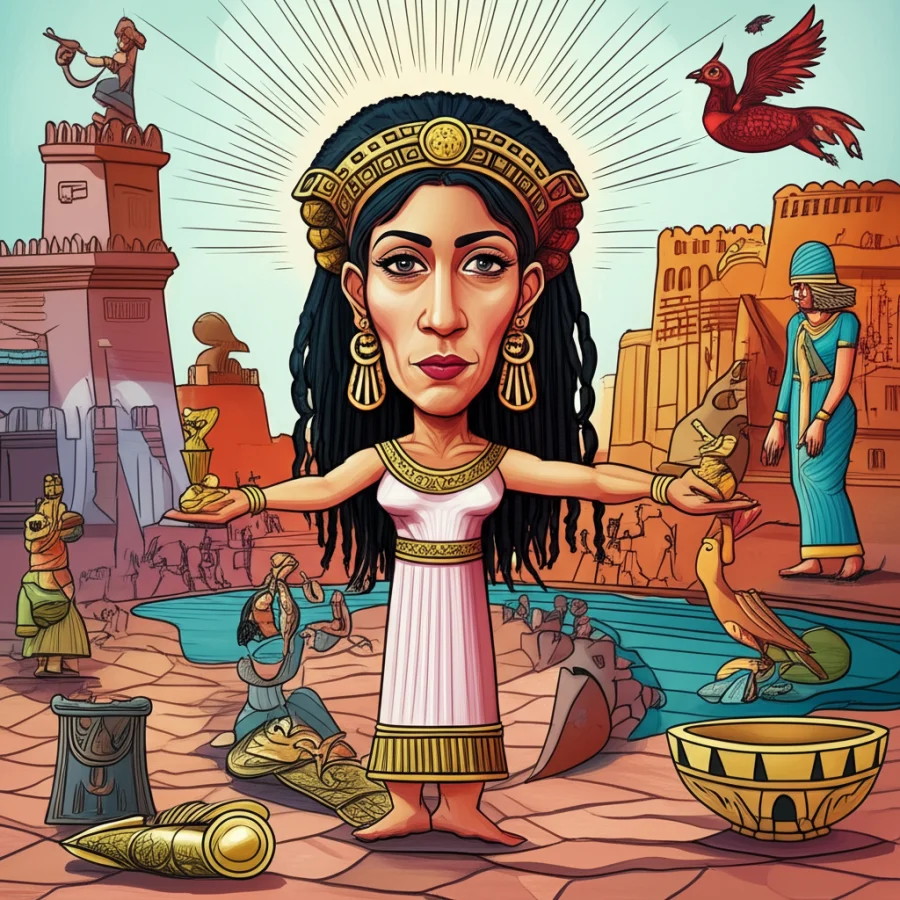
1. Introduction: Whispers from the Cradle of Civilization
From the fertile plains cradled between the Tigris and Euphrates rivers, a land known as Mesopotamia, arose one of humanity’s earliest and most complex civilizations: Sumer. It was here, amidst the burgeoning city-states and monumental ziggurats, that a rich tapestry of myths and legends was woven, reflecting the hopes, fears, and cosmic understanding of its people. Among these ancient narratives, few resonate with as much power and symbolic depth as "The Descent of Inanna." This is not a historical account of events, nor is it a divine revelation; rather, it is a traditional story, a profound legend passed down through generations by the ancient Sumerians, offering a window into their worldview and the very foundations of their cultural heritage.
2. Origins and Cultural Background: The World of Sumer
The myth of Inanna’s descent hails from a period stretching back to the third millennium BCE, a time when Sumerian society flourished. City-states like Uruk, Ur, and Eridu were vibrant centers of innovation, giving birth to writing (cuneiform), complex irrigation systems, and intricate religious practices. The people of this era lived in an intimate relationship with their environment, deeply reliant on the unpredictable rivers for sustenance. Their worldview was inherently polytheistic, populated by a vast pantheon of anthropomorphic deities who governed every aspect of existence – from the heavens above to the waters below, and the very soil beneath their feet.
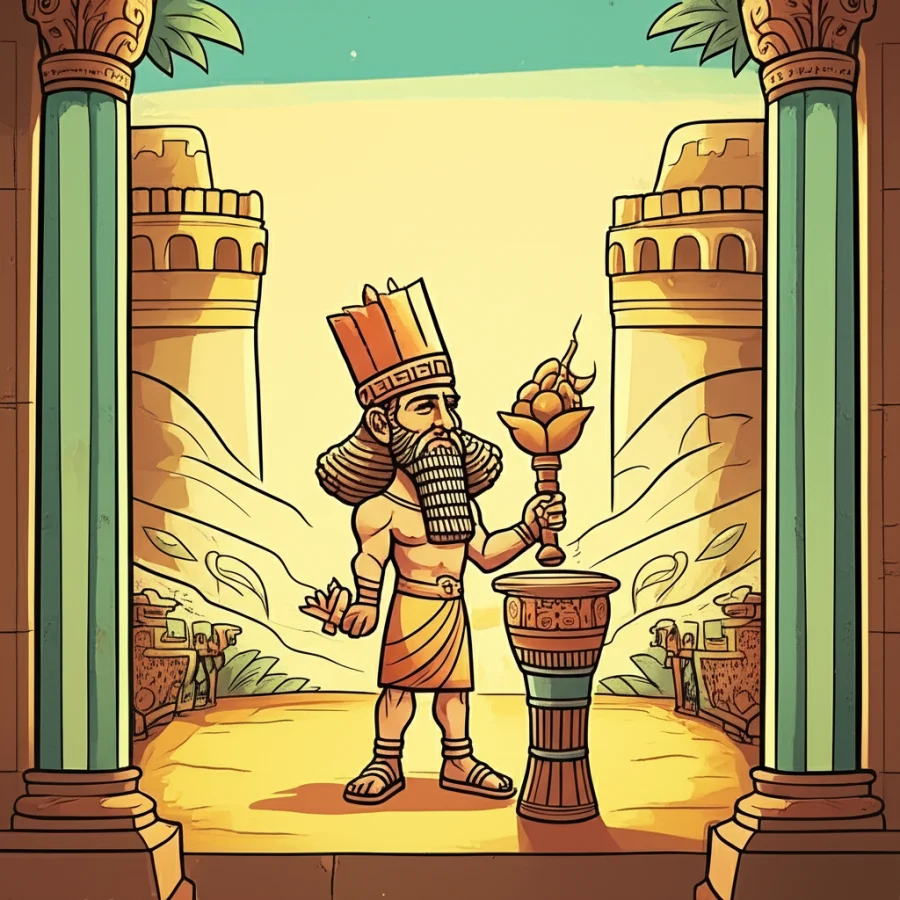
They believed the cosmos was structured with distinct realms: the heavens, the earth, and the gloomy, inescapable Underworld, known as Kur. Life was seen as a cyclical journey, mirroring the changing seasons, the annual floods, and the perpetual rhythm of birth, death, and regeneration. The gods and goddesses were thought to possess both immense power and very human-like emotions, interacting with the mortal world and each other in ways that shaped destiny. Eridu, often considered one of the earliest cities in Sumer, held a special place as a sacred site, home to the temple of Enki, the god of wisdom and water. The very act of storytelling, like the "Songs of Eridu" implied in this myth’s title, was a vital part of their cultural fabric, transmitting knowledge, values, and an understanding of their place in the universe.
3. Character Descriptions: Sovereigns of the Seen and Unseen
At the heart of this ancient drama are two formidable figures, sisters of contrasting realms: Inanna and Ereshkigal.
Inanna, often hailed as the "Queen of Heaven and Earth," was one of the most prominent deities in the Sumerian pantheon. She was a goddess of paradoxical domains: fierce in battle, yet tender in love; a bringer of fertility and abundance, yet also a figure associated with the chaos and passion of war. Symbolically, she was often depicted with the eight-pointed star (representing the planet Venus), riding on the back of a lion, or holding a scepter. Her attributes spoke to her dynamism, her power over life’s vital forces, and her assertive nature. To the Sumerians, Inanna embodied the vibrant, unpredictable energy of life itself, constantly striving, growing, and asserting her will.
Her elder sister, Ereshkigal, ruled the desolate and inescapable Kur, the Sumerian Underworld. Ereshkigal was a somber, unyielding figure, queen of the dead, her realm a place from which no one returned willingly. She was the embodiment of irreversible loss and the stark finality of death. Her symbolic attributes would have been those of darkness, sorrow, and the cold, unchanging law of the grave. Unlike Inanna, whose domain was vibrant and ever-changing, Ereshkigal presided over an immutable, eternal stillness. These two sisters, one of flourishing life and the other of eternal death, represented the fundamental duality of existence as understood by the Sumerians. Other figures, like Inanna’s loyal servant Ninshubur and the demonic gallu of the Underworld, play crucial supporting roles, highlighting themes of loyalty and the inexorable nature of divine decrees.
4. Main Story / Narrative Retelling: The Queen’s Descent
The ancient tablets begin their tale with Inanna, radiant and powerful, setting her heart upon a journey to the Great Below, the realm of her sister, Ereshkigal. Her motives are shrouded in some mystery, sometimes attributed to attending the funeral rites of Ereshkigal’s husband, Gugalanna, the Bull of Heaven, and at other times suggesting a bolder ambition to extend her dominion even over the land of the dead. Whatever her true intent, Inanna meticulously prepares, adorning herself with the seven me—divine decrees and powers that symbolize her authority and essence: the shugurra crown, small lapis measuring rod, lapis necklace, twin lapis beads, gold ring, breastplate of "come, man, come!", and the royal robe.
Before departing, Inanna instructs her faithful vizier, Ninshubur, to mourn her absence for three days and three nights if she does not return, and then to seek aid from the great gods of Sumer: first Enlil, then Nanna, and finally Enki, the clever god of wisdom and water. With these preparations complete, Inanna strides towards the seven gates of the Underworld, knocking imperiously.
At each of the seven gates, Neti, the chief gatekeeper, demands that Inanna surrender one of her garments or ornaments. Despite her protests, citing the "laws of the Great Below," Inanna is stripped of her me one by one. The shugurra crown, the lapis measuring rod, the necklace, the beads, the gold ring, the breastplate, and finally, the royal robe – each symbol of her power and identity is removed, leaving her naked, humbled, and vulnerable.
She finally enters the throne room of Ereshkigal, where her sister, surrounded by the Anunnaki judges of the Underworld, glares at her. With a chilling gaze, the Anunnaki fix their "eye of death" upon Inanna. She is immediately turned into a lifeless corpse, hung upon a hook on the wall, her vibrant energy extinguished in the bleak dominion of death.
Three days and three nights pass, and Ninshubur, true to her mistress’s command, begins her lament. She cries out to Enlil, who dismisses Inanna’s ambition as folly. She turns to Nanna, who also refuses to intervene. Finally, Ninshubur appeals to Enki, the wise god of Eridu, whose heart is moved by Inanna’s plight. With his divine ingenuity, Enki creates two sexless beings from the dirt beneath his fingernails: Kurgarra and Galatur, the lamenter and the mourner. He instructs them to descend to the Underworld and, instead of demanding, to empathize with Ereshkigal’s suffering, echoing her groans of pain.
Following Enki’s counsel, Kurgarra and Galatur enter Ereshkigal’s realm. They find the queen wracked with the pains of childbirth, or perhaps the pains of her desolate domain. By mimicking her suffering, they win her favor. Ereshkigal, appeased, offers them a gift. They ask for Inanna’s corpse, hanging on the hook. She grants their wish. Kurgarra and Galatur sprinkle Inanna with the "food of life" and the "water of life," and the goddess is miraculously revived.
However, the laws of the Underworld are absolute: one cannot leave without providing a substitute. As Inanna ascends, she is accompanied by a host of fearsome gallu demons, who seek to drag someone back in her place. She passes Ninshubur, who is mourning her, and spares her. She passes her sons, Shara and Lulal, also in mourning, and spares them. But when she arrives in Uruk, she finds her beloved husband, Dumuzid, seated on his throne, adorned in fine clothes, conspicuously not mourning her absence. Enraged by his apparent betrayal and lack of grief, Inanna points him out to the gallu.
The demons seize Dumuzid, dragging him towards the Underworld. Dumuzid pleads with the gods, transforming into various animals to escape, but the gallu are relentless. Eventually, his loyal sister, Geshtinanna, offers to take his place for half the year. Thus, the cycle is established: Dumuzid spends half the year in the Underworld, and Geshtinanna the other half, ensuring that the balance of the Great Below is maintained.
5. Symbolism and Meaning: Reflecting Ancient Understandings
For the ancient Sumerians, "The Descent of Inanna" was far more than an entertaining tale; it was a profound narrative imbued with multiple layers of meaning.
Firstly, it powerfully symbolized the seasonal cycles of nature. Inanna’s journey to the Underworld and Dumuzid’s subsequent captivity were deeply connected to the death and rebirth of vegetation, particularly the annual drying up of the land and the return of fertility. Dumuzid, as a shepherd god, was associated with the abundance of flocks and the life-giving pastures. His descent and return with Geshtinanna mirrored the cycle of dormancy and growth that sustained Sumerian agricultural life.
Secondly, the myth underscored the cosmic order and the inevitability of death. Even powerful deities like Inanna were subject to the unyielding laws of the universe, particularly those governing the Underworld. It taught that death was a finality, a realm with its own queen and its own rules, and that balance between life and death had to be maintained.
Thirdly, it explored morality, justice, and the consequences of ambition. Inanna’s initial desire to conquer the Underworld, or at least to enter it with her full powers, led to her downfall. Dumuzid’s apparent indifference to his wife’s fate resulted in his tragic substitution. The story highlighted the importance of loyalty (Ninshubur’s unwavering devotion) and the devastating impact of betrayal.
Finally, the myth offered insights into feminine power and the complexities of grief. Inanna’s journey is a testament to her agency and resilience, even in the face of death. Ereshkigal, though somber, holds absolute power within her domain, asserting a form of feminine authority that complements Inanna’s vibrant energy. The act of lamentation and empathy, demonstrated by Kurgarra and Galatur, is shown to be a potent force, capable of swaying even the most unyielding of queens.
6. Modern Perspective: A Myth for All Times
Today, "The Descent of Inanna" continues to captivate and inform, offering rich material for diverse fields of study and creative expression. In literature and poetry, its themes of loss, transformation, and rebirth resonate deeply, inspiring countless retellings and interpretations that explore the human condition. Its narrative structure, particularly the hero’s journey into an underworld, is a foundational archetype found in many mythologies and has influenced fantasy novels, films, and video games, where characters often undergo symbolic descents to confront their shadows or retrieve lost powers.
In cultural and religious studies, the myth provides invaluable insights into ancient Mesopotamian society, shedding light on their religious practices, gender roles, and understanding of the cosmos. Psychological interpretations, particularly within Jungian analysis, view Inanna’s descent as a metaphor for the individual’s journey into the unconscious, confronting the shadow self (Ereshkigal) to achieve wholeness and integration. Feminist readings often highlight Inanna’s powerful agency and the assertion of female divine authority in both life and death. This ancient story, therefore, remains a vital text for understanding the enduring power of myth to speak across millennia.
7. Conclusion: Echoes of Imagination
"The Descent of Inanna" stands as a magnificent testament to the imaginative spirit of the ancient Sumerians, a vivid and complex narrative that helped them make sense of their world, their place within it, and the grand cycles of life and death. It is a cultural story, not a belief to be adopted or practiced, but a historical and educational artifact that enriches our understanding of human civilization’s earliest thoughts and expressions.
As Muslims, we firmly recognize that only Allah, the One God, is the true Creator and Sustainer of the heavens and the earth, and all that is within them. Our faith teaches us that He alone is sovereign, without partner or peer. This ancient Sumerian myth, like countless others from various cultures, serves as a poignant reminder of humanity’s innate desire to understand the mysteries of existence and to articulate those understandings through the powerful medium of storytelling. It underscores the universal human capacity for imagination, the profound legacy of cultural heritage, and the enduring tradition of weaving narratives that explore the deepest questions of life, loss, and the eternal journey of the soul.