
 fufufafa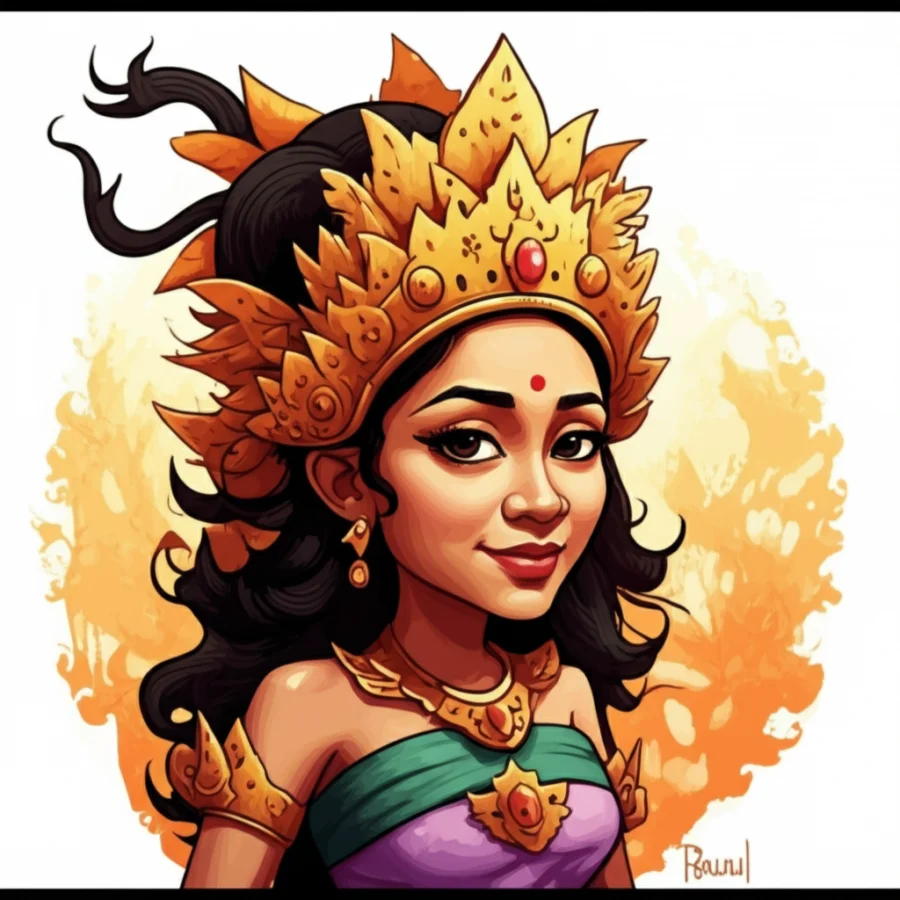
1. Introduction
The vibrant, spiritual island of Bali, nestled within the Indonesian archipelago, is a land rich in ancient traditions and captivating folklore. Among the many tales passed down through generations, one figure stands prominently in the collective cultural memory: Dewi Sri, often revered as the mythological patroness of rice and fertility. This narrative delves into a traditional story, a legend woven by the ancient people of Bali, illustrating their profound connection to the land and the sustenance it provided. It is crucial to understand from the outset that this account is presented purely as a cultural artifact, a traditional story born from the imaginations and observations of ancient societies, and is not to be interpreted as a factual or devotional text.
2. Origins and Cultural Background
The myth of Dewi Sri, and indeed many of Bali’s foundational stories, emerged from an agrarian society deeply reliant on the rhythms of nature. For millennia, the lives of the Balinese people revolved around the cultivation of rice, the staple food that dictated their prosperity, their ceremonies, and their very survival. In an era predating modern scientific understanding, people viewed the world through a lens of interconnectedness between the seen and unseen. The land, the sky, the water, and the very act of growth were perceived as imbued with spiritual essence, governed by forces that could be benevolent or capricious.
This cultural era was characterized by a profound respect for the natural environment, particularly the intricate subak irrigation systems that channeled life-giving water to the terraced rice fields. The cycles of planting, growth, and harvest were not merely agricultural processes but sacred rituals, vital for ensuring the community’s well-being. It was within this context of dependence on the earth’s bounty and the mysterious forces of creation that stories like Dewi Sri’s took root, serving to explain the world, impart wisdom, and foster a sense of gratitude and responsibility towards nature.
3. Character Description: Dewi Sri
Dewi Sri, as depicted in Balinese and Javanese folklore, is a figure of ethereal beauty, grace, and profound benevolence. She is not a creature in the traditional sense, but rather a mythological being, often imagined as a radiant maiden adorned with the colors of the earth and the sky. Her symbolic attributes are deeply intertwined with the prosperity of the land: she is the life-giver, the protector of the rice fields, and the embodiment of fertility. Her presence is believed to ensure abundant harvests, safeguard crops from pests, and bless the people with sustenance.
Symbolically, Dewi Sri represents the very essence of life’s provision. Her image is often associated with the lush green of young rice shoots, the golden hue of mature grains, and the clear, flowing water essential for irrigation. She embodies the nurturing aspect of nature, a gentle yet powerful force that sustains humanity. To the ancient Balinese, she was a personification of the vital energy that transforms a tiny seed into a nourishing meal, a revered symbol of the island’s enduring capacity for life and abundance, rather than a deity to be worshipped.
4. Main Story: The Emerald Veil and the Crown of Bali
Long ago, when the volcanic peaks of Bali still whispered secrets to the clouds and the terraced rice fields shimmered like emerald steps to the heavens, the people lived in harmony with the land. Their prosperity, however, was not always assured. There were seasons of drought, pestilence, and inexplicable blights that threatened to starve the island. It was during one such harrowing period, when the rice stalks withered and the communal spirit waned, that the legend of Dewi Sri and the Crown of Bali began to unfold.
The island had fallen under a shadow. The subak channels, usually teeming with clear water, ran sluggishly. The emerald fields turned brittle and brown. Despair crept into the villages, and the people, in their desperation, sought answers from the wise elders. It was said that the life force of Bali, the very essence of its fertility and prosperity, was embodied not just in the rice itself, but in a sacred artifact, often spoken of as the "Crown of Bali." This was not a literal crown of gold and jewels for a king, but a ceremonial headdress, intricately woven with the finest rice stalks, adorned with river pearls and volcanic obsidian, representing the perfect balance between earth, water, and sky. It was believed to be a conduit for Dewi Sri’s blessings, hidden away in a sacred temple, protected by ancient rites.
As the famine deepened, the Crown of Bali, once vibrant and glowing with an inner light, began to dim. Its rice stalks withered, its pearls lost their luster, and the obsidian appeared dull. A young farmer named Wayan, known for his unwavering dedication to the rice fields and his deep respect for the land, felt a profound calling. He consulted the pemangku, the temple priests, who spoke of ancient prophecies. The Crown, they explained, would only shine again when the spirit of Dewi Sri was honored not just in ritual, but in the hearts and actions of the people. They had become complacent, taking the land’s bounty for granted, forgetting the delicate balance required.
Wayan, guided by an intuition that felt like a gentle breeze, ventured into the highest, most ancient rice terraces, where the water source was said to originate. There, amidst the mist and the ancient banyan trees, he found a hidden spring, its flow choked by neglect and debris. As he tirelessly cleared the blockages, his hands bleeding from the sharp stones, he felt a strange, comforting presence. He saw no form, but perceived a soft, radiant light, and heard a whisper that seemed to echo from the rustling leaves: "The true Crown of Bali is not merely an object, but the living spirit of the rice, tended with love and wisdom."
As Wayan worked, a delicate, glowing emerald veil seemed to shimmer in the air around him, a momentary vision of Dewi Sri’s presence, inspiring him with renewed vigor. He understood then that Dewi Sri’s essence was not distant, but intimately woven into the very fabric of the island’s life. He returned to his village, not with a magical solution, but with a renewed sense of purpose and a message of communal responsibility. He rallied the villagers, not to pray for salvation, but to act. Together, they cleared the subak channels, repaired the terraces, and replanted the fields with a newfound reverence.
Slowly, meticulously, they worked, sharing what little food they had, their spirits rekindled by Wayan’s quiet determination. As the first tiny green shoots emerged from the revitalized soil, a subtle change occurred. The sacred Crown of Bali in the temple began to regain its luster. Its rice stalks unfurled with a renewed vibrancy, its pearls gleamed, and the obsidian pulsed with a soft light. The rains returned, gentle and steady, and the fields, once barren, transformed into a sea of vibrant green.
The people understood that Dewi Sri had not simply granted a miracle; she had reminded them of their duty. The "Crown of Bali" was not just the physical headdress, but the collective effort, the shared wisdom, and the enduring respect for the land that sustained them. It was the harmonious balance between humanity and nature, guarded by the spirit of fertility and abundance, embodied by Dewi Sri.
5. Symbolism and Meaning
This narrative, like many ancient myths, is rich with symbolism. Dewi Sri herself represents the profound dependence of humanity on nature’s bounty, particularly the life-sustaining power of rice. She embodies the cycle of life, death, and rebirth, mirroring the agricultural seasons. The "Crown of Bali" in this story serves as a potent metaphor for the island’s prosperity, its cultural identity, and the delicate balance required to maintain it. Its waning and resurgence symbolize the health of the community and the land—a reflection of human actions and attitudes towards their environment.
The story also emphasizes themes of communal responsibility, wisdom, and the importance of stewardship. Wayan’s actions highlight the idea that blessings are not passively received but are cultivated through diligent effort, respect, and understanding of natural processes. To the ancient Balinese, this myth likely reinforced the sacredness of the subak system, the necessity of collective labor, and the moral imperative to live in harmony with the natural world, understanding that prosperity is a gift requiring constant care and gratitude. It taught them that true wealth lay not in material possessions, but in the vibrant health of their land and the unity of their community.
6. Modern Perspective
Today, the myth of Dewi Sri continues to resonate within Balinese culture, though its interpretation has evolved. While not worshipped as a literal deity in contemporary belief systems, her image remains a powerful cultural icon. She appears in traditional Balinese art, dance, and literature, symbolizing the island’s enduring agricultural heritage and its spiritual connection to the land. Tourists encounter her statues adorning rice fields, not as objects of worship, but as artistic representations of cultural identity and the beauty of Bali’s agrarian landscape.
In modern cultural studies, Dewi Sri is examined as a fascinating example of how ancient societies personified natural forces to explain their world and transmit vital knowledge. Her story is a subject of academic research into folklore, anthropology, and sustainable agricultural practices. Even in contemporary discussions about environmental conservation, the underlying message of respecting nature and ensuring sustainable practices, as embodied by Dewi Sri, finds renewed relevance. She is a reminder of a past where humanity understood its deep interdependence with the environment, a narrative that continues to inspire reverence for Bali’s unique ecological and cultural heritage.
7. Conclusion
The story of Dewi Sri and the Crown of Bali is a beautiful testament to the power of human imagination and the enduring tradition of storytelling. It is a cultural narrative, a window into the worldview of ancient Balinese people, reflecting their aspirations, fears, and profound connection to the land that sustained them. As Muslims, we recognize that only Allah is the true Creator and Sustainer of all life, the sole source of all blessings and provisions. This mythological tale, therefore, stands as a creation of human ingenuity, a cultural legacy to be appreciated for its artistic and historical value. It reminds us of the universal human quest to understand our place in the world and to articulate the wonders of creation through narrative, fostering a deeper appreciation for the rich tapestry of global cultural heritage and the timeless art of storytelling.







