fufufafa
Introduction:
The story of the Bakunawa and the Moon is a traditional legend woven into the rich tapestry of Filipino folklore, particularly among the pre-colonial cultures of the Philippines. It is a tale passed down through generations, told by the ancient people of the islands, a way to explain the mysteries of the natural world and the fearsome power of the elements. This is a story, a narrative crafted from the imaginations of our ancestors, not a factual account or a basis for religious belief. It is a window into their world, their fears, and their attempts to understand the cosmos.
Origins and Cultural Background:
The myth likely originated in the regions of the Philippines where vibrant oral traditions thrived, such as among the Tagalog, Bicolano, and Visayan people. Before the arrival of colonizers, these societies were structured around complex social systems, often centered on barangays (village communities). Life was intrinsically linked to the land and the sea. The cycles of nature – the rising and setting of the sun, the ebb and flow of the tides, the unpredictable eruptions of volcanoes – were deeply intertwined with their daily existence. They looked to the natural world for sustenance, for guidance, and for understanding.
Their worldview was animistic, meaning they believed that spirits inhabited all things: the trees, the rivers, the mountains, and the sky. The gods and goddesses, the spirits and the creatures of the air and sea, were all interwoven into their lives. The natural phenomena that modern science explains with facts and figures, these people explained with stories and legends. These tales served as explanations for eclipses, typhoons, and volcanic eruptions, allowing them to make sense of the world and to impart knowledge and values to their children.
The devastating power of a volcano like Mayon, with its catastrophic eruptions, would have been a profoundly terrifying experience. The destruction, the ashfall that blotted out the sun, the earthquakes that shook the earth – these were forces that demanded an explanation. The Bakunawa myth, as we will see, provided that explanation.
Character / Creature Description:
The Bakunawa is a colossal, serpentine sea dragon, a creature of immense size and power. Descriptions vary across different versions of the myth, but common attributes paint a picture of a fearsome beast. It is often described as having a long, scaled body, resembling a giant snake or dragon. Some accounts give it multiple eyes, glowing with an unearthly light, and a mouth filled with razor-sharp teeth. Others claim it has a body that is iridescent, shimmering with the colors of the sea and the sky. Its most significant attribute is its insatiable hunger, a hunger that drove it to swallow celestial bodies. The Bakunawa is not simply a monster; it is a force of nature, a manifestation of chaos and the raw, untamed power of the elements. It is a symbol of the unknown and the destructive forces that could, at any moment, disrupt the delicate balance of the world.
Main Story / Narrative Retelling:
In the days before the Spanish arrived, when the world was young and the gods still walked among mortals, the moon shone with a brilliance that rivaled the sun. It was a time of prosperity and beauty, a time of peace. But this harmony was threatened by the Bakunawa.
The Bakunawa, a serpentine dragon of immense size, resided in the depths of the ocean. It was a creature of darkness and insatiable hunger. One day, the Bakunawa emerged from the deep and saw the moon, its radiant glow beckoning. Driven by an overwhelming urge, the Bakunawa rose from the ocean and began to pursue the luminous orb across the sky.
The Bakunawa’s attack was not subtle. It lunged, its massive jaws snapping at the moon, and in a terrifying moment, it swallowed it whole. Darkness fell upon the world. Fear gripped the people. The rice crops withered, the animals trembled, and the seas churned with unrest. The elders understood that the balance of the world had been disrupted.
The moon, however, was not easily defeated. The gods, seeing the plight of their people, intervened. They commanded the people to make a great noise to scare away the Bakunawa. They beat drums, chanted, and clashed metal against metal, creating a cacophony that echoed across the land and sea. They lit bonfires and made offerings, hoping to drive the monstrous creature away.
As the noise intensified, the Bakunawa, feeling the vibrations and discomfort, began to regurgitate the moon. In this moment, a great light erupted, casting shadows across the land. The people were overjoyed. But the Bakunawa, still hungry, tried again. It swallowed the moon a second time.
Again, the people retaliated, making even louder noises and chanting with even greater fervor. And again, the Bakunawa was forced to release its celestial prey. This cycle continued, with the Bakunawa repeatedly attempting to devour the moon and the people fiercely defending it with their clamor.
The gods, witnessing the bravery of the people, decided to punish the Bakunawa. Some versions of the myth say that the gods placed the seven stars of the Ursa Major constellation as protection around the moon. Other versions say that the gods sent a guardian to always be with the moon. Still, others say that the Bakunawa was permanently scarred by the moon’s radiance.
The Bakunawa, forever haunted by its failed attempts, retreated back into the ocean depths, forever a reminder of the battle between darkness and light, of chaos and order. It is said that the Bakunawa still tries to devour the moon during eclipses, and that is why the people must make noise during these events, to scare away the creature and protect the moon.
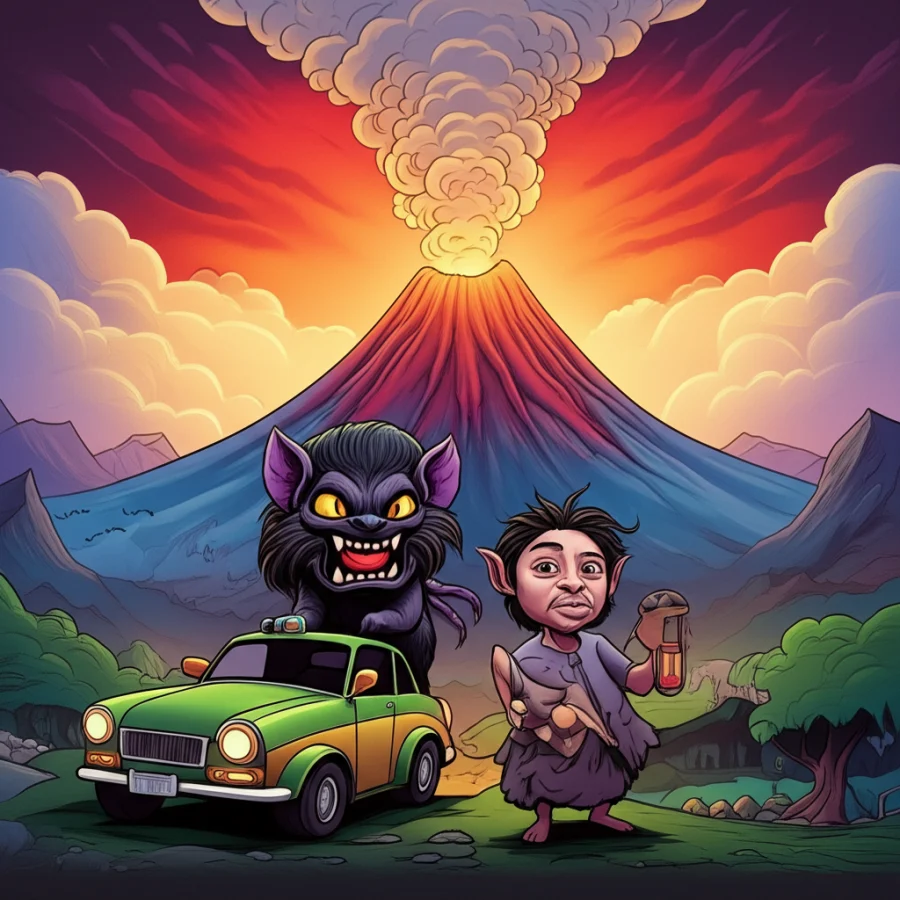
The story became intertwined with the devastating eruptions of Mayon Volcano. The Bakunawa’s insatiable hunger was equated to the volcano’s fiery outbursts, its destructive force a reflection of the volcano’s destructive power. The eruptions, like the Bakunawa’s attacks on the moon, brought darkness and fear, and the attempts to appease the dragon reflected attempts to appease the volcano.
Symbolism and Meaning:
The Bakunawa myth is rich in symbolism. The Bakunawa itself can be seen as representing the forces of chaos, destruction, and the unknown. The moon, on the other hand, symbolizes order, light, and the cycles of life. The story represents a struggle between these opposing forces. The eclipse, when the Bakunawa swallows the moon, represents the temporary triumph of chaos over order, and the fear that comes with it. The people’s actions—their drumming, chanting, and making noise—symbolize their efforts to restore balance, to fight against the forces of darkness and to protect what they hold dear.
The myth might have served as a way for the ancient people to understand the cycles of nature, to explain the inexplicable. It also served as a tool for teaching lessons about morality, courage, and the importance of community. The act of the community coming together to fight against the Bakunawa reflects the value of cooperation and the strength found in unity. The story could also have provided a framework for understanding and accepting the unpredictable nature of life, the inevitable presence of challenges, and the need for resilience in the face of adversity. The story’s relationship to the eruption of Mayon volcano provided a symbolic means of processing the devastation.
Modern Perspective:
Today, the Bakunawa myth continues to resonate within Filipino culture. It is interpreted in various forms, including literature, film, and video games. It has become a symbol of Filipino identity, a reminder of the rich cultural heritage and storytelling traditions of the past. The myth is often used to explore themes of good versus evil, the power of community, and the human relationship with the natural world.
In contemporary interpretations, the Bakunawa can be a figure of power, a symbol of environmental destruction, or a metaphor for the challenges that humanity faces. The myth has also found its way into educational materials, helping to preserve and share the stories of the past with future generations. The legend is also used in visual art and performances, and is used to teach children about their ancestral traditions.
Conclusion:
The story of the Bakunawa and the Moon is a testament to the power of human imagination and the enduring legacy of cultural storytelling. It is a tale that originated from the hearts and minds of the ancient Filipinos, a way to make sense of the world, to address the fears, and to pass on values. It is a part of their history, a narrative that has shaped their identity.
As Muslims, we acknowledge that only Allah, the Most High, is the true Creator and Sustainer of all things. We are grateful for the beauty of our heritage, and we recognize the importance of respecting and learning from the stories of our ancestors. These stories, though rooted in a different worldview, offer us valuable insights into the human condition and the power of narrative. May we continue to appreciate and share these cultural treasures, remembering that the true source of all creation and power rests solely with Allah. The story of the Bakunawa serves as a reminder of the power of imagination and the importance of preserving the stories that connect us to our past.