fufufafa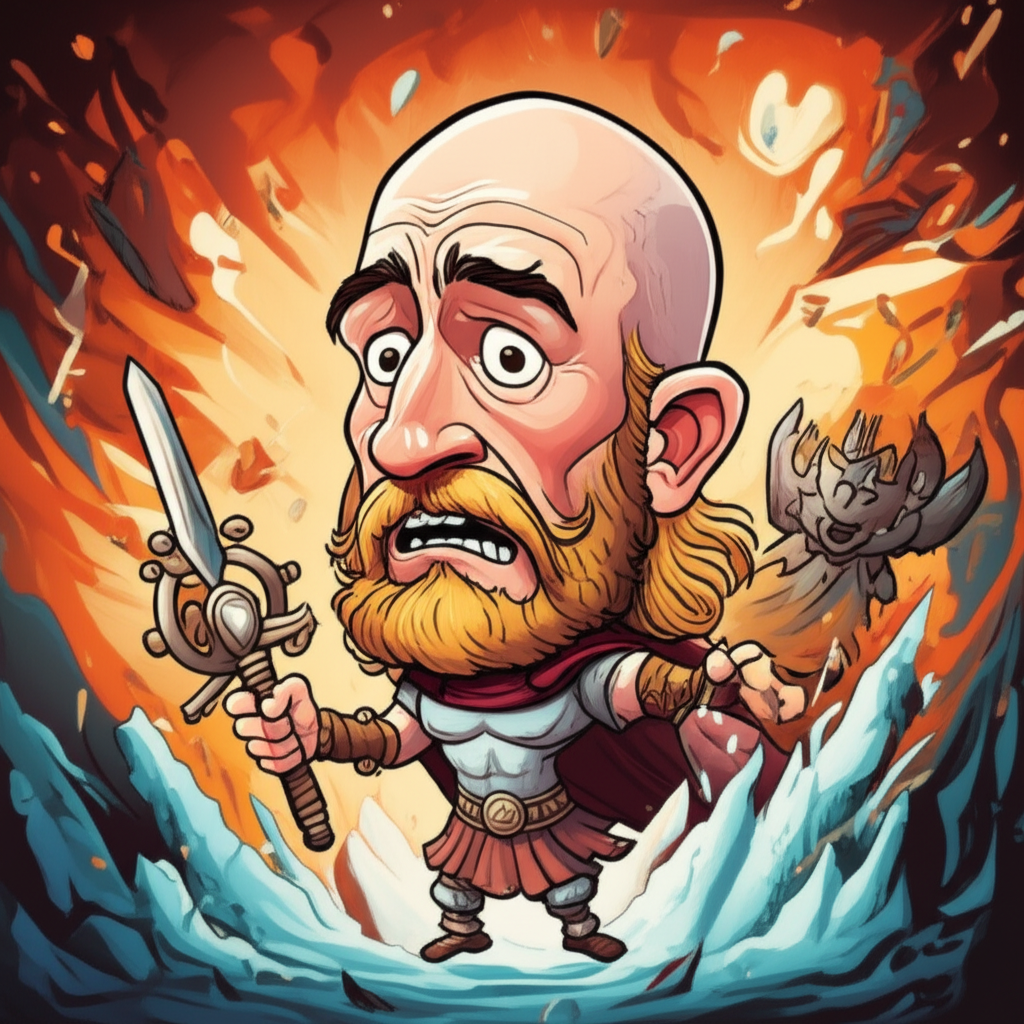
Introduction:
The story of Baldr, the radiant god of light and innocence, and his tragic demise at the hands of fate, is a cornerstone of Norse mythology. This tale, a tapestry woven from the threads of ancient Germanic and Scandinavian cultures, offers a glimpse into the worldview of a people who gazed upon a world teeming with gods, giants, and the ever-present shadow of destiny. This is a traditional story, a product of human imagination and storytelling passed down through generations. It is not a historical account, nor is it meant to be considered a religious truth. Instead, it serves as a window into the beliefs, fears, and hopes of the Norse people.
Origins and Cultural Background:
The Norse myths, including the story of Baldr and Ragnarök (the twilight of the gods), originated in the Viking Age (roughly 8th to 11th centuries CE) and the preceding Germanic Iron Age. This was a time of intense social and political upheaval. The harsh Scandinavian environment, marked by long winters, vast forests, and turbulent seas, shaped the Norse worldview. Survival depended on strength, skill, and a deep understanding of the natural world. This environment fostered a culture of exploration, raiding, and trade, leading to encounters with other cultures and the spread of their stories.
The Norse people viewed the world as a complex cosmos, a vast tree called Yggdrasil, whose branches supported nine realms. These realms were populated by various beings: the Aesir and Vanir, the two tribes of gods; the giants, primal forces of chaos; the elves, beings of light and beauty; and humans, dwelling in Midgard, the middle realm. Fate, a powerful and unyielding force, dictated the course of events, even for the gods themselves. Life was seen as a struggle, and death was an inevitable part of the cycle. Courage in the face of adversity, loyalty to one’s kin, and the pursuit of glory were highly valued. They sought understanding of the world, not through abstract philosophical inquiries, but through stories, poems, and practical observations.
Character/Creature Description: Baldr, the Shining God
Baldr, the most beloved of the Aesir gods, was a figure of unparalleled beauty, radiance, and purity. He was the son of Odin, the Allfather, and Frigg, the goddess of love, marriage, and motherhood. Baldr’s very name, derived from the Old Norse word "baldr," means "brave" or "bold," yet he was often depicted as gentle and wise. He possessed a golden skin that radiated light, and his presence brought joy and peace to all who knew him. He was associated with light, innocence, and summer, embodying the promise of renewal and life. He lived in the resplendent hall of Breidablik, a place of unparalleled beauty and serenity. Baldr was the epitome of goodness, the embodiment of everything that was pure and untainted. His gentle nature and wise counsel made him beloved by all, except, perhaps, the forces of chaos that sought to corrupt the world.
Main Story/Narrative Retelling:
The seeds of tragedy were sown when Baldr began to suffer from terrible nightmares. He dreamt of his own death, a premonition that cast a shadow over Asgard, the home of the gods. Frigg, deeply distressed by her son’s dreams, embarked on a perilous journey, traveling throughout the nine realms and extracting an oath from every object, creature, and element – from the stones and trees to the diseases and poisons – that they would never harm Baldr.
The gods, reassured by Frigg’s efforts, began to play games with Baldr, using him as a target. They would throw weapons at him, arrows, swords, and stones, but none could pierce his golden skin. It seemed as though Baldr was invulnerable. But Loki, the trickster god, a master of deceit and chaos, was consumed by envy and malice. He disguised himself as an old woman and visited Frigg, seeking information. He learned that Frigg had overlooked one seemingly insignificant thing: a sprig of mistletoe, which she deemed too young and harmless to pose a threat.
Loki, seizing his opportunity, fashioned an arrow from the mistletoe. He then sought out Hodr, Baldr’s blind brother, and offered him the arrow, guiding his hand to aim it at Baldr. Hodr, unaware of Loki’s treachery, shot the arrow. It pierced Baldr’s heart.
The death of Baldr plunged Asgard into mourning. The light of the world dimmed. The gods, overwhelmed with grief, attempted to bring Baldr back from the realm of the dead, Hel, ruled by the goddess of the same name. They sent Hermóðr, Odin’s son, to negotiate with Hel. Hermóðr rode for nine nights and nine days to reach Hel’s halls. He pleaded with her to release Baldr. Hel agreed, but only if all things in the world wept for him.
The gods sent messengers to spread the word. Everything did weep: the trees, the rocks, the creatures, and the elements. However, one giantess, disguised as the witch Þökk, refused to weep. This was, of course, Loki in disguise. Because of this refusal, Baldr was forced to remain in Hel, and the prophecy of Ragnarök drew ever closer.
The death of Baldr was the first great sign that the end was near. It was a catalyst that set the events of Ragnarök in motion, the final battle that would see the gods clash with the forces of chaos, the giants, and the monsters that would bring the world as they knew it to an end.
Symbolism and Meaning:
The story of Baldr is rich with symbolism. Baldr’s purity and radiance represent the sun, light, and the cyclical nature of life. His death can be interpreted as the death of summer, the fading of the light, and the approach of winter. The mistletoe, an unassuming plant used for the arrow, symbolizes the hidden dangers and the insidious nature of evil. Loki, the trickster, represents chaos and the destructive forces that undermine order. The inability to bring Baldr back from Hel reflects the Norse belief in the inevitability of death and the limitations of even the gods’ power. The story speaks of betrayal, innocence lost, and the struggle against fate. The refusal to weep for Baldr represents the resistance to compassion, the rejection of empathy, and the ultimate victory of darkness over light, for a time.
Modern Perspective:
The story of Baldr and Ragnarök continues to resonate in modern culture. Baldr’s tale has been reinterpreted in countless novels, films, video games, and works of art. He often appears as a tragic hero, a symbol of innocence corrupted by the forces of darkness. Ragnarök has become a popular theme in fantasy and science fiction, representing a cataclysmic end and the potential for rebirth. The themes of betrayal, loss, and the struggle against fate remain universally relatable. These stories remind us of the beauty and power of storytelling and the enduring appeal of the human imagination.
Conclusion:
The saga of Baldr is a powerful narrative, a testament to the storytelling prowess of the Norse people. It is a cultural artifact, a window into a world shaped by harsh landscapes, complex beliefs, and a profound understanding of the cyclical nature of life and death. We must remember that this is a story, a creation of human imagination. As Muslims, we acknowledge that only Allah is the true Creator and Sustainer, the ultimate source of all being and power. This story serves as a reminder of our shared human history and the rich tapestry of cultural heritage that has shaped our world. It encourages us to appreciate the power of imagination and the enduring appeal of storytelling, while always grounding ourselves in the belief in the One God.