fufufafa
Introduction:
The story of the Bakunawa and the Forest of Shadows originates from the rich tapestry of Filipino mythology, a collection of tales woven by the ancient peoples of the Philippine archipelago. This is not a story of proven events, but rather a traditional narrative, a whispered echo from generations past. It is a glimpse into the worldview of those who lived long before us, a testament to their imagination and their connection to the world around them. This story, like many others, served to explain the inexplicable, to navigate the anxieties of life, and to weave a cultural identity. It is a story to be understood, not to be taken as truth, a window into a different way of seeing the world.
Origins and Cultural Background:
The Bakunawa myth flourished during a time when animism was deeply ingrained in the lives of the early Filipinos. This was a society largely agrarian, deeply intertwined with the natural world. The rhythms of the sun, the moon, the tides, and the seasons dictated their lives. They lived in small, independent barangays (villages), each often governed by a datu (chief) and guided by the wisdom of the babaylan (spiritual leader). Their world was populated not only by humans, but also by spirits, deities, and mythical creatures that inhabited the forests, the mountains, the seas, and the sky.
Their cosmology, their understanding of the universe, was based on observation and interpretation of nature. The sun and moon were celestial bodies of immense importance, crucial for agriculture and navigation. Eclipses, when these luminaries disappeared, were not understood through scientific principles, but as moments of great fear and uncertainty. They represented chaos, a disruption of the natural order, and the potential for malevolent forces to gain power. The Bakunawa myth emerged from this environment, a reflection of their anxieties about these celestial events and their understanding of the unseen forces that shaped their lives.
Character / Creature Description:
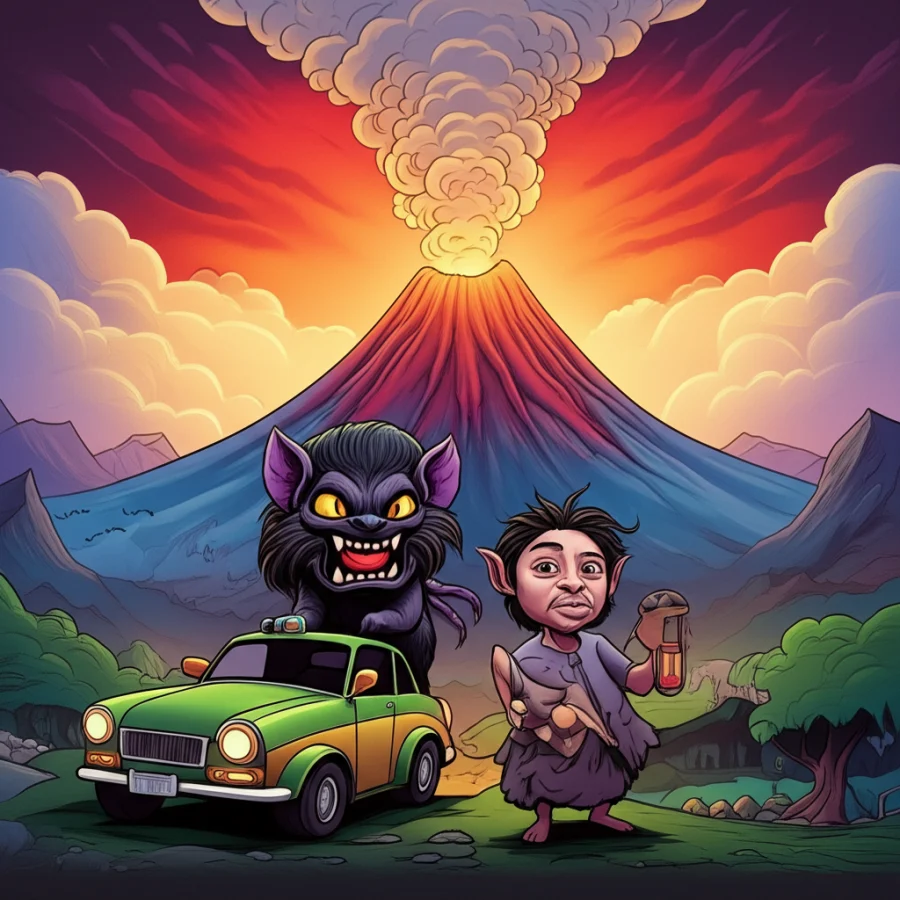
At the heart of the story lies the Bakunawa, a serpentine dragon-like creature of immense power and insatiable hunger. Descriptions vary across different regions and versions of the myth, but the Bakunawa is often depicted as a colossal being, larger than the largest mountain. It is said to have scales that shimmer like the night sky, and eyes that glow with an unearthly light. Its body is long and sinuous, capable of wrapping around the earth and sky. Some accounts depict it with multiple mouths, or even with a multitude of eyes that can see in all directions.
The Bakunawa is not simply a monster; it is a symbolic representation of several powerful forces. It represents the destructive power of chaos and darkness, the forces that threaten to engulf the world in nothingness. It is also often associated with the sea and the moon, reflecting the power of the tides and the cyclical nature of the world. Its insatiable hunger symbolizes greed and the constant threat of imbalance. The creature’s existence serves as a reminder of the fragility of the world and the importance of maintaining harmony and order. The Bakunawa is not to be worshipped, but understood as a representation of the dangers and anxieties of a world perceived as filled with powerful and unpredictable forces.
Main Story / Narrative Retelling:
Long ago, before the world as we know it, the moon shone with a brilliant, unwavering light. It was a treasure to the people, guiding their nights and nourishing the crops with its gentle radiance. But this beauty and peace angered the Bakunawa, a colossal serpent that dwelled within the Forest of Shadows, a place of perpetual twilight and hidden dangers.
The Bakunawa, driven by its insatiable hunger, coveted the moon’s light and sought to devour it. It slithered out from its shadowy realm, its massive form eclipsing the stars. It rose into the sky, its jaws gaping wide, intent on swallowing the celestial sphere whole.
As the Bakunawa attacked, the people of the land were thrown into a state of terror. The world plunged into darkness. Frightened, they sought guidance from their babaylans, who knew the secrets of the spirit world. The babaylans, understanding the threat, knew they had to act quickly.
The people, following the babaylans’ instructions, took up their drums and gongs. They beat them with all their might, creating a deafening clamor that echoed across the land. They lit bonfires, hoping to scare away the beast. Some even chanted prayers, beseeching the gods to protect the moon.
The noise and the flames, though seemingly insignificant against the monstrous Bakunawa, began to have an effect. The serpent, startled by the sudden onslaught of sound, faltered in its attack. It was distracted, its focus momentarily broken.
But the Bakunawa was relentless. It continued its attempts, determined to consume the moon. Each time, the people responded with greater force, beating their drums louder, lighting more bonfires, and chanting with increasing fervor.
The battle raged for what felt like an eternity. Sometimes, the Bakunawa would succeed in swallowing a portion of the moon, causing an eclipse. But always, the people would rally, their efforts eventually forcing the creature to retreat, releasing the moon back into the sky.
This struggle, this battle between the Bakunawa and the people, became a cyclical event. The moon, threatened but never fully devoured, would wax and wane. The people, forever vigilant, continued their tradition of drumming and making noise whenever the Bakunawa appeared, driving it away. This act became a ritual, a reminder of the fragility of the world and the importance of unity in the face of adversity. The Forest of Shadows, the creature’s domain, remained a place of mystery, a constant reminder of the darkness that lurked just beyond the edges of the known world.
Symbolism and Meaning:
The story of the Bakunawa and the Forest of Shadows is rich with symbolic meaning. The Bakunawa itself represents the forces of chaos, darkness, and destruction, the dangers that threaten to overwhelm order and harmony. The moon represents beauty, light, and the cyclical nature of life. The people’s actions – the drumming, the bonfires, the prayers – symbolize their resilience, their courage, and their collective efforts to fight against adversity.
The story highlights the importance of community and unity. The people’s survival depended on their ability to work together, to support one another in the face of danger. It also reflects the ancient Filipinos’ understanding of the world as a delicate balance, constantly threatened by forces beyond their control. The story serves as a reminder to be vigilant, to be prepared, and to never lose hope, even in the darkest of times. The Forest of Shadows represents the unknown, the hidden dangers that exist just beyond the visible world, a constant reminder of the power of the unseen.
Modern Perspective:
Today, the Bakunawa myth continues to resonate in various forms. It’s often found in modern literature, particularly fantasy and science fiction, as a powerful symbol of primal fears and cosmic threats. The Bakunawa might be re-imagined as a monstrous antagonist in a video game or as a source of inspiration for art and design. The story is also explored in academic studies of Filipino culture, providing insights into the beliefs and values of the ancient Filipinos. It’s a key element in understanding Philippine folklore and history. The cyclical nature of the conflict, the fight against a powerful force that never truly disappears, offers a powerful narrative that continues to capture the imagination.
Conclusion:
The tale of the Bakunawa and the Forest of Shadows is a valuable cultural artifact, a story passed down through generations. It is a testament to the imagination, the anxieties, and the values of the ancient Filipino people. It is important to remember that this is a story, a product of human creativity, and not a belief system. As Muslims, we acknowledge that only Allah is the true Creator and Sustainer of all things. We are guided by the Quran and the teachings of the Prophet Muhammad (peace be upon him).
This myth is a reminder of the importance of cultural heritage, of the power of storytelling, and of the enduring human fascination with the unknown. It is a story to be learned from, to be appreciated, and to be shared, allowing us to connect with the past and appreciate the richness and diversity of the human experience. It is a window into a world shaped by wonder, fear, and the enduring human spirit.