fufufafa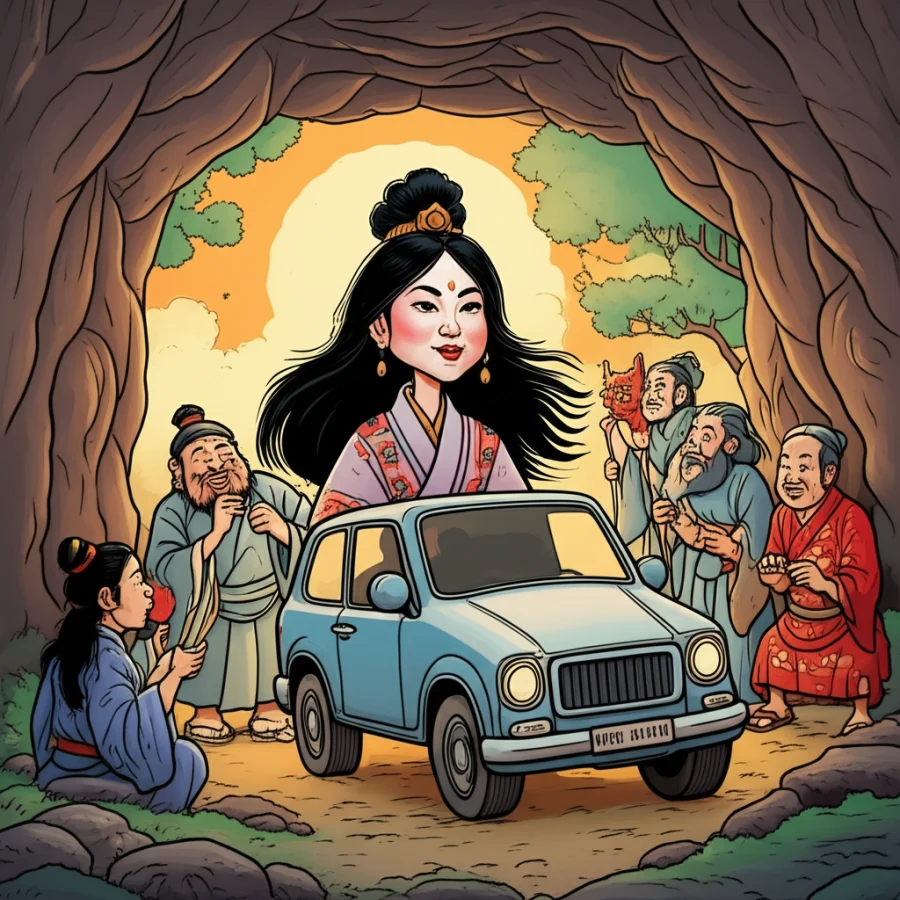
The sun, a blazing orb of life and warmth, is something humanity has revered and feared since the dawn of consciousness. Across cultures, myths have sprung up to explain its journey across the sky, its power, and its occasional absence. One such story, originating from the ancient Shinto traditions of Japan, tells of Amaterasu Omikami, the sun goddess, and her self-imposed exile in a dark cave, a tale deeply intertwined with the origins and significance of Ise Grand Shrine. This is a traditional story, passed down through generations, a glimpse into the worldview of ancient Japanese society.
Origins and Cultural Background:
To understand the story of Amaterasu, we must journey back to the Yayoi period (approximately 300 BCE to 300 CE) and the subsequent Kofun period (approximately 300 CE to 538 CE) in Japan. These eras saw the development of settled agricultural societies, the rise of clan-based power structures, and the nascent formation of Shinto, a belief system centered on the veneration of kami, spirits inhabiting natural phenomena and ancestral figures.
The people of this time lived in close proximity to the natural world. Their lives were dictated by the rhythms of the seasons, the success of their harvests, and the forces of nature, which they attributed to the kami. This belief system was deeply intertwined with their daily lives, shaping their rituals, social structures, and understanding of the cosmos. The world was seen as interconnected, with humans, nature, and the spirits existing in a delicate balance. Disruptions to this balance, such as natural disasters or societal conflict, were often attributed to the displeasure of the kami. Myths like the one of Amaterasu served not only to explain natural phenomena but also to reinforce social values, ethical behavior, and the importance of harmony within the community.
Character Description: Amaterasu Omikami:
Amaterasu Omikami, the sun goddess, is a central figure in Shinto mythology. She is described as a radiant and benevolent deity, the ruler of the heavens, and the ancestor of the Japanese Imperial family. Depictions often portray her as a beautiful woman adorned in flowing robes, emanating light and warmth.
Symbolically, Amaterasu represents the sun itself, the source of life, light, and order in the world. Her presence ensures the growth of crops, the well-being of the people, and the proper functioning of the cosmos. Her absence, on the other hand, signifies darkness, chaos, and the potential for societal breakdown. The story of her retreat into the cave highlights the vital role of the sun in maintaining harmony and the consequences of its absence. While she is portrayed as powerful and divine, it is important to remember that this is a figure within a mythological framework, representing concepts and values rather than a literal, tangible being.
Main Story: The Narrative Retelling:
In the celestial realm, high above the mortal world, lived Amaterasu Omikami, the radiant sun goddess. Her light bathed the earth in warmth, nurturing life and ensuring the prosperity of all. Her younger brother, Susanoo-no-Mikoto, the storm god, was a volatile and often destructive force. He was known for his wild temper and disregard for order.
One day, Susanoo, in a fit of rage, unleashed a series of chaotic acts. He destroyed Amaterasu’s rice fields, polluted her sacred weaving hall, and even flung a flayed pony at her looms, killing one of her attendants. Grief-stricken and horrified by her brother’s actions, Amaterasu retreated into Ama-no-Iwato, the Heavenly Rock Cave.
As the great stone door slammed shut, plunging the world into utter darkness. The sun vanished, crops withered, and the land fell into a state of chaos and despair. The other kami were distraught. They knew that without Amaterasu’s light, the world would perish.
The kami gathered outside the cave, desperately trying to coax Amaterasu out. They held a grand festival, hoping to pique her curiosity. Ame-no-Uzume, the goddess of dawn and revelry, performed a provocative and hilarious dance, causing the other kami to erupt in uproarious laughter.
Intrigued by the commotion, Amaterasu peeked out from behind the rock door. "Why is there so much merriment when the world is plunged into darkness?" she asked.
The kami replied, "We have found a goddess even more radiant than you, Amaterasu-sama!"
As she stepped further out of the cave, another kami held up a mirror, reflecting Amaterasu’s own radiant image back at her. Stunned by the brilliance, she was drawn completely out of the cave. At that moment, another kami quickly sealed the entrance, preventing her from retreating again.
With Amaterasu’s return, light flooded the world once more, restoring balance and harmony. The crops began to grow, the land flourished, and the people rejoiced. This event, according to the myth, led to the establishment of Ise Grand Shrine, a sacred place dedicated to the worship of Amaterasu Omikami, where she is believed to reside and continue to watch over Japan.
Symbolism and Meaning:
The myth of Amaterasu’s cave is rich in symbolism. The story can be interpreted as an allegory for the cyclical nature of light and darkness, the changing seasons, and the constant struggle between order and chaos. Amaterasu’s retreat into the cave represents periods of hardship, darkness, and societal disruption. Susanoo’s actions symbolize destructive forces, both natural and human-caused, that can threaten the well-being of the community.
The kami‘s efforts to bring Amaterasu back represent the importance of collective action, perseverance, and the power of laughter and celebration in overcoming adversity. The mirror symbolizes self-reflection and the recognition of one’s own inner light and potential. The establishment of Ise Grand Shrine signifies the importance of veneration and maintaining a connection with the divine in order to ensure continued prosperity and harmony. For the people of ancient Japan, this story likely served as a reminder of the importance of social order, respect for authority, and the need to maintain balance in all aspects of life.
Modern Perspective:
The myth of Amaterasu’s cave continues to resonate in modern Japanese culture and beyond. It appears in various forms of media, including literature, anime, manga, video games, and films. The story is often used as a source of inspiration for creative works that explore themes of light and darkness, good versus evil, and the power of resilience.
In cultural studies, the myth is analyzed as a reflection of ancient Japanese beliefs, social structures, and values. It provides insights into the role of women in early Japanese society, the importance of agriculture, and the relationship between humans and the natural world. The myth also serves as a reminder of the enduring power of storytelling in shaping cultural identity and transmitting values across generations.
Conclusion:
The tale of Amaterasu’s cave and the prophecy of Ise Grand Shrine is a captivating story from the Shinto tradition, offering a glimpse into the worldview of ancient Japanese society. It is a testament to the power of myth to explain natural phenomena, reinforce social values, and inspire artistic expression.
As Muslims, we understand that this is a cultural narrative, a product of human imagination and storytelling, not a statement of religious truth. We recognize that only Allah is the true Creator and Sustainer of the universe, the source of all light and guidance. This story, however, allows us to reflect on the rich cultural heritage of Japan, the power of human imagination, and the enduring tradition of storytelling that connects us to our past. It is a window into understanding how different societies have attempted to make sense of the world around them, reminding us of the diversity and beauty of human culture.