fufufafa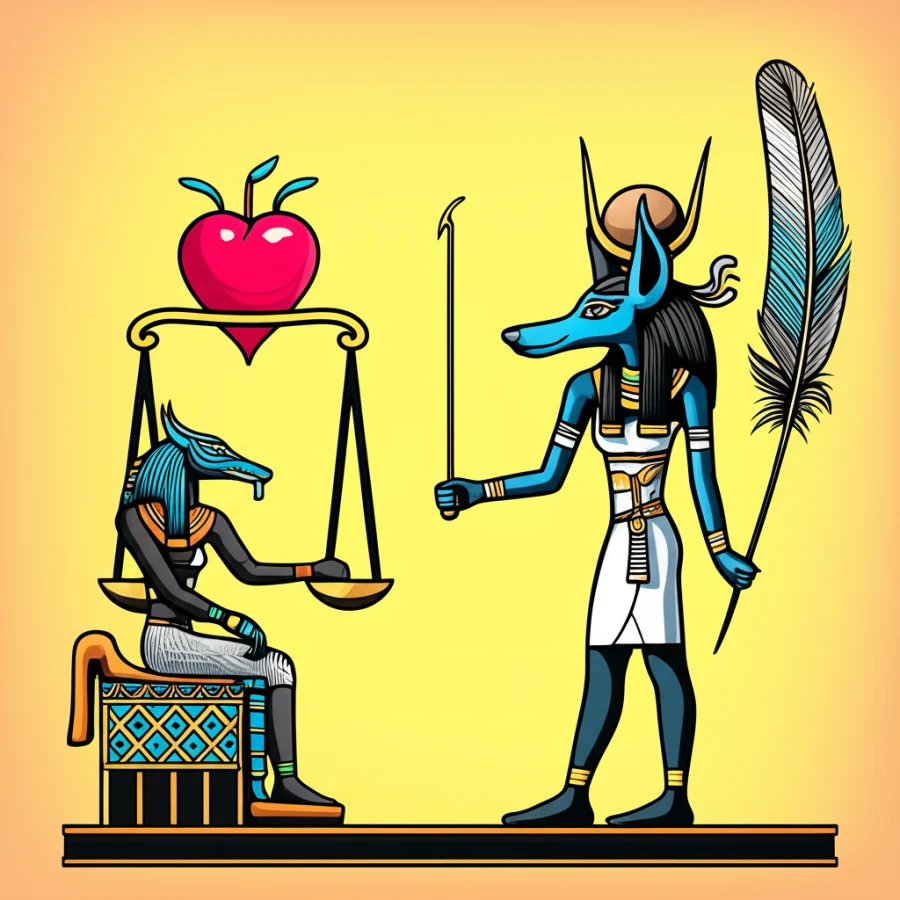
The tapestry of human history is richly woven with tales that sought to explain the inexplicable, to imbue the natural world with meaning, and to grapple with the profound questions of existence. Among the most vibrant of these narrative traditions are the myths of Ancient Egypt, a civilization whose legacy continues to fascinate and enlighten us. This article delves into one such powerful narrative, focusing on the formidable goddess Sekhmet and the underlying theme of divine judgment often associated with the "Weighing of the Heart" – a traditional story told by an ancient people, presented here for cultural, historical, and educational understanding, and not as a belief to be adopted or practiced.
Origins and Cultural Background
Ancient Egypt, a civilization that flourished along the fertile banks of the Nile River for over three millennia, was a society deeply immersed in religious belief and cosmic order. Its people viewed the world as a dynamic interplay of divine forces, where gods and goddesses personified natural phenomena, human emotions, and abstract concepts. The Nile’s annual inundation, bringing life and sustenance, shaped their worldview, fostering a cyclical understanding of existence: birth, death, and rebirth.
In this era, roughly from 3100 BCE to 30 BCE, the Egyptians lived in a world where the sun’s scorching heat could bring both life-giving warmth and destructive drought. They sought to understand and appease these powerful forces through elaborate rituals, temples, and stories. Their society was highly structured, led by a divine pharaoh who acted as an intermediary between humanity and the gods, ensuring the cosmic balance known as Ma’at (truth, justice, order). Myths served not merely as entertainment but as foundational narratives that explained their origins, justified their social structures, guided their morality, and offered solace in the face of life’s mysteries, particularly death and the afterlife. It is within this rich cultural tapestry that the myth of Sekhmet’s wrath and the concept of divine judgment, epitomized by the Weighing of the Heart, found its profound significance.
Sekhmet: The Powerful Lioness
At the heart of our narrative stands Sekhmet, a figure of immense power and complex symbolism in the Ancient Egyptian pantheon. She is typically depicted as a lioness-headed woman, often crowned with the solar disk and the uraeus (cobra), symbolizing her connection to the sun god Ra and her royal authority. Sekhmet’s name itself means "The Powerful One" or "She Who Is Mighty," and her attributes reflect this might.
Symbolically, Sekhmet embodies both the destructive and protective aspects of the sun. She is the goddess of war, pestilence, and disease, unleashing her fiery wrath upon the enemies of Ra and those who transgress against Ma’at. Her breath was believed to be the hot desert winds, and her fierce eyes the scorching midday sun. Yet, paradoxically, she was also revered as a goddess of healing and medicine, with priests often serving as physicians. This dual nature highlights a core Egyptian belief: that the same force that brings destruction can also bring healing and protection, much like the sun itself. She was not merely a bringer of chaos but a purifier, a divine instrument of justice who cleansed the world of impurities, albeit through terrifying means.
The Divine Retribution: Sekhmet and the Destruction of Mankind
The central myth concerning Sekhmet’s most dramatic intervention is often referred to as "The Destruction of Mankind" or "The Drunkenness of Sekhmet." This immersive narrative begins in a time when the venerable sun god Ra, having grown old, sat upon his throne, observing the world he had created. He noticed a disquieting trend: humanity, his beloved creation, had grown arrogant and rebellious. They mocked him, whispered seditious words, and began to turn away from the path of Ma’at. Ra’s heart was troubled, and he decided that a divine reckoning was necessary to restore order.
Summoning a council of the elder gods – including Nun, the primordial ocean; Thoth, the god of wisdom; and Osiris, the lord of the underworld – Ra sought their counsel. It was decreed that humanity must be punished for their insolence. Ra then dispatched his Eye, a powerful feminine aspect of himself, usually identified with Hathor, the gentle goddess of love, music, and joy. But when Hathor descended to Earth with the intent of divine retribution, her form began to transform. The gentle cow-headed goddess of pleasure morphed into the terrifying, lioness-headed Sekhmet, embodying the fiercest aspect of divine wrath.
Sekhmet’s rage was absolute and unyielding. She began her bloody rampage, tearing through the rebellious human populace, her eyes burning with the fire of the sun. The desert sands ran red with the blood of the unrighteous, and Sekhmet, intoxicated by the carnage, found grim satisfaction in her task. She reveled in the destruction, her bloodlust growing with each fallen foe. As days turned into nights, her fury showed no signs of abating. She was not merely punishing; she was cleansing, purging the world of its perceived impurities.
However, Ra, witnessing the extent of his chosen instrument’s devastation, began to feel a pang of regret. He had intended to teach humanity a lesson, to restore balance, but Sekhmet’s fury threatened to annihilate all of mankind, leaving the world barren and empty. The creation he had once cherished was on the brink of complete eradication. Ra knew he had to intervene, for even divine wrath, unchecked, could unravel the very fabric of existence.
With urgency, Ra devised a clever plan. He commanded his messengers to gather 7,000 jars of beer. To this beer, he added red ochre or hematite, dyeing the vast quantity of liquid a deep, blood-like crimson. This mixture was then poured across the fields and valleys where Sekhmet was expected to continue her destructive path. When Sekhmet, still burning with unquenched bloodlust, came upon the vast, red lake, she mistook it for the blood of humanity. Eagerly, she began to drink, and drink, and drink. The intoxicating beer soon took hold, and the mighty Sekhmet, her rampage abruptly halted, fell into a deep, peaceful slumber.
When she awoke, the bloodlust had vanished, replaced by a gentle calm. The fierce lioness had reverted to her more benevolent aspect, Hathor, and humanity, though significantly diminished, was saved from total annihilation. Ra, in his wisdom, had managed to temper his own wrath and restore balance, preserving a remnant of mankind. This myth thus concludes with the understanding that even divine retribution has its limits and that mercy can triumph over destruction.
Symbolism and Meaning
To the Ancient Egyptians, the myth of Sekhmet’s destruction of mankind was laden with profound symbolism. It explained the dual nature of the sun – its life-giving warmth and its potential for scorching devastation. Sekhmet’s transformation from Hathor underscored the idea that even the most benevolent forces could turn destructive when angered, and vice-versa, demonstrating the cyclical nature of cosmic power.
The story reinforced the paramount importance of Ma’at, the cosmic order. Humanity’s rebellion against Ra was a transgression against Ma’at, necessitating divine intervention. Sekhmet’s wrath served as a powerful deterrent, a reminder of the dire consequences of impiety and moral imbalance. Ra’s eventual intervention to save humanity also highlighted the divine attribute of mercy and the ultimate desire for balance, even after a period of intense retribution.
While the narrative of Sekhmet’s rampage is distinct from the formal "Weighing of the Heart" ritual in the afterlife, both concepts are deeply intertwined in the broader Egyptian understanding of divine judgment and justice. The Weighing of the Heart, depicted in funerary texts like the Book of the Dead, was the ultimate test in the Hall of Two Truths. Here, the heart of the deceased, believed to be the seat of intellect and morality, was weighed against the feather of Ma’at by Anubis, with Thoth recording the verdict. A heart found heavy with sin would be devoured by Ammit, the "Devourer of the Dead," while a heart in balance would grant eternal bliss in the Field of Reeds. Sekhmet’s "war" was a collective, immediate judgment by Ra on the living, a visceral manifestation of divine consequence for collective misdeeds. The Weighing of the Heart was an individual judgment in the afterlife, a final moral accounting. Both illustrate the profound Egyptian preoccupation with morality, justice, and the inescapable consequences, whether immediate or eternal, of one’s actions in the eyes of the divine. Sekhmet’s wrath was the earthly echo of the cosmic scales of Ma’at.
Modern Perspective
Today, the myth of Sekhmet and the underlying themes of divine judgment continue to resonate in various forms. In literature, Sekhmet often appears as an archetype of fierce, uncompromising power, a figure of both terror and reverence. She, and other Egyptian deities, frequently feature in fantasy novels, comic books, and role-playing games, where their complex mythologies provide rich source material for compelling characters and narratives. Movies and television series, particularly those exploring ancient civilizations or supernatural themes, occasionally draw upon the dramatic imagery of Sekhmet’s destructive power. For instance, the general awe and fear of ancient deities in adventure films often carry echoes of such powerful myths.
Academically, these myths are invaluable for cultural studies, religious studies, and comparative mythology, offering insights into ancient psychology, social structures, and theological developments. Scholars analyze these stories to understand how ancient societies grappled with morality, divine authority, and the human condition. They serve as a testament to the enduring human imagination and our universal quest to find meaning and order in a complex world.
Conclusion
The story of Sekhmet and the divine reckoning of humanity is a powerful testament to the vibrant cultural heritage of Ancient Egypt. It is a traditional narrative, crafted by ancient people to explain their world, their gods, and the moral principles they held dear. It is crucial to re-emphasize that this is a cultural story, not a belief system to be adopted or practiced. As Muslims, we recognize that only Allah is the true Creator and Sustainer of the universe, the One who holds all power and wisdom, and to whom all worship and devotion are due.
Yet, as we reflect on such tales, we acknowledge the profound human capacity for imagination and storytelling. These myths, while not reflecting divine truth, offer a window into the minds of those who came before us, allowing us to appreciate the diversity of human thought and the enduring tradition of narrative as a means of understanding ourselves and our place in the vast tapestry of existence. They remind us of the universal human quest for meaning, justice, and the delicate balance between destruction and preservation, themes that continue to resonate across cultures and time.