fufufafa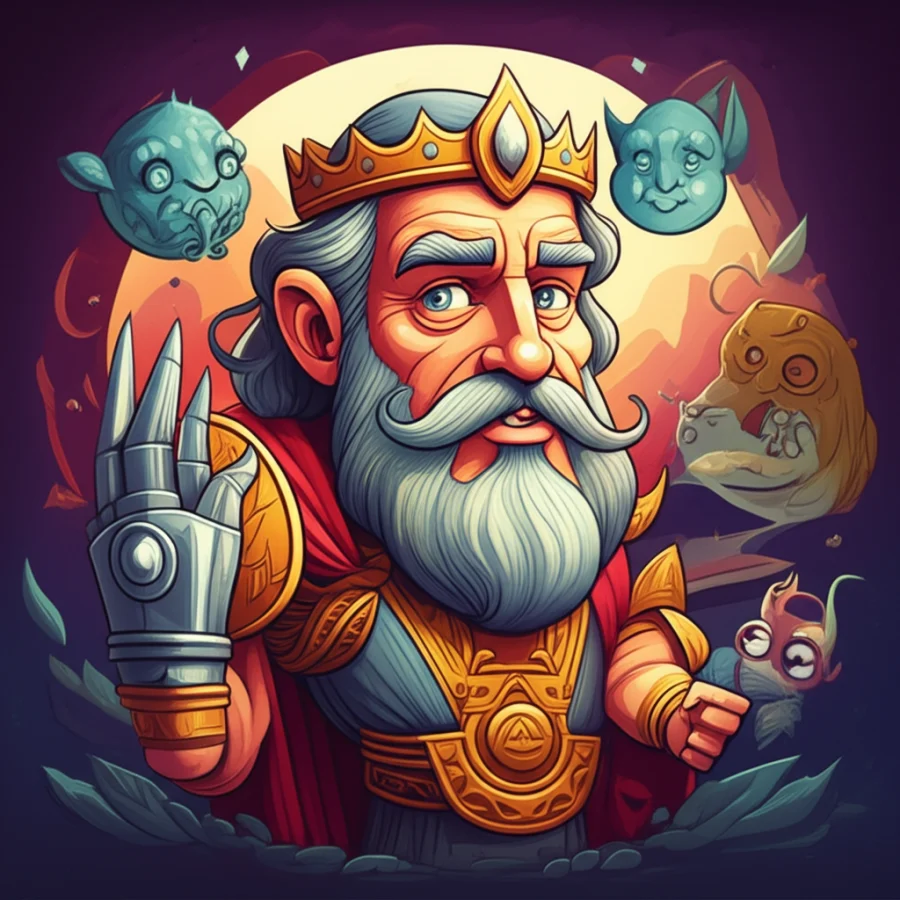
The mists of ancient Ireland, a land woven with emerald hills and rugged coastlines, have long held within them tales of gods, heroes, and the liminal spaces between worlds. Among these enduring narratives is the legend of Nuada, a figure whose story is intrinsically linked to the turning of the seasons, particularly the profound transition known as Samhain. This is not a chronicle of historical fact, nor a guide to worship, but rather a traditional story, passed down through generations by ancient storytellers, offering a glimpse into how people of that era perceived their world.
The cultural era in which these tales flourished was one deeply attuned to the rhythms of nature. The ancient Celts, scattered across what is now Ireland, Scotland, and parts of Britain and Europe, lived lives dictated by the sun, the moon, and the fertile earth. Their understanding of the world was a vibrant tapestry where the natural and the supernatural were not separate but intricately interwoven. They saw the divine not in distant celestial bodies alone, but in the rustling leaves of the forest, the crashing waves of the sea, and the very breath of the wind. Their society was often tribal, with chieftains and druids holding significant influence, guiding their communities through the cycles of planting and harvest, war and peace. The concept of a veiled reality, where spirits and otherworldly beings could brush against the mortal realm, was not a source of fear but a fundamental aspect of their worldview.
Within this rich tapestry of belief and storytelling stands Nuada, often depicted as a king, a leader of the Tuatha Dé Danann, a mythical race of beings who, according to legend, inhabited Ireland before the arrival of the Milesians. Nuada’s most striking attribute, and one that imbues him with a powerful symbolic resonance, is his silver arm. Having lost his original arm in a fierce battle against the Fomorians, monstrous beings from the sea, Nuada was fitted with a prosthetic made of pure silver. This silver arm was not merely a replacement; it was said to be so skillfully crafted that it moved and functioned as if it were flesh and bone, even healing and nourishing him. Symbolically, the silver arm can be interpreted as representing resilience, the ability to overcome great loss and injury, and the enduring strength of leadership even in the face of profound adversity. Silver, in many ancient cultures, was associated with the moon, with purity, and with healing properties, further enhancing Nuada’s symbolic stature.
The narrative of Nuada and Samhain often unfolds as a powerful allegory for the cyclical nature of life, death, and rebirth, particularly as it relates to the transition from the abundance of harvest to the starkness of winter. Samhain, celebrated around the end of October and the beginning of November, was considered a pivotal moment in the Celtic calendar. It was a time when the veil between the mortal world and the spirit world was believed to thin, allowing for communication and interaction between the living and the dead, and between humans and the otherworldly beings.
Imagine, if you will, the approaching chill of late autumn in ancient Ireland. The days grow shorter, the sun’s warmth a fading memory. The fields, once bursting with golden grain and vibrant produce, are now bare, their bounty gathered and stored. This is the time of Samhain. In the grand halls of the Tuatha Dé Danann, or perhaps in the heart of a sacred grove, Nuada, the King with the Silver Arm, presides. The air is thick with the scent of burning peat and the lingering aroma of the last harvest feasts. Yet, there is a palpable sense of anticipation, a quiet hum of otherworldly presence.
The elders speak of the journey of Samhain. It is not merely a day, but a passage. It is the time when the doors between realms swing open, and the souls of the departed, along with spirits of nature and beings from the ‘Otherworld,’ are free to roam. For Nuada, this journey is not just about acknowledging the dead, but about reaffirming the balance of existence. He understands that the light of summer and the abundance of harvest must eventually give way to the darkness and introspection of winter. His silver arm, a testament to his own enduring spirit through loss, serves as a constant reminder that even in the deepest shadows, there is a possibility of renewal and continued strength.
During Samhain, tales are told of spirits visiting the living, of ancestors being honored, and of pacts being forged with the unseen forces that govern the land. Nuada, as king, would have been instrumental in ensuring that these encounters were handled with respect and understanding. He would have understood the importance of appeasing the spirits, of making offerings to ensure a benevolent transition into the darker months. The journey of Samhain, for him and his people, was a profound acknowledgment of mortality, a celebration of life’s cycle, and a respectful engagement with the mysteries of the cosmos. It was a time for introspection, for remembering those who had passed, and for preparing for the challenges and quietude of the coming winter.
The symbolism embedded within the myth of Nuada and Samhain is multifaceted. Nuada’s silver arm, as mentioned, represents resilience, adaptation, and leadership that can endure hardship. The journey of Samhain itself symbolizes the cyclical nature of life, the acknowledgment of death as an inevitable part of existence, and the interconnectedness of the living and the dead. It speaks to the ancient human understanding of the universe as a place of constant flux, where periods of light and growth are followed by periods of darkness and rest, each vital for the continuation of the whole. The thinning of the veil during Samhain can be seen as a metaphor for moments of heightened awareness, when the ordinary boundaries of perception are lifted, allowing for deeper insights and spiritual connection.
In the modern world, the echoes of these ancient stories persist, though their context has evolved. Nuada, while not a widely recognized figure outside of Celtic mythology circles, embodies archetypes of the wounded healer and the resilient leader that continue to resonate in literature, fantasy gaming, and even film. The concept of Samhain, stripped of its original spiritual connotations by many, has been largely secularized into the popular celebration of Halloween. However, the underlying themes of confronting the darker aspects of existence, of remembering the past, and of embracing change continue to hold relevance. Academics and cultural historians study these myths to understand the worldview of ancient peoples, their societal structures, and their relationship with the natural world.
It is crucial to reiterate that the legend of Nuada and the journey of Samhain is a traditional story, a product of human imagination and cultural expression from a bygone era. As Muslims, we recognize that the true Creator and Sustainer of all existence is Allah (SWT). Our understanding of the universe and our place within it is guided by divine revelation, not by ancient myths or folklore.
Yet, in reflecting on these age-old narratives, we can appreciate the enduring power of storytelling. These tales, born from the fertile minds of ancient peoples, offer us a window into their understanding of the world, their hopes, their fears, and their attempts to make sense of the vast mysteries surrounding them. The legend of Nuada and the journey of Samhain, in its imaginative portrayal of resilience and the cyclical nature of life, serves as a testament to the rich cultural heritage of storytelling, a tradition that continues to shape our understanding of ourselves and the world, albeit through a lens of faith and reason. It is through such cultural exploration that we gain a broader appreciation for the diverse tapestry of human experience and the enduring human need to find meaning in the stories we tell.