fufufafa
The vast, shimmering expanse of the Pacific Ocean has long been a cradle of profound mythologies, its endless horizons inspiring tales of gods, heroes, and formidable creatures. From the numerous island nations scattered like emerald jewels across its surface, a rich tapestry of oral traditions emerged, each thread woven with reverence for nature and the powerful forces that shaped their world. This article delves into a fascinating aspect of this heritage, exploring the concept of powerful water guardians—often referred to as Taniwha in Māori tradition—and imagining how such awe-inspiring entities might resonate within the vibrant cultural landscape of the Samoan Isles, connected intimately to the revered deity Tangaroa. It is crucial to understand from the outset that this is a traditional story, a product of ancient imaginations and cultural narrative, not a factual account or a call for belief, worship, or practice. Instead, it is presented purely for cultural, historical, and educational understanding, offering a window into the rich storytelling legacy of the Polynesian people.
Origins and Cultural Background: A Seafaring Worldview
The ancient Polynesians were master navigators and intrepid voyagers, their lives intrinsically linked to the rhythms and moods of the ocean. Their societies, stretching from Aotearoa (New Zealand) to Hawai’i and Rapa Nui (Easter Island), and encompassing the Samoan archipelago, were built upon an intimate understanding of the sea, its currents, and its boundless resources. In this world, the distinction between the physical and spiritual realms was often blurred. People viewed their environment as alive, imbued with mana (spiritual power) and inhabited by aitu (spirits or deities), ancestors, and other powerful beings. The ocean, in particular, was seen as a living entity—a provider of sustenance, a highway for travel, a protector of islands, but also a formidable and unpredictable force capable of immense destruction.
In this context, myths served not only as entertainment but also as vital repositories of knowledge, moral codes, and environmental wisdom. They explained the inexplicable, codified societal norms, and instilled respect for the natural world. The paramount deity of the ocean across much of Polynesia was Tangaroa (or Kanaloa in Hawai’i, Tagaloa in Samoa), the god of the sea, fish, and all sea creatures. He was a creator, a sustainer, and a force of immense power, whose moods could dictate the fate of entire communities. Within his vast dominion, it was believed, resided beings of extraordinary power—guardians of the deep, protectors of sacred places, and sometimes, formidable challenges to those who dared to disrespect the ocean’s sanctity.
Character Description: The Taniwha-like Guardian of Samoa
While the term "Taniwha" is specifically derived from Māori mythology, describing formidable water or land creatures often serving as guardians or harbingers, the concept of powerful, awe-inspiring entities inhabiting the waters is a common thread across Polynesian cultures. In the Samoan Isles, where the ocean’s presence is ever-felt, one can imagine a similar guardian, a potent manifestation of Tangaroa’s dominion and the raw power of the Pacific. This Taniwha-like guardian would not be a singular, uniformly described entity, but rather a concept embodying the ocean’s dual nature: benevolent provider and terrifying avenger.
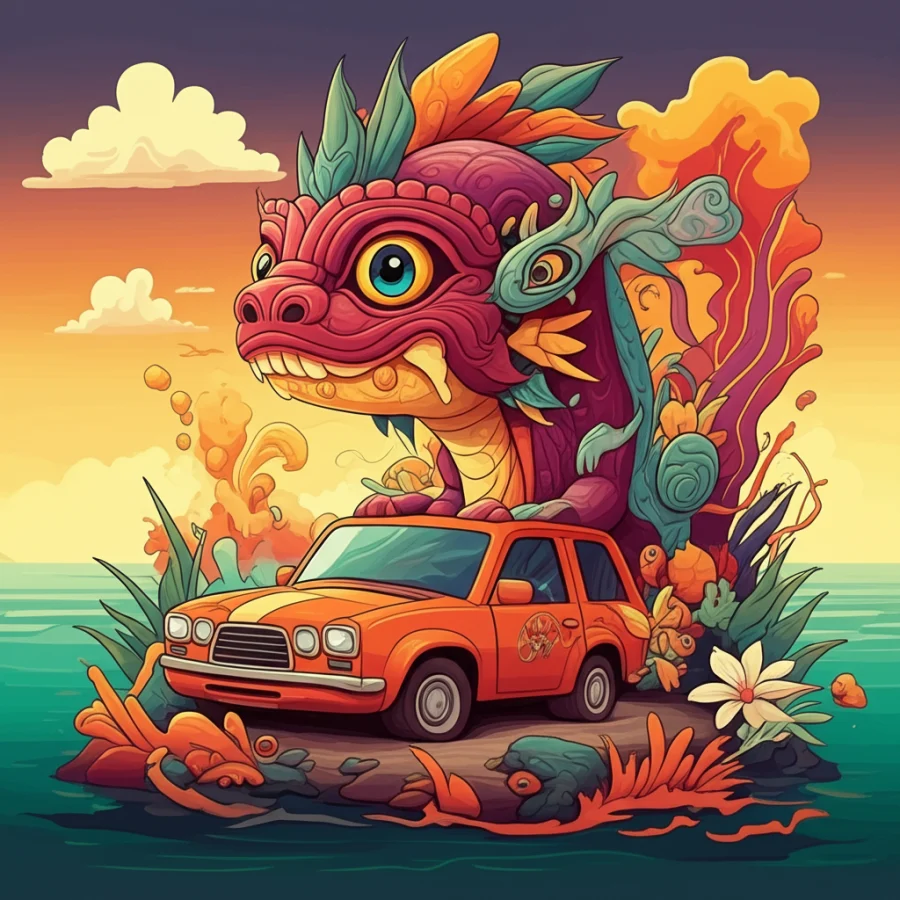
Picture such a being: a creature of immense proportions, perhaps a colossal, ancient eel, its scales shimmering with the colours of the deep ocean—iridescent blues, greens, and silvers. Its eyes, ancient and wise, might glow with an ethereal light, reflecting the stars or the bioluminescence of the darkest depths. Or perhaps it takes the form of a gargantuan shark, its hide scarred by untold centuries, moving with an effortless grace that belies its incredible power. Alternatively, it could be a more ethereal presence, an unseen force that manipulates currents, summons storms, or guides shoals of fish.
Symbolically, this guardian would represent the untamed majesty and mystery of the ocean itself. It would embody the delicate balance of the ecosystem, serving as a protector of reefs, lagoons, and sacred fishing grounds. Its presence would instill both fear and reverence, reminding the islanders of their place within the natural order. It would be an extension of Tangaroa’s will, ensuring that humanity respected the gifts of the sea and adhered to the ancient tapu (sacred prohibitions) that governed their interactions with the marine world. It would not be worshipped, but acknowledged as a powerful entity within the spiritual landscape, a potent reminder of the ocean’s life-giving and life-taking capabilities.
Main Story: The Tale of Leifiti and the Deep Sentinel
In the ancient village of Falealupo, nestled on the western tip of Savai’i, life revolved around the rhythm of the tides and the bounty of the sea. For generations, the people had prospered, their canoes returning laden with fish from the rich fishing grounds beyond the reef. These grounds were said to be under the watchful eye of a powerful aitu of the deep, a guardian known only as the Moana Vao (Wild Ocean Spirit), a creature of immense power, an ancient serpent-like being that had served Tagaloa since the dawn of time. The elders spoke of its shimmering form, vast as a coral reef, and its immense wisdom, ensuring prosperity for those who honoured the ocean and its ancient laws.
Young Leifiti, the chieftain’s son, was a skilled fisherman, strong and ambitious. Yet, he often chafed under the strictures of tradition. The old ways, with their ceremonies and taboos, seemed to him slow and inefficient. One season, a great famine threatened Falealupo. The fishing grounds, once bountiful, yielded little. Desperate, Leifiti ignored the elders’ warnings and ventured into the sacred, forbidden waters—a deep trench where the Moana Vao was believed to slumber. He cast his nets, pulling in a haul so vast it nearly capsized his canoe, heedless of the growing unease in the air, the sudden, unnatural calm of the sea.
As Leifiti returned, triumphant but arrogant, a deep tremor ran through the ocean. The calm waters turned turbulent, dark clouds gathered overhead, and a colossal shadow passed beneath his canoe. The air grew heavy with an unseen presence. Suddenly, a monstrous head, adorned with ancient coral and sea moss, broke the surface of the water, its eyes glowing with an ancient, chilling light. It was the Moana Vao, roused from its slumber, its scales shimmering with the colours of a brewing storm. It did not speak, but its gaze alone conveyed immense displeasure, a profound sorrow mixed with righteous fury.
A furious gale erupted, tossing Leifiti’s canoe like a toy. The precious catch was swept away, and Leifiti barely made it back to shore, humbled and terrified. For weeks after, the sea around Falealupo remained unforgiving. Storms ravaged the coast, and the fishing grounds lay barren, the fish seemingly vanished. The people understood: the Moana Vao had been angered, and Tagaloa himself had turned his face away.
Leifiti, stripped of his pride, sought the counsel of the village fa’afafine (spiritual advisor). He was told that only true humility and a sacred offering could appease the ancient guardian. For three days and three nights, Leifiti fasted, prayed, and prepared a fa’alavelave—a ceremonial offering of the finest kava, taro, and woven mats. He then embarked alone in a small outrigger, paddling towards the very trench he had desecrated. As he reached the sacred spot, he offered his gifts, not with a plea for bounty, but with a sincere prayer for forgiveness, acknowledging his disrespect for the ocean’s sacred balance and the wisdom of his ancestors.
He poured the kava into the depths, its milky tendrils spiralling down. The air softened, the wind died down, and the ocean, once tempestuous, became a glassy mirror. Below, a vast, shimmering form passed, not with anger, but with a gentle, knowing grace. It was the Moana Vao, no longer wrathful, but accepting. The next morning, the sun rose over calm seas, and the fishing grounds once again teemed with life, a testament to humility, respect, and the enduring power of the ocean’s guardian.
Symbolism and Meaning: Lessons from the Depths
This narrative, like many traditional stories, is rich with symbolism and meaning that would have resonated deeply with ancient Samoan society. The Moana Vao, a Taniwha-like guardian, serves as a powerful metaphor for the ocean itself—its immense power, its capacity for both generosity and wrath. It represents the delicate ecological balance that must be respected; excessive greed (Leifiti’s overfishing) and disrespect for sacred spaces lead to dire consequences.
The story underscores the vital importance of fa’a Samoa (the Samoan Way)—respect for elders, adherence to traditional laws, and the understanding that individual actions have communal repercussions. Leifiti’s journey from arrogance to humility teaches the value of introspection, repentance, and the necessity of seeking forgiveness. The guardian’s response highlights the idea that nature, when respected, is a benevolent provider, but when violated, can become a formidable punisher. Ultimately, the tale reinforces the deep spiritual connection between the Samoan people and their environment, emphasizing that humans are part of a larger, interconnected web of life, subject to the powerful forces overseen by deities like Tagaloa.
Modern Perspective: Echoes in Contemporary Samoa
Today, while the literal belief in such powerful water guardians has largely faded with the advent of modernity and other belief systems, the cultural significance of these myths endures. In contemporary Samoa and across Polynesia, these stories are cherished as invaluable components of cultural heritage. They are retold in schools, inspiring children with tales of adventure and morality. Artists draw inspiration from these ancient beings, depicting them in paintings, carvings, and literature, thus ensuring their continued presence in the cultural consciousness.
Academically, these myths are studied for their insights into ancient worldviews, social structures, and ecological wisdom. They offer a unique lens through which to understand the relationship between people and their environment, particularly relevant in an era of climate change and environmental concerns. The concept of a guardian of the ocean resonates with modern conservation efforts, subtly encouraging respect for marine ecosystems. These narratives are not seen as literal truths but as profound allegories, imaginative expressions of a people’s deep connection to their ancestral lands and seas, passed down through generations.
Conclusion: A Legacy of Imagination
The echoes of Tangaroa, and the tales of his powerful guardians like the Taniwha-like Moana Vao of the Samoan Isles, remind us of the incredible human capacity for imagination and storytelling. These narratives, born from the intimate relationship between ancient peoples and their environment, offer a glimpse into a worldview where every wave, every current, and every creature held deeper significance. They are cultural treasures, rich in symbolism and historical context, providing valuable insights into the wisdom and values that shaped early Polynesian societies.
As Muslims, we acknowledge that only Allah, the Most High, is the true Creator and Sustainer of the heavens and the earth, and all that is between them. He is the One who fashioned the oceans and instilled within them their profound power and beauty. While we recognize that these mythological beings are not real, we can appreciate the human creativity and the cultural heritage embedded in such stories. They stand as a testament to the enduring power of storytelling to transmit wisdom, reinforce community values, and connect generations to their past, fostering a deep respect for cultural identity and the imaginative spirit of humanity.