fufufafa
The vast, sapphire expanse of the Pacific Ocean has always been a source of profound mystery and inspiration for the peoples who dwell upon its scattered islands. Among these emerald jewels, the Samoan archipelago, with its volcanic peaks, lush rainforests, and vibrant coral reefs, has cradled a rich tapestry of myths and legends. These are not tales whispered in hushed tones of worship, but rather ancient stories, passed down through generations, that paint a vivid picture of how early Samoans understood their world, their environment, and the forces that shaped their lives. One such thread in this intricate cultural weave is the legend of the shark gods, beings that embodied both the awe-inspiring power and the primal fear associated with the ocean’s apex predators.
The Samoan culture, steeped in a deep connection to the sea, flourished in an era where the natural world was perceived as a living, breathing entity, imbued with spirits and potent forces. Life on these islands was inextricably linked to the ocean’s bounty and its inherent dangers. The tides dictated fishing expeditions, storms threatened voyages, and the sleek, silent hunter of the deep, the shark, was a constant presence. In this worldview, the distinction between the earthly and the spiritual was often blurred. Natural phenomena and powerful creatures were not merely physical occurrences but manifestations of divine will or the actions of ancestral spirits. It was within this context of a vibrant, animistic understanding of the world that the stories of the shark gods took root, serving as a framework for understanding the ocean’s dual nature – its life-giving sustenance and its formidable, untamed power.
The figures that populate these ancient narratives are not to be understood as deities to be worshipped, but rather as symbolic representations of the ocean’s might. Among them, the concept of the "shark god" emerges as a potent archetype. These were not necessarily singular entities with defined physical forms in the way we might imagine a human god. Instead, they represented the collective essence, the primal energy, and the watchful presence of sharks in the Samoan imagination. Their symbolic attributes were manifold. Sharks, with their ancient lineage and relentless hunting prowess, embodied strength, ferocity, and an unwavering mastery of their domain. Their silent, efficient movements through the water spoke of a deep, instinctual wisdom. Their sharp teeth and powerful jaws symbolized a raw, unyielding force. These were not creatures to be trifled with, and the "shark gods" served as a narrative device to acknowledge and respect this power, not to elevate it to the status of divine decree.
The narratives surrounding these shark-like beings often tell of their origins intertwined with the very fabric of the ocean and the land. Some tales speak of powerful chiefs or ancestral figures who, through great deeds or divine favor, were transformed into sharks, forever becoming guardians or spirits of the sea. Imagine a scenario, as depicted in these ancient stories, where a revered warrior, known for his courage and his prowess in battle, finds himself at the end of his earthly life. Instead of a simple passing, his spirit, perhaps honored for his strength and his protective nature towards his people, is said to have merged with the powerful form of a shark, becoming an eternal sentinel of the reefs and the deep waters. These stories often describe their movements as deliberate and knowing, their presence felt before they are seen. They were the unseen eyes of the ocean, the silent arbiters of its depths. Perhaps a fisherman, struggling against a fierce current, might feel a sudden, inexplicable calm, or a fleeting glimpse of a dark fin, interpreted as a benevolent gesture from these ancient spirits, guiding him or warning him of unseen peril. Conversely, stories might also recount instances where the wrath of these shark-like beings was invoked, a consequence of disrespect or transgression, leading to turbulent seas or unfortunate encounters. These were cautionary tales, woven from the raw material of nature’s unpredictability.
The symbolism embedded within these shark god narratives is rich and multifaceted. For the ancient Samoans, these stories likely served as a way to process their relationship with the ocean. The shark gods represented the untamed power of nature, a force that could provide sustenance but also pose an existential threat. They may have symbolized the importance of respect and humility in the face of such power, a reminder that humanity, despite its ingenuity, was still subject to the larger rhythms of the natural world. The ferocity of the shark could also be seen as a metaphor for leadership and protection; a chief, like a shark god, needed to be strong, decisive, and capable of defending his people. The wisdom attributed to these beings could reflect the deep, intuitive knowledge of the ocean that skilled navigators and fishermen possessed, a wisdom honed through years of observation and experience. In essence, the shark gods were a way for ancient Samoans to articulate their awe, their fear, and their understanding of the complex and often dangerous environment that sustained them.
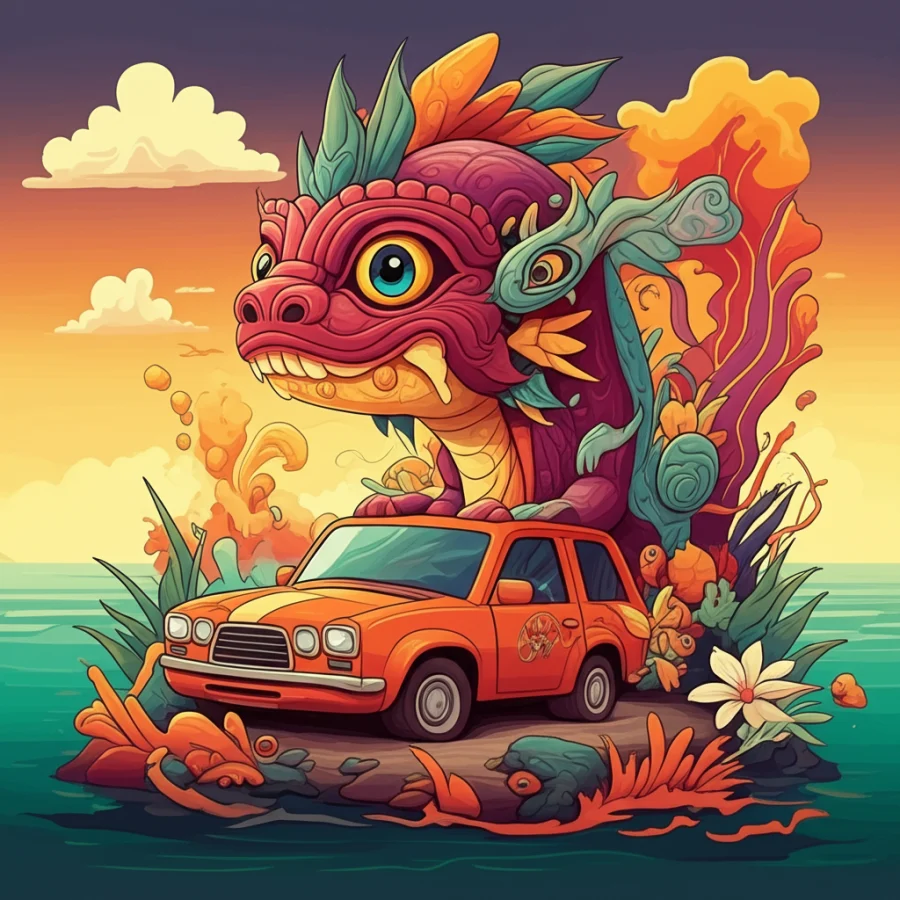
In the modern era, these ancient stories have found new life, interpreted and re-imagined within the realms of literature, film, and cultural studies. Scholars delve into these myths to understand the worldview of past societies, tracing the evolution of cultural beliefs and the human tendency to personify natural forces. In contemporary fiction and visual media, the archetypal imagery of the shark god can be found, often adapted to explore themes of primal power, the wildness of nature, or the spiritual connection between humans and the animal kingdom. These interpretations, while drawing from the original lore, are creative expressions rather than literal retellings of belief.
It is crucial to reiterate that these narratives are a fascinating glimpse into the cultural heritage and imaginative traditions of the ancient Samoan people. They are stories that speak of a particular way of understanding the world, of the profound relationship between humanity and the natural environment. As Muslims, we recognize that only Allah (God) is the true Creator and Sustainer of all that exists, the ultimate source of power and wisdom. These traditional stories, while rich in cultural significance and artistic merit, are not to be considered as belief or divine truth. They serve as a testament to the enduring power of human storytelling, the ways in which our ancestors sought to make sense of the world around them, and the universal human impulse to find meaning and wonder in the vast, mysterious forces that shape our existence. The echoes of Tangaroa, and the legends of the shark gods, continue to resonate, not as doctrines to be followed, but as vibrant threads in the rich tapestry of human cultural expression and imagination.