fufufafa
The tapestry of human civilization is richly interwoven with threads of ancient tales, myths, and legends, each reflecting the unique worldview and aspirations of the people who first wove them. Among the most profound and imaginative are the creation myths of ancient China, stories passed down through generations that sought to explain the inexplicable: the origin of the cosmos, the earth, and humanity itself. The tale of Pangu, the primordial giant, and Zhurong, the majestic God of Fire, is one such narrative, a cornerstone of traditional Chinese folklore that offers a captivating glimpse into the cosmological understanding of a bygone era. It is important to remember that this is a traditional story told by ancient people, a product of human imagination and early attempts to comprehend the vastness of existence, and is not to be understood as historical or religious truth.
Origins and Cultural Background
This particular myth originates from the heart of ancient China, a civilization that flourished for millennia, developing a profound philosophical and cultural identity. In the early epochs, long before the advent of scientific inquiry, the world was a place of mystery and wonder, often perceived through the lens of natural phenomena and the unseen forces believed to govern them. The people of this era, deeply connected to the rhythms of nature – the cycle of seasons, the destructive power of floods, the life-giving warmth of the sun – sought to rationalize their existence and the universe around them.
Their worldview was characterized by a cyclical understanding of time and a holistic perception of the cosmos, often explained through concepts like Yin and Yang – the complementary forces that bring balance and harmony to all things. The universe was thought to have emerged from a state of primordial chaos, a formless void, and the creation myths served as foundational narratives to explain this transition from nothingness to the ordered world they inhabited. These stories were not merely entertainment; they were explanations, moral lessons, and communal expressions of awe and understanding, shaping their art, philosophy, and societal structure.
Character Descriptions: The Architect and the Flame
At the heart of this creation narrative stand two pivotal figures, each embodying powerful forces within the nascent cosmos.
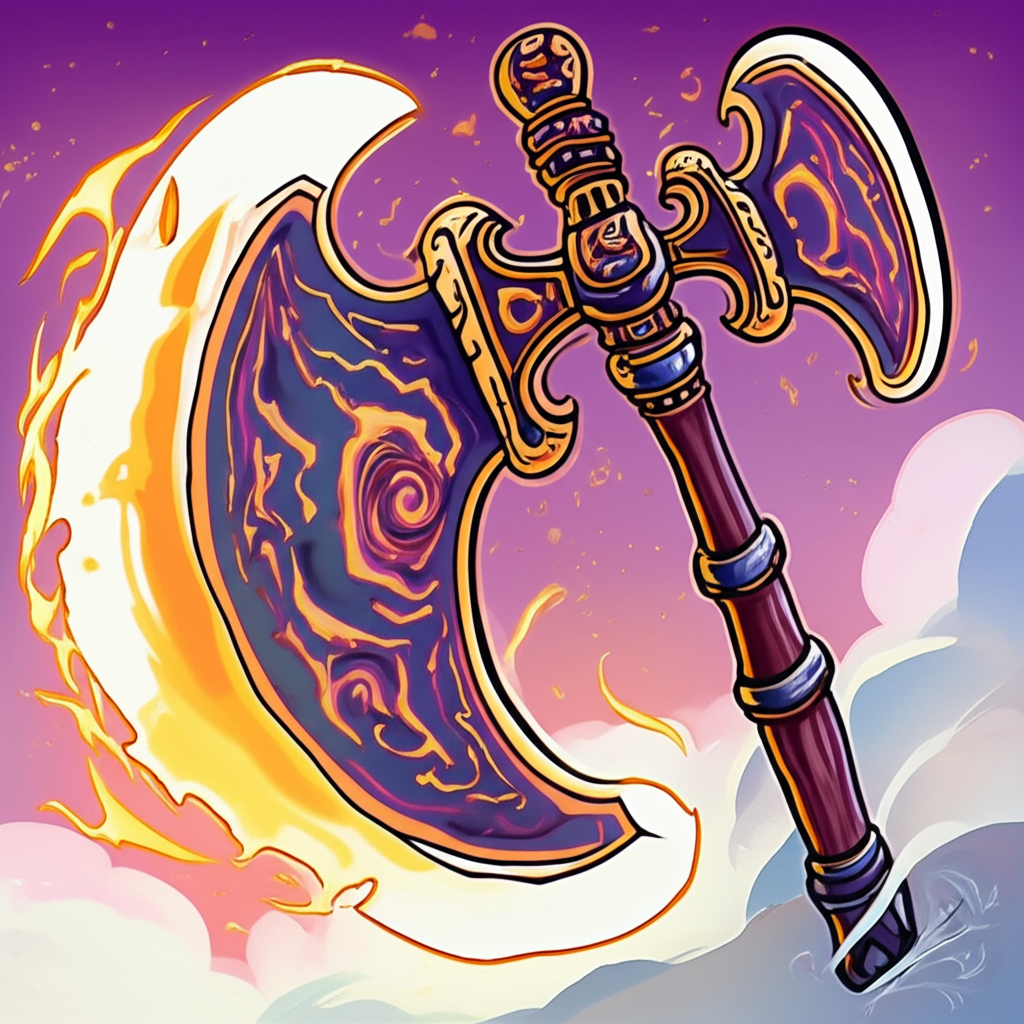
Pangu, the primordial giant, is arguably the most significant figure in Chinese creation mythology. Often depicted as a colossal being, sometimes with a hammer and chisel or an axe, Pangu is born within the cosmic egg, a swirling vortex of primordial chaos. His imagery is inherently symbolic: he represents the raw, untamed power of creation, the singular entity whose very existence and ultimate sacrifice brings forth the structured world. He is the ultimate progenitor, the embodiment of the universe itself, from whose body all elements of the natural world are said to derive. His story is one of immense effort, growth, and selfless transformation, symbolizing the arduous process of bringing order from disorder.
Zhurong, in contrast, is the illustrious God of Fire, sometimes referred to as the Fire Emperor or the Southern Emperor. He is a formidable deity, often imagined with a fiery aura, riding a dragon or a charioteer of flames. Zhurong’s symbolic attributes are multifaceted: he represents not only the life-giving warmth and light of fire, essential for human survival and civilization, but also its destructive potential – the scorching heat of droughts, the consuming power of conflagrations. He is a dynamic force, bringing both illumination and devastation, embodying the dual nature of one of humanity’s most crucial discoveries. His presence in the newly formed world signifies the establishment of elemental forces, vital for shaping and sustaining the cosmos that Pangu began.
The Main Story: Pangu’s Sacrifice and Zhurong’s Fiery Reign
In the beginning, the universe was an undifferentiated mass, a swirling, dark chaos likened to a cosmic egg. Within this vast, formless void, Pangu slumbered for eighteen thousand years. When he finally awoke, he found himself trapped in the suffocating darkness. With immense effort and a mighty swing of his axe, Pangu shattered the cosmic egg. The lighter, purer elements ascended to form the heavens (Yang), while the heavier, murkier elements descended to become the earth (Yin).
Fearing that the heaven and earth might merge again, Pangu stood between them, pushing the sky higher each day, while the earth grew thicker beneath his feet. For another eighteen thousand years, Pangu grew, and with him, the distance between heaven and earth expanded by ten feet each day. This colossal effort was Pangu’s unspoken "Oath of Creation" – a commitment not just to separate the primordial chaos, but to establish a stable, habitable cosmos through sheer will and endurance.
Finally, his monumental task complete, Pangu collapsed, utterly exhausted. As he lay dying, his body underwent a profound transformation, fulfilling the ultimate act of creation. His breath became the wind and clouds, his voice the thunder, his left eye the sun, and his right eye the moon. His hair and beard turned into the stars, his limbs into the four cardinal directions and the mountains, his blood into rivers, his muscles into fertile soil, and his veins into roads and pathways. His skin and body hair became the plants and forests, his teeth and bones precious metals and stones, and his sweat the dew and rain. Even the parasites on his body, touched by the divine essence, transformed into humanity.
With the world now formed, albeit raw and untamed, the elemental forces began to manifest, upholding the foundational "Oath of Creation" laid down by Pangu’s sacrifice. Among the first and most vital was Zhurong, the God of Fire. Emerging from the vibrant energies of the newly established cosmos, perhaps from the very fiery essence that once sparked Pangu’s initial awakening, Zhurong brought the gift and the terror of flame. He soared across the nascent skies on his fiery chariot or a magnificent dragon, his presence igniting the world.
Zhurong’s flames provided warmth to the newly formed earth, banishing the pervasive chill that followed Pangu’s demise. He brought the light of day, challenging the lingering darkness and revealing the contours of the mountains and rivers Pangu had become. His fire was instrumental in shaping the early world, burning away excess, forging new landscapes, and providing the initial spark for life to truly flourish. Yet, Zhurong was not merely a benevolent force; his fires could rage unchecked, causing destruction and demanding respect, reminding the emerging world of the potent, untamed power within the universe. He was a constant, dynamic force, ensuring the continuation and evolution of the world that Pangu had painstakingly brought into being, perpetually upholding the dynamic "Oath of Creation" through his very essence.
Symbolism and Meaning
This myth is rich with symbolism. Pangu’s story primarily represents the concept of sacrifice as the ultimate act of creation. His transformation into the world emphasizes the profound connection between humanity and nature; we are, in a sense, made from the very fabric of the cosmos. It also symbolizes the immense effort required to bring order from chaos and the foundational role of a singular, powerful entity in initiating existence.
Zhurong, on the other hand, embodies the dualistic nature of fire: its life-giving warmth, light, and transformative power, alongside its destructive potential. He represents the essential elemental forces that govern the natural world, the dynamic energies that sustain and shape the universe after its initial creation. For ancient people, Zhurong likely symbolized the unpredictable yet vital forces of nature, the necessity of both light and darkness, creation and destruction, for the world to maintain its balance. The "Oath of Creation," implicitly taken by Pangu and continuously upheld by figures like Zhurong, speaks to the inherent commitment to life, order, and the ongoing processes of change and renewal within the cosmos.
Modern Perspective
Today, the myth of Pangu and Zhurong continues to resonate, though its interpretation has shifted from literal belief to cultural appreciation. In modern China and across the globe, these stories are celebrated as profound expressions of human imagination and early philosophical thought. They are frequently reinterpreted in various forms of media: appearing in literature, providing inspiration for fantasy novels and poetry; influencing movies and television series that explore themes of creation and elemental power; and finding new life in video games, where deities and primordial beings often feature as powerful characters or lore elements. Academically, these myths are studied for their insights into ancient Chinese culture, religious beliefs (or lack thereof), and the universal human quest to understand origins. They serve as valuable cultural heritage, connecting contemporary society to its ancient roots.
Conclusion
The myth of Pangu and Zhurong is a powerful testament to the human capacity for storytelling and the timeless desire to comprehend our place in the universe. It is a cultural narrative, a product of human creativity and early attempts to make sense of the world, rather than a belief system or a record of historical events. As Muslims, we recognize and affirm that only Allah, the One True God, is the sole Creator and Sustainer of the heavens and the earth and all that is within them. He is the Beginning and the End, the All-Powerful, the All-Knowing, and His creation is brought forth by His command, "Be," and it is.
Nonetheless, these ancient tales from various cultures hold immense value. They enrich our understanding of human heritage, demonstrate the diverse ways in which different civilizations have conceptualized the cosmos, and remind us of the enduring power of imagination and the art of storytelling to convey profound ideas across millennia. They invite us to reflect on the creativity of our ancestors and appreciate the cultural threads that connect us all.