fufufafa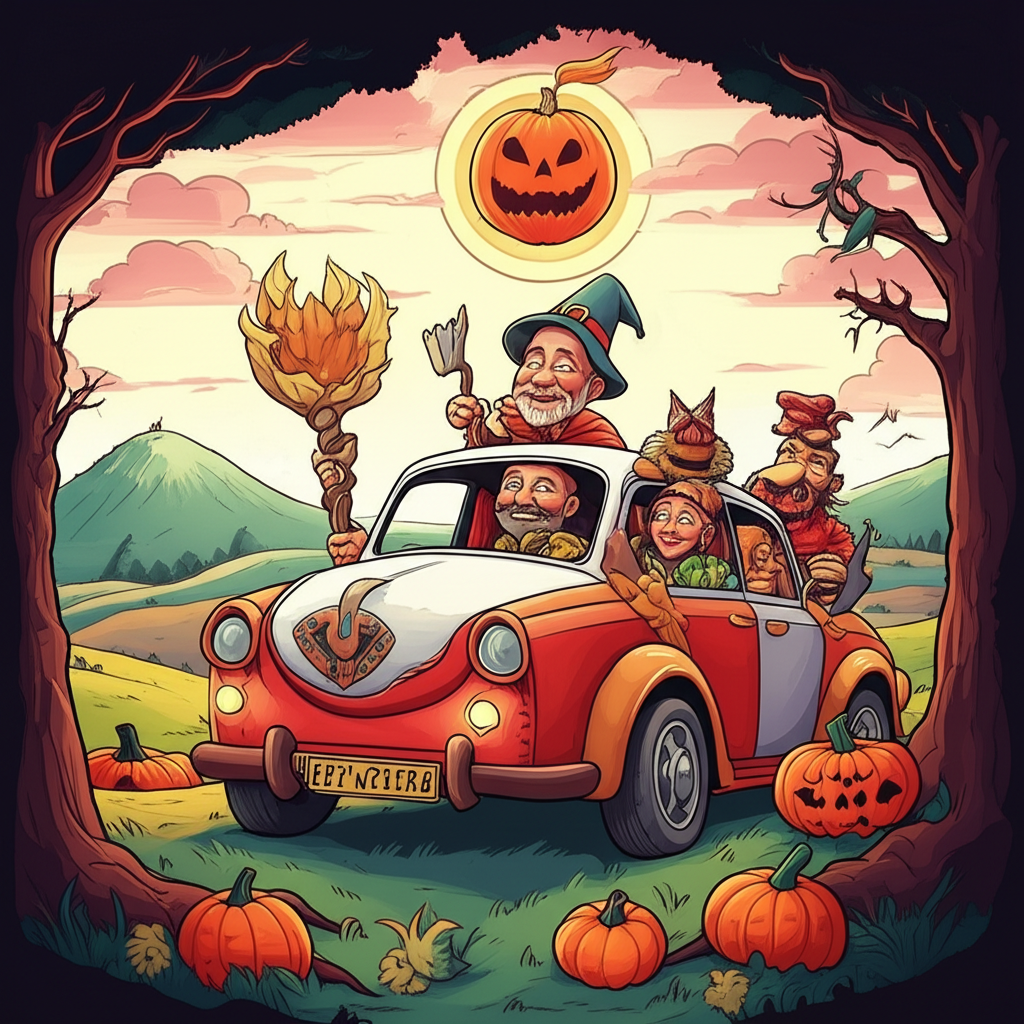
The wind, a restless spirit in itself, often carries tales across the emerald landscape of Ireland. Among these age-old narratives, the story of Samhain, deeply intertwined with the sacred Hill of Tara, stands as a potent echo of how ancient peoples perceived the turning of the year and the mysterious boundary between worlds. This is not a chronicle of historical events, but a traditional story, woven from the threads of myth and folklore, passed down through generations by the ancient Celts. It offers a glimpse into their worldview, a world where the natural and the supernatural were often perceived as intimately connected.
To understand the genesis of Samhain, we must journey back in time to an Ireland where life was inextricably linked to the cycles of nature. The Celts, a people of vibrant culture and deep spiritual connection to the land, lived in a society that was largely agrarian. Their days were dictated by the sun’s arc, the growth of crops, and the migrations of animals. Their world was one of constant flux, and they sought to find meaning and order within this ever-changing tapestry. They viewed the world not as a purely material place, but as one imbued with unseen forces, spirits that inhabited forests, rivers, and the very earth beneath their feet. The veil between the realm of the living and the realm of the spirits was, in their understanding, thin and permeable, especially at certain times of the year.
Samhain, celebrated on the night of October 31st into November 1st, marked a pivotal moment in this cyclical understanding. It was the end of summer and the harvest, the culmination of the sun’s warmth and bounty. It was also the beginning of winter, the long, dark half of the year, a time of scarcity, introspection, and perceived vulnerability. It was at this liminal juncture, as the old year died and the new was born, that the boundaries between worlds were believed to blur most significantly.
Central to the folklore surrounding Samhain is the concept of the "Otherworld," a mystical dimension inhabited by beings both benevolent and fearsome. While specific figures vary across different traditions, the idea of supernatural entities crossing into the mortal realm is a recurring theme. These beings might be depicted as spirits of the ancestors, ancient deities, or powerful, otherworldly creatures. Their presence was not necessarily inherently malevolent, but their intentions and influence were often unpredictable, reflecting the anxieties and awe that the unknown could inspire. The Hill of Tara itself, a prominent ceremonial and political center for ancient Irish kings, was believed to be a place where this connection to the Otherworld was particularly strong, a nexus of power and spiritual significance.
The narrative of Samhain often describes this night as a time when the dead would return to walk the earth, and the fairy folk, or aos sí, would be more active. It was believed that the gates to the Otherworld would open, allowing spirits to mingle with the living. This was a time of both celebration and caution. Bonfires were lit, not just for warmth, but to ward off malevolent spirits and to guide the souls of the departed. People would wear masks and costumes, perhaps to disguise themselves from spirits, or to impersonate them, blurring their own identities in the liminality of the night. Feasts were held, a final abundance before the lean months, and offerings were sometimes made to appease the unseen forces. The Hill of Tara, with its ancient mounds and ceremonial enclosures, would have been a focal point for such gatherings, a place where the community collectively acknowledged the transition and sought protection.
The symbolic meaning of Samhain for the ancient Celts was multifaceted. Primarily, it represented the profound transition from light to darkness, from life to a period of dormancy and introspection. The return of the dead symbolized a connection to ancestry and the continuity of life, even beyond the physical realm. The perceived increased activity of the aos sí likely reflected a deep respect for and a healthy dose of fear towards the forces of nature and the unknown. It was a time for acknowledging the precariousness of existence, the need for community, and the importance of appeasing the powers that governed their world. The Hill of Tara, as a seat of power and a place of ritual, embodied this connection to leadership, destiny, and the collective spirit of the people.
In the modern era, the echoes of Samhain resonate in various forms of cultural expression. The traditions surrounding this ancient festival have significantly influenced the contemporary celebration of Halloween, with its costumes, trick-or-treating, and spooky themes. In literature, films, and video games, the concept of Samhain and the liminality it represents continues to be explored, often drawing on the rich tapestry of Celtic mythology. Scholars and cultural historians delve into these stories to understand the beliefs, anxieties, and social structures of ancient societies. The Hill of Tara, beyond its mythological significance, remains a powerful archaeological site, a tangible link to the people who once walked its sacred ground and told these tales.
As we reflect on Samhain and the folklore surrounding the Hill of Tara, it is important to remember that these are stories, woven from the human desire to comprehend the mysteries of existence. They speak to a time when the world was perceived through a different lens, one where the natural and the supernatural were not so distinctly separated. As Muslims, we recognize that only Allah (SWT) is the true Creator and Sustainer of all that exists, both seen and unseen. These ancient narratives, however, offer a valuable window into the cultural heritage and the imaginative traditions of our human family. They highlight the enduring power of storytelling to connect us to our past, to explore our deepest fears and hopes, and to celebrate the rich diversity of human imagination. The whispers of Samhain, carried on the wind across the Irish landscape, continue to remind us of the stories that shape our understanding of the world, even as we hold firm to our unwavering belief in the oneness of Allah.