
 fufufafa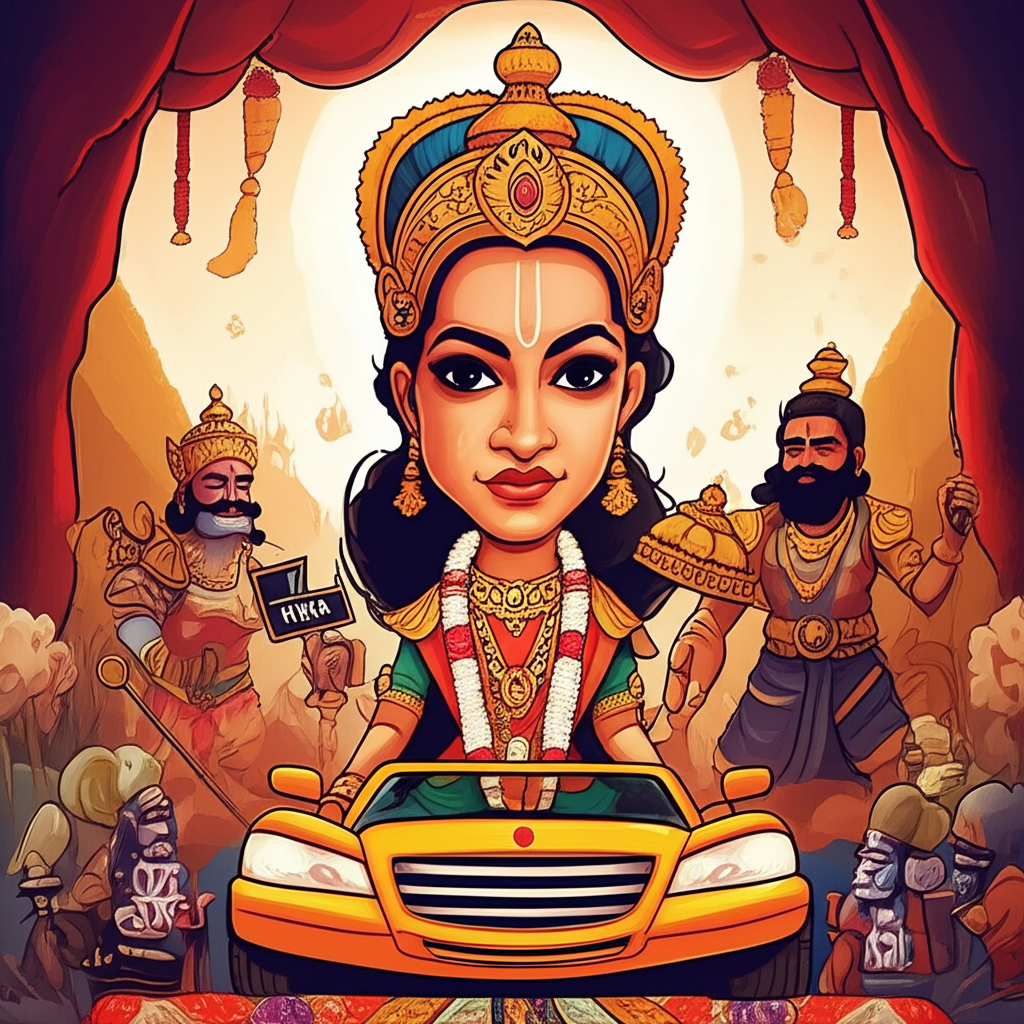
The tale of Lanka, a legendary island kingdom often described as a fortress of immense wealth and mystical power, finds its roots deeply embedded within the rich tapestry of ancient Indian mythology. Specifically, it is a central element of the epic Ramayana, a foundational narrative passed down through generations, shaping the cultural and philosophical understanding of the Indian subcontinent for millennia. This is not a historical account, nor a religious doctrine, but a traditional story, a vibrant thread woven by ancient storytellers to explore profound themes of dharma, karma, and the eternal struggle between good and evil.
The era in which these epics were conceived and shared was one where the lines between the tangible and the divine were often blurred in the human imagination. Life was deeply intertwined with the rhythms of nature, and the cosmos was perceived as a vast, interconnected web of forces, both benevolent and fearsome. Gods, demons, celestial beings, and powerful mortals were not abstract concepts but active participants in the human drama, their actions influencing the fate of individuals and entire kingdoms. This worldview fostered a rich tradition of storytelling, where myths served as vehicles for moral instruction, explanations of natural phenomena, and explorations of the human condition. The Ramayana, with its grand narrative and complex characters, emerged from this fertile ground, offering timeless lessons couched in an imaginative and compelling story.
At the heart of the Lanka narrative lies the figure of Ravana, the formidable Rakshasa king. He is often depicted as a being of immense power, with ten heads and twenty arms, symbolizing his formidable intellect, his vast knowledge, and his extraordinary might. His dominion, Lanka, is portrayed as a veritable paradise, constructed from gold and precious stones, protected by formidable defenses, and inhabited by a formidable army of Rakshasas. Ravana himself is a complex figure, often characterized by his devotion to Shiva, his mastery of the Vedas, and his immense ego. His symbolic attributes are manifold: his ten heads can be seen as representing the ten senses, or perhaps the myriad desires and distractions that can lead even the most learned astray. His twenty arms signify his immense capacity for action, both constructive and destructive. His arrogance and his adherence to his own flawed interpretation of dharma are ultimately his undoing, highlighting the peril of unchecked power and the consequences of transgressing moral boundaries.
The prophecy of Lanka, as it unfolds within the Ramayana, is not a single, explicit pronouncement but rather an unfolding destiny woven through the actions of its characters. The story begins with Ravana’s abduction of Sita, the devoted wife of Prince Rama. This act, a transgression of the highest moral order, sets in motion a cosmic chain of events. Rama, an avatar of Vishnu, embarks on a quest to rescue Sita, aided by an army of Vanaras, monkey-like beings, led by the valiant Hanuman.
The narrative then shifts to the mighty fortress of Lanka, a marvel of ancient engineering and a testament to Ravana’s power. The epic vividly describes the island, its golden palaces shimmering under the sun, its walls impenetrable, and its atmosphere charged with the presence of the Rakshasa army. Rama and his allies launch their assault, a titanic struggle that tests their courage, their strategy, and their faith. The battles are depicted with a grandeur and ferocity that capture the imagination, with celestial weapons, divine interventions, and the clash of extraordinary beings.
The prophecy, in this context, is not a foretelling of doom written in the stars, but rather the inevitable consequence of Ravana’s actions. His pride, his lust, and his defiance of dharma create the conditions for his downfall. The destruction of Lanka, therefore, is not a random act of violence, but the logical outcome of a kingdom built on injustice and ruled by a king consumed by ego. The epic illustrates how even the most magnificent creations, if divorced from righteousness, are ultimately destined to crumble. The golden city, a symbol of material wealth and power, ultimately succumbs to the forces of dharma, personified by Rama and his unwavering resolve. The narrative emphasizes that true strength lies not in brute force or material opulence, but in righteousness, compassion, and adherence to moral principles.
The symbolism within the Lanka narrative is multifaceted. Lanka itself can be interpreted as a representation of the material world, with its allure and its transient nature. Ravana embodies the destructive aspects of unchecked ego, desire, and ignorance, while Rama represents the ideal of dharma, justice, and divine grace. The epic explores themes of loyalty, sacrifice, duty, and the transformative power of devotion. The journey of Rama to rescue Sita is also a metaphor for the soul’s journey towards spiritual liberation, overcoming obstacles and inner demons to attain enlightenment. The Vanara army, with their loyalty and their innate strength, symbolize the potential for goodness and unity that exists even in seemingly humble beings.
In the modern world, the Ramayana and its prophecies of Lanka continue to resonate. The story has been reinterpreted in countless literary works, theatrical productions, and, most notably, in popular culture through animated films, television series, and video games. These modern adaptations often focus on the epic battles, the complex characters, and the underlying themes of heroism and morality, making the ancient narrative accessible to new audiences. Cultural studies scholars analyze the epic for its insights into ancient Indian society, its philosophical underpinnings, and its enduring influence on art and literature.
It is crucial to reiterate that the narrative of Lanka and its prophecy are products of ancient storytelling, born from a specific cultural and historical context. They are valuable for their artistic merit, their exploration of universal human themes, and their contribution to our understanding of cultural heritage. As Muslims, we acknowledge that the ultimate truth and the sole Creator and Sustainer of the universe is Allah (God). Our understanding of reality is guided by divine revelation.
The tales of Lanka and its legendary king serve as a powerful reminder of the enduring human fascination with stories that explore the interplay of power, righteousness, and consequence. They showcase the incredible capacity for imagination that has shaped cultures and continue to captivate minds across generations. By studying these narratives, we gain a deeper appreciation for the diverse ways in which humanity has sought to understand its place in the cosmos, to grapple with moral dilemmas, and to weave tales that illuminate the human spirit. The prophecy of Lanka, in its grand and imaginative retelling, remains a testament to the power of storytelling to inspire, to teach, and to endure.

