
 fufufafa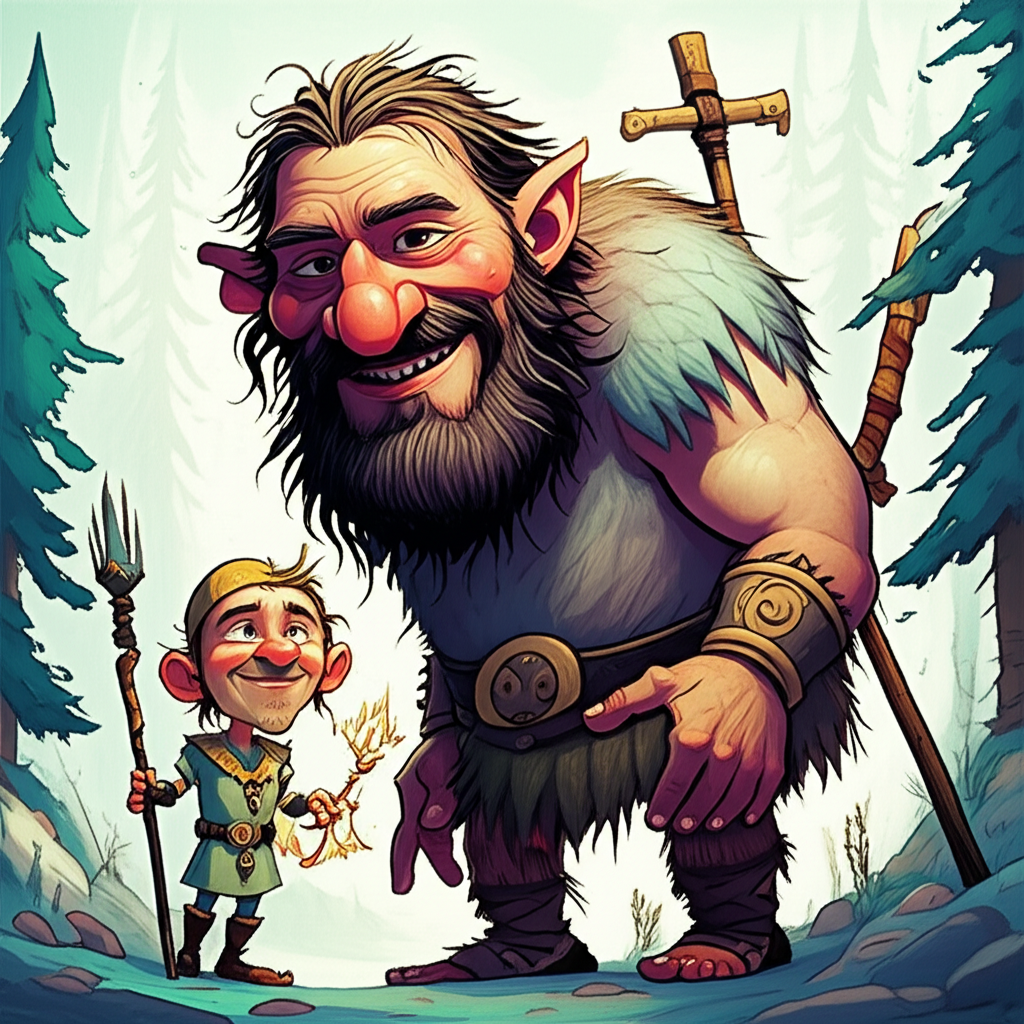
The sagas of the North, woven from the mists of time and the biting winds of harsh landscapes, speak of a world teeming with beings beyond the ken of mortal understanding. Among these ancient tales, the encounter with the Jotnar of Vanaheim offers a glimpse into a spiritual and imaginative universe populated by powerful entities, a universe conceived by the ancient Norse peoples. It is crucial to remember that these are traditional stories, passed down through generations, reflecting the worldview and cultural anxieties of a bygone era, not factual accounts.
The cultural tapestry from which these myths emerge is that of the early Germanic and Scandinavian peoples, likely flourishing during the Viking Age and the preceding centuries. Their lives were intimately tied to the unforgiving rhythms of nature. Long, dark winters tested their resilience, while the vast, untamed forests and the formidable mountains inspired awe and a sense of profound insignificance. In such an environment, the world was not merely a physical space but a realm alive with unseen forces. The Norse peoples viewed their existence as a constant interplay between order and chaos, between the realms of gods, humans, and the primordial giants, the Jotnar. These beings were not necessarily evil, but represented the raw, untamed forces of nature – the frost, the stone, the wildness of the earth.
The Jotnar, often referred to as giants, are depicted as colossal beings, typically embodying the primal elements of the natural world. They are associated with frost, ice, mountains, and the untamed wilderness. Their immense size is a symbolic representation of their power and their dominion over the harsh, unyielding aspects of nature. In some traditions, they possess immense strength and a deep, often ancient, wisdom, born from their connection to the earth’s foundational elements. They are not always adversaries; sometimes, they are depicted as possessing their own complex societies and motivations, often acting as foils or counterpoints to the more ordered realms of the gods. Their symbolic attributes speak to the awe-inspiring, and at times terrifying, power of the natural world that shaped the lives and imaginations of those who told these stories.
Imagine, if you will, a lone traveler, a scout named Bjorn, venturing deep into the northern reaches of Midgard, far beyond the familiar settlements. The air grew thin and sharp, carrying the scent of pine and the distant, mournful cry of a hawk. Bjorn, hardened by years of traversing rugged terrain, felt an unusual stillness settle upon the land. The usual chatter of forest creatures was absent, replaced by a heavy silence that pressed in on him. He had been tasked with charting new hunting grounds, but the landscape itself seemed to whisper warnings.
As he crested a jagged ridge, the vista that unfolded before him was one of stark, breathtaking grandeur. Towering peaks, draped in eternal snow, clawed at a bruised, twilight sky. And there, nestled in a valley shrouded in mist that seemed to shimmer with an unearthly light, was Vanaheim. Or rather, what the ancient stories described as a gateway to it. Not a grand citadel, but a place where the very earth seemed to breathe with ancient power. He saw colossal figures moving in the distance, their forms indistinct against the snow-laden slopes. These were the Jotnar, the frost giants, beings of immense stature and silent power.
Bjorn, despite his courage, felt a primal tremor of apprehension. He had heard the tales of their immense strength, of their dominion over the cold and the wild. He knew that to stumble into their domain uninvited was to court peril. He crept closer, his senses heightened, his hand instinctively reaching for the hilt of his axe. He saw one Jotnar, a titan carved from living rock and ice, tending to what looked like a herd of colossal, shaggy beasts – creatures of myth themselves. Another, with a beard like a frozen waterfall, sat on a boulder the size of a small dwelling, his eyes, like chips of glacial ice, surveying the desolate landscape. They moved with a slow, deliberate grace, their presence exuding an aura of immense, ancient power.
He watched, hidden behind a cluster of wind-sculpted pines, as they communicated not with words he could discern, but with deep, rumbling sounds that vibrated through the very ground. It was a language of the earth, of the wind, of the shifting ice. He saw no aggression, no immediate threat, but a profound sense of otherness, of beings utterly alien to his own existence. He realized then that these were not monsters to be slain, but forces of nature to be understood, to be respected. His mission was not to conquer, but to observe, to report back on the untamed heart of the world. With a silent prayer for safe passage, Bjorn slowly, cautiously, retreated, the image of the silent, colossal Jotnar forever etched in his mind.
This narrative, within its mythological context, likely represented to the ancient Norse peoples the awe-inspiring and often terrifying power of nature. The Jotnar embodied the untamed, primordial forces that shaped their world – the biting frost of winter, the unyielding might of mountains, the wildness of the wilderness. Their encounters, whether with gods or humans, served as a way to personify and understand these overwhelming natural phenomena. The Jotnar could symbolize the challenges of survival, the sheer scale of the natural world that dwarfed human endeavors, and the inherent dangers that lurked beyond the safety of their settlements. They might also represent the chaotic, primal forces that preceded the more ordered realms of the gods, a reminder of the raw essence from which all things emerged.
In the modern era, these ancient myths continue to resonate, finding new life in literature, film, and gaming. The Jotnar have been reimagined as formidable antagonists in fantasy epics, their immense power and elemental affiliations providing compelling adversaries. They appear in comic books, video games, and even as inspiration for character archetypes in various forms of media, often representing the raw, elemental forces that heroes must overcome. Their symbolic weight as embodiments of nature’s power and untamed wildness continues to captivate storytellers and audiences alike, demonstrating the enduring power of these ancient narratives to spark the imagination.
In conclusion, the encounter with the Jotnar of Vanaheim, as told in the sagas of the North, is a rich cultural artifact, a testament to the imaginative spirit of the ancient Norse peoples. It offers a window into how they perceived their world, imbuing natural forces with anthropomorphic qualities and weaving elaborate tales of interactions between different beings. It is a reminder that, as Muslims, we recognize that only Allah (God) is the true Creator and Sustainer of all that exists, the ultimate power behind the universe. These traditional stories, however, hold value not as declarations of truth, but as expressions of human heritage, of our innate desire to understand our place in the cosmos through the enduring tradition of storytelling and the boundless realms of imagination.


