
 fufufafa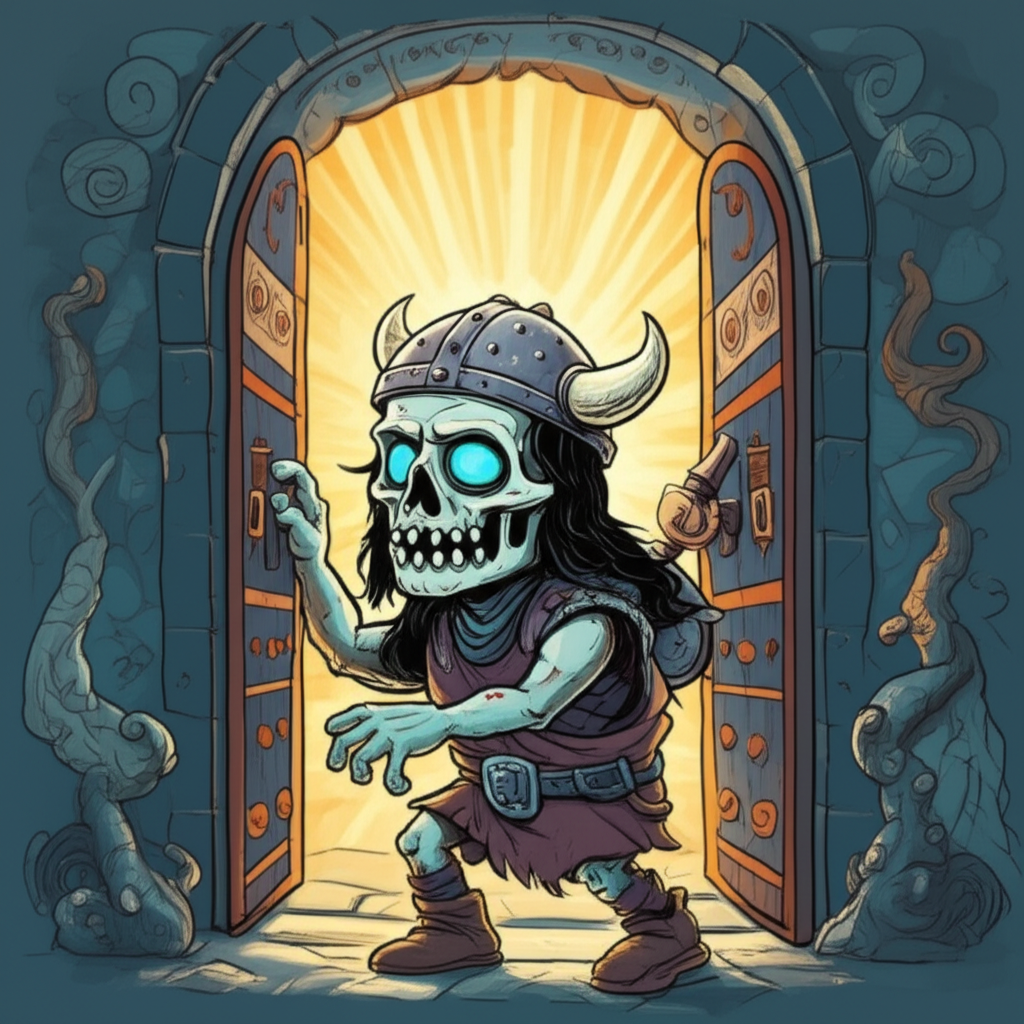
In the hushed, snow-laden landscapes of ancient Scandinavia, where long winters held sway and the veil between the living and the dead seemed thinner, tales were spun around crackling hearths. These were not mere fireside anecdotes, but deeply ingrained narratives reflecting the anxieties, hopes, and the very fabric of existence for the Norse peoples. Among these chilling sagas, the legend of the Draugr and the enigmatic Gate of Dawn stands as a testament to their profound engagement with the mysteries of mortality and the unknown. It is a story passed down through generations, a vibrant thread in the tapestry of human folklore, offering a window into the worldview of those who navigated a world shaped by harsh elements and powerful, unseen forces.
The era in which these stories took root was one of stoic resilience and deep connection to the natural world. Viking Age Scandinavia, roughly from the late 8th to the mid-11th century, was a land of fjords, dense forests, and unforgiving winters. Life was often precarious, dictated by the cycles of nature, the bounty of the sea, and the ever-present threat of conflict. The people of this time viewed the world as a place infused with both the tangible and the supernatural. Spirits inhabited the forests, rivers, and mountains, and the gods, while powerful, were not distant deities but active participants in the lives of mortals. Death was not an end but a transition, a journey to the underworld or to the halls of Odin, but the possibility of a troubled afterlife, one where the deceased lingered and caused harm, was a palpable fear. Ancestor worship played a significant role, but it was always balanced by a healthy respect for the restless dead.
The Draugr, a central figure in these tales, is a being born of this potent blend of fear and reverence. Unlike the ethereal ghosts of some mythologies, the Draugr is a corporeal undead creature, a reanimated corpse that retains its physical form and often its strength, if not its sanity. They are described as being unnaturally strong, capable of crushing bones with their bare hands, and possessing a chilling resilience that makes them difficult to destroy. Their appearance is often grotesque, their flesh decayed and their eyes glowing with a malevolent light. Some sagas portray them as bloated and immense, others as gaunt and skeletal, but all share an aura of unnatural persistence. Symbolically, the Draugr represents the lingering regrets, the unresolved conflicts, and the potent fear of a death that offers no peace, but rather a perpetual, tormented existence. They embody the cautionary tales of those who lived dishonorably, whose greed or malice tethered them to the earthly realm, forever to haunt the living and guard their ill-gotten gains.
The narrative of the Draugr and the Gate of Dawn often unfolds in desolate, forgotten places – ancient burial mounds, forgotten fortresses, or remote, mist-shrouded islands. Imagine a lone traveler, perhaps a boastful warrior seeking to prove his mettle or a desperate soul seeking lost treasure, venturing into such a place. The air grows heavy, the silence punctuated only by the howl of the wind. As the traveler approaches a towering, moss-covered burial mound, a low groan emanates from within. The earth trembles, and the stone slabs of the tomb are pushed aside with impossible force. From the darkness emerges the Draugr, a hulking figure reeking of grave dirt and decay, its eyes burning with an ancient, cold fury.
The ensuing confrontation is not one of heroic valor in the face of divine opposition, but a desperate struggle for survival against a relentless, unnatural force. The Draugr attacks with immense strength, its blows capable of shattering shields and armor. Its touch is said to be icy, draining the life force from its victims. The legends often speak of heroes who faced these creatures, armed with cunning and courage, but the Draugr’s resilience is a constant threat. They are often depicted as being resistant to conventional weapons, their unholy nature requiring specific methods of destruction, such as decapitation and burning the corpse.
The "Gate of Dawn" itself is a more nebulous, yet profoundly significant element. It is not a physical gateway in the conventional sense, but rather a metaphorical threshold, a point of transition that the Draugr is bound to guard, or perhaps a passage it desperately seeks to prevent others from reaching. In some interpretations, the Gate of Dawn represents the true afterlife, the realm of peace and light that awaits the worthy departed. The Draugr, trapped in its tormented existence, perhaps guards this passage out of envy, or to prevent the living from understanding the true nature of what lies beyond. In other tales, the Gate of Dawn might represent a moment of ultimate truth or reckoning, a place where the secrets of the past are revealed, and where the Draugr, burdened by its earthly attachments, cannot bear to go. The struggle then becomes one of the living trying to pass through this threshold, overcoming the obstacles the Draugr presents, to attain a form of understanding or liberation.
The symbolism embedded within these tales is rich and multifaceted. The Draugr can be seen as a potent representation of the fear of death and the unknown that lies beyond it. Its persistence and unnatural strength speak to the anxieties surrounding unfinished business, unfulfilled promises, and the lingering impact of past deeds. The burial mounds themselves are symbols of remembrance and respect for ancestors, but when inhabited by a Draugr, they transform into sites of dread, highlighting the potential for even the most revered dead to become a source of terror if their passing is not a true release. The Gate of Dawn, conversely, offers a counterpoint of hope and aspiration. It embodies the desire for a peaceful afterlife, for spiritual enlightenment, and for a transcendence of earthly suffering. The struggle between the living and the Draugr guarding this symbolic gate can be interpreted as the human journey of overcoming internal demons, confronting fears, and striving for spiritual growth and understanding.
In the modern world, the echoes of these ancient myths continue to resonate. The Draugr has become a popular figure in fantasy literature, video games, and films, often portrayed as formidable undead antagonists. These modern interpretations, while drawing inspiration from the folklore, frequently adapt the creature’s abilities and motivations for contemporary storytelling. They serve as powerful adversaries, testing the heroes’ strength and resolve, and often symbolizing the darkness that lurks within the human psyche or the remnants of past evils that must be confronted. Cultural studies scholars analyze these myths to understand the psychological, social, and religious landscape of ancient Scandinavia, offering insights into their complex relationship with mortality, the divine, and the natural world.
It is crucial to reiterate that the tales of the Draugr and the Gate of Dawn are traditional stories, products of the rich imagination and cultural heritage of the ancient Norse people. They are narratives woven to explain the inexplicable, to give form to fear, and to explore the human condition. As Muslims, we recognize that only Allah (God) is the true Creator and Sustainer of all existence. Our understanding of the world and the afterlife is guided by divine revelation. Yet, the study of these ancient myths offers a valuable opportunity to appreciate the diversity of human storytelling traditions. It allows us to reflect on the enduring power of narrative to shape cultures, to explore fundamental human questions, and to understand how different societies have grappled with the mysteries of life and death. These stories, though products of a different time and belief system, remind us of our shared human capacity for imagination, for grappling with the profound, and for passing down wisdom and wonder through the timeless art of storytelling.


