
 fufufafa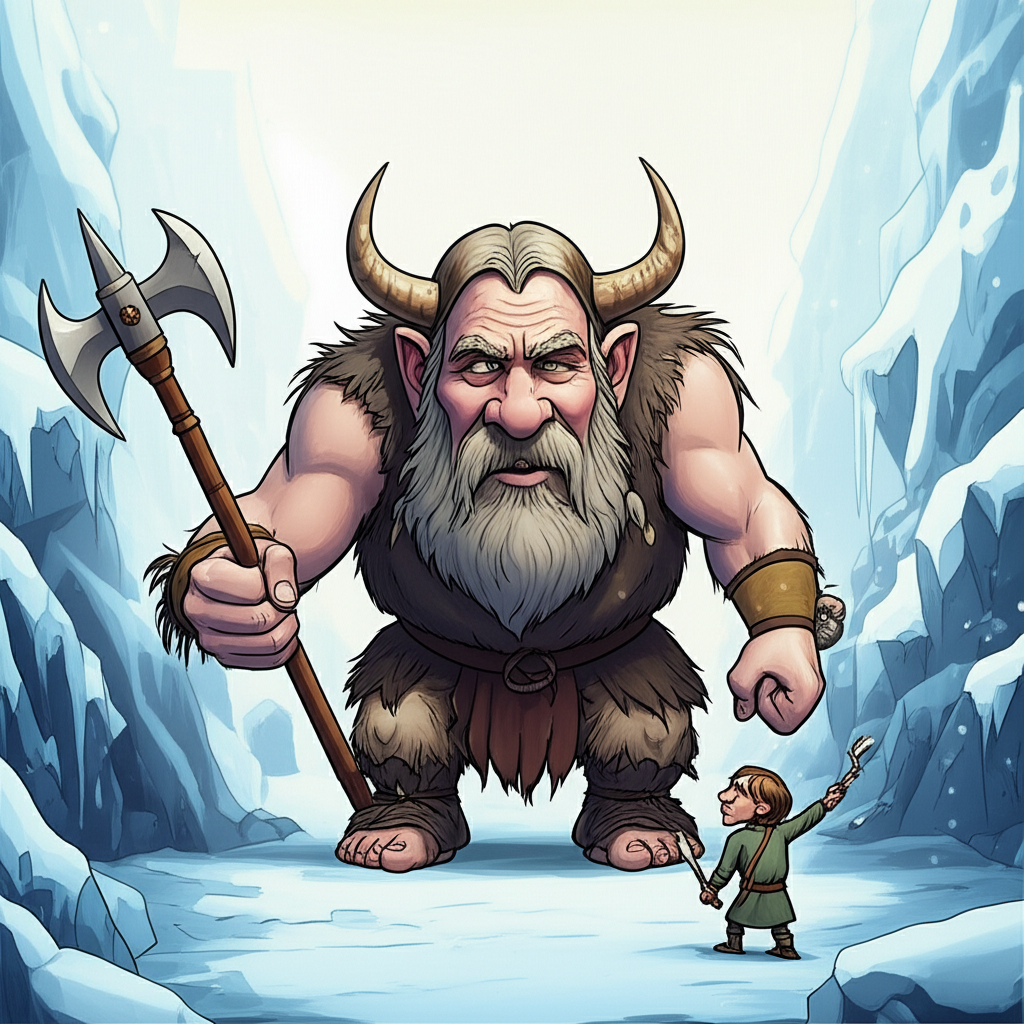
The biting wind carries tales from the north, whispers of ancient peoples who looked to the dramatic landscapes of Scandinavia for answers to life’s great mysteries. Among these stories, passed down through generations around crackling hearths and during long, dark winters, are the Norse myths. These are not historical accounts, but vibrant narratives woven from the collective imagination of cultures that once thrived in a world of stark beauty and formidable natural forces. It is within this rich tapestry of folklore that we encounter the Jotnar of Niflheim, beings born from the primal cold and shadow, whose stories offer a glimpse into the worldview of those who told them.
The era in which these myths took root was one of resilience and deep connection to the natural world. The Norse peoples, inhabiting lands of fjords, mountains, and vast, unforgiving winters, saw their environment as a powerful, often capricious entity. Their lives were shaped by the relentless cycles of the seasons, the raw power of storms, and the ever-present threat of the untamed wilderness. In such a setting, it was natural for their stories to reflect this awe and respect for the forces beyond human control. The world was not simply a backdrop; it was alive, imbued with spirits, gods, and colossal beings that embodied the very essence of its elements. The concept of a cosmic struggle between opposing forces – order and chaos, light and darkness, warmth and cold – was a fundamental aspect of their understanding, a framework through which they navigated the uncertainties of existence.
Among the most formidable of these elemental beings were the Jotnar, often translated as giants. They were not the lumbering, dim-witted figures of later fairy tales, but ancient, powerful entities who predated the gods themselves. The Jotnar of Niflheim, specifically, were the embodiments of ice, frost, and primordial darkness. Imagine them as colossal beings sculpted from the very glaciers that carved the northern landscapes. Their skin might be the colour of a winter sky just before a blizzard, their breath a mist that freezes upon contact, and their eyes like chips of glacial ice, reflecting the stark, unforgiving beauty of their homeland. Their strength was legendary, capable of shattering mountains and diverting rivers. They were not inherently evil in the human sense, but rather forces of nature, often primal and untamed, representing the wild, untamable aspects of the world that existed before the structured order of the gods. Their symbolic attributes spoke of the raw, unyielding power of the cold, the vastness of the unknown, and the ancient, elemental forces that shaped the cosmos.
Let us venture, then, into the chilling realm of Niflheim, a place of perpetual mist and biting frost, where the air itself seems to crackle with an ancient cold. This is not a journey undertaken lightly, but one that the old tales describe as fraught with peril. Picture a lone traveler, perhaps a hunter or a seeker of forgotten knowledge, who, by accident or design, finds themselves straying too far into the desolate north. The familiar paths dissolve, replaced by a landscape of jagged ice formations that pierce the grey sky like the teeth of some colossal beast. The silence is profound, broken only by the mournful howl of the wind that seems to carry the groans of the earth itself.
As the traveler presses onward, the air grows impossibly cold, numbing the limbs and stealing the breath. Then, a shadow falls, not of cloud, but of something immense and ancient. Emerging from the swirling mists, the traveler beholds a Jotnar. It is a being of staggering size, its form suggesting the raw, untamed power of the frozen north. Its presence is not merely physical; it is an overwhelming sensation of ancient cold and primal force. The Jotnar might stand as tall as a mountain peak, its limbs like ancient trees encased in ice. Its face, if it can be called that, is a landscape of frozen furrows and sharp angles, with eyes that hold the chilling stillness of a winter night.
The encounter is not one of dialogue, but of raw presence. The Jotnar’s very existence emanates a palpable aura of frost and desolation. The traveler feels a primal fear, not of malice, but of being utterly overwhelmed by a force far beyond human comprehension. The Jotnar might not speak, but its gaze, like the piercing chill of an arctic wind, seems to probe the traveler’s very essence. The air around it is so cold that it could freeze flesh instantly. The ground trembles slightly with its movements, and the mist seems to writhe and swirl in its wake. The traveler’s thoughts might turn to the insignificance of their own existence against such elemental power, a stark reminder of the vast, indifferent forces that govern the world. It is a moment of profound vulnerability, a confrontation with the raw, untamed nature that exists outside the warmth of human civilization. The Jotnar, in this narrative, is not a character with motivations or intentions, but a living embodiment of the cold, the wild, and the ancient.
To the ancient Norse people, stories like this served as a profound exploration of their world and their place within it. The Jotnar, particularly those of Niflheim, likely represented the immense, often terrifying, power of nature. The relentless cold of winter, the vast, unexplored glaciers, and the biting winds could be personified as these colossal beings. They might have symbolized the challenges of survival in a harsh environment, the fear of the unknown, and the primal forces that existed before the gods brought order to the cosmos. The encounter with a Jotnar could also be interpreted as a reminder of humanity’s vulnerability and the importance of respecting the natural world. It was a way of understanding the untamed aspects of existence, the chaos that lay just beyond the boundaries of their settlements and their carefully constructed lives.
In the modern world, the legacy of these Norse myths, including the figures of the Jotnar, continues to resonate. They are a rich source of inspiration for literature, film, and video games, where these colossal beings often appear as formidable antagonists or embodiments of raw, elemental power. From epic fantasy novels to blockbuster movies, the imagery of frost giants and their chilling realms is instantly recognizable. In academic circles, these myths are studied for their insights into ancient Scandinavian culture, their worldview, and their understanding of the natural world. They are examined as valuable artifacts of human storytelling, revealing how ancient peoples grappled with fundamental questions of existence, power, and the forces that shaped their lives.
In conclusion, the encounter with the Jotnar of Niflheim is a vivid narrative born from the imagination of ancient Norse storytellers. It is a testament to their deep connection with the natural world and their efforts to understand its formidable power through myth and legend. These stories, while captivating and culturally significant, are traditional tales, not historical facts or divine pronouncements. As Muslims, we recognize that the true Creator and Sustainer of all existence is Allah (SWT). These ancient narratives, however, offer us a window into the rich heritage of human storytelling, the enduring power of imagination, and the ways in which different cultures have sought to make sense of the world around them. They remind us of the beauty of diverse cultural expressions and the profound human need to weave stories that explain, inspire, and endure.


