fufufafa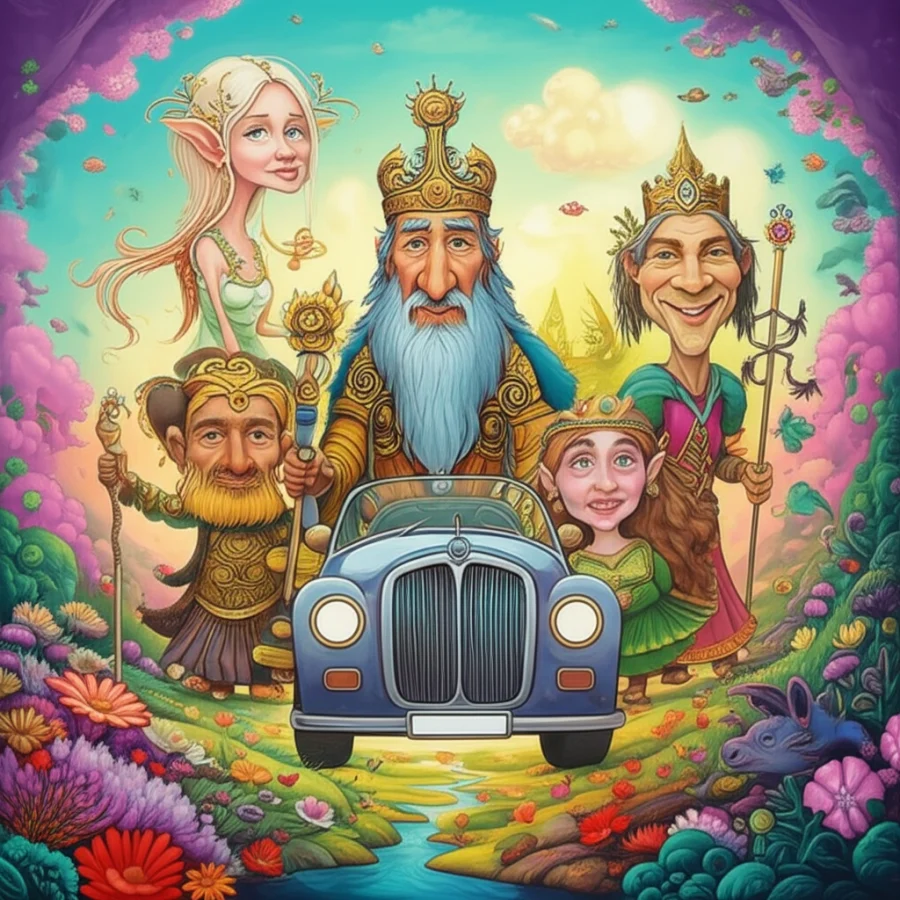
From the emerald isle of Ireland, a land steeped in mist and legend, emerges a captivating narrative woven from the threads of ancient folklore: the myth of the Tuatha Dé Danann and their fabled realm, Tír na nÓg. This is not a chronicle of historical fact, nor a doctrine to be embraced, but rather a traditional story, a tapestry of imagination spun by the storytellers of a bygone era, offering a glimpse into their worldview and the tales that shaped their understanding of the world.
The stories of the Tuatha Dé Danann and Tír na nÓg likely took root and flourished during a period in Irish history when oral tradition was paramount. This was an era where the natural world held a profound and often mystical significance. The dense forests, the ever-present sea, the changing seasons, and the very earth itself were perceived not just as physical entities, but as imbued with unseen forces and ancient spirits. Life was often dictated by the rhythms of agriculture and the vagaries of nature, leading to a deep reverence for the cycles of growth, decay, and renewal. The people of this time viewed the world as a place where the veil between the mundane and the marvelous was thin, where the actions of humans could be influenced by beings of great power and otherworldly wisdom. It was in this fertile ground of wonder and respect for the unseen that the legends of the Tuatha Dé Danann took flight.
The Tuatha Dé Danann, in these ancient tales, are depicted as a race of beings who arrived in Ireland before the advent of human settlers. They are often described not as gods in the Abrahamic sense, but as a powerful, magical, and almost divine folk, possessing extraordinary abilities. Their attributes are symbolic, representing ideals and forces that resonated with the ancient Irish. They are associated with mastery over the elements, with profound wisdom, and with an uncanny connection to the natural world. Their presence signifies a time of great knowledge, advanced craftsmanship, and a deep understanding of the subtle energies that govern existence. They are often portrayed as possessing immense beauty and grace, embodying a form of primordial perfection. Their skills in weaving, metalworking, and magic are legendary, reflecting an admiration for artistry and the power of creation.
The most alluring aspect of the Tuatha Dé Danann lore is their connection to Tír na nÓg, the Land of Eternal Youth. This is not a geographical location easily found on any map, but a mythical paradise, a realm beyond the ordinary passage of time. The narrative often begins with a mortal, usually a young man of noble bearing, encountering a captivating maiden from Tír na nÓg. Perhaps it is Niamh of the Golden Hair, her beauty so radiant that it eclipses the sun, her voice like the music of the spheres. She arrives on a magnificent white horse, its mane flowing like silver mist, and beckons the mortal to accompany her to her homeland.
Driven by curiosity, by a yearning for something more, or perhaps by the irresistible allure of Niamh herself, the mortal agrees. He embarks on a journey across the shimmering sea, guided by Niamh and her ethereal steed. As they approach Tír na nÓg, the world transforms. The air is perpetually sweet, the sun always shines with a gentle warmth, and there is no sickness, no old age, and no death. Laughter echoes through verdant meadows where flowers bloom eternally, and sparkling rivers flow with clear, sweet water. The inhabitants of Tír na nÓg are eternally young and vibrant, their lives filled with joy, music, and feasting. They possess an intimate knowledge of nature’s secrets and live in perfect harmony with their surroundings. The mortal, enchanted by this idyllic existence, revels in its delights, forgetting the world he left behind.
However, the allure of Tír na nÓg is often presented with a subtle, underlying caution. While the land offers eternal youth and happiness, it also demands a complete severance from one’s mortal past. Time flows differently, or not at all, for its inhabitants. The mortal, though initially captivated, may eventually feel a pang of longing for his own kin, for the familiar scent of his homeland, for the fleeting beauty of his own transient world. The stories often recount the mortal’s eventual decision to return, only to discover that centuries have passed in his absence. His loved ones are long gone, his homeland transformed, leaving him a stranger in a world that has moved on without him. This return often signifies a profound sense of loss and the realization that even eternal youth cannot compensate for the richness of human experience, with all its joys and sorrows, its beginnings and its endings.
The symbolism embedded within the myth of the Tuatha Dé Danann and Tír na nÓg is multifaceted. The Tuatha Dé Danann themselves can be seen as representing the forces of nature, the primal energies of the earth, and the ancestral wisdom of the land. Their magical prowess and connection to the unseen speak to a world where the spiritual and the material were intricately intertwined. Tír na nÓg, in its essence, symbolizes an idealized state of being – one of perpetual joy, beauty, and freedom from suffering. It can represent the human yearning for immortality, for a perfect existence free from the ravages of time and mortality. However, the cautionary element of the stories suggests a deeper understanding of the value of the mortal journey. The tale may have served as a reminder that true fulfillment is often found not in escaping life’s challenges, but in embracing its complexities, its impermanence, and the rich tapestry of human relationships that are forged within the confines of a mortal existence. It might also reflect a fascination with the "otherworld," a common theme in Celtic mythology, representing a spiritual or magical dimension accessible through certain rituals or by those with a special connection.
In the modern era, the myth of the Tuatha Dé Danann and Tír na nÓg continues to capture the imagination. These ancient tales have been a wellspring of inspiration for countless works of literature, from poetry and novels that retell the legends with contemporary flair to scholarly analyses exploring their cultural significance. In the realm of visual arts, these figures and their otherworldly domain have been depicted in paintings and illustrations, bringing their ethereal beauty to life. Furthermore, these myths have found their way into popular culture, influencing fantasy games, films, and television series, where the concept of magical beings and hidden realms continues to resonate with audiences. They are studied in academic settings, providing valuable insights into the beliefs, values, and storytelling traditions of ancient Irish society.
In conclusion, the myth of the Tuatha Dé Danann and their enchanting realm of Tír na nÓg is a testament to the enduring power of human imagination and the rich cultural heritage of Ireland. It is a story passed down through generations, a narrative that speaks of a time when the world was perceived through a lens of wonder and mystery. As Muslims, we recognize that only Allah (SWT) is the true Creator and Sustainer of all existence, the ultimate source of power and truth. These ancient stories, while captivating and culturally significant, remain within the realm of folklore and imaginative storytelling. They offer us a window into the past, a chance to appreciate the creativity and the worldview of our ancestors, and to understand the enduring human desire to explore the unknown and to ponder the nature of existence, beauty, and the passage of time. The whispers of Tír na nÓg remind us that the greatest journeys are often those of the mind and spirit, enriched by the traditions and the imaginative tales that shape our understanding of the world and our place within it.