fufufafa
From the mist-shrouded shores of ancient Ireland, where the wild Atlantic winds have carved stories into the very landscape, comes a rich tapestry of myths and legends. Among these, the tale of Manannán mac Lir and his dominion over the sea stands as a potent reminder of how our ancestors sought to understand the vast, untamed forces that shaped their world. This is not a chronicle of divine pronouncements, but a traditional story, passed down through generations, reflecting the imaginative spirit and the deep connection to nature held by the ancient Celts.
The era in which these stories took root was one where the boundaries between the physical and the mystical were far more fluid. Life was intimately intertwined with the rhythms of nature. The sea, a source of both sustenance and peril, was a constant, awe-inspiring presence. For the people of early Ireland, the world was a place alive with spirits, gods, and powerful beings who influenced every aspect of existence, from the turning of the seasons to the success of a fishing expedition. The sea, in particular, with its unpredictable moods, its hidden depths, and its ability to both connect and isolate, was a realm ripe for myth-making. It was a place of mystery, a boundary between their known world and the unknown, a frontier where the imagination could roam free.
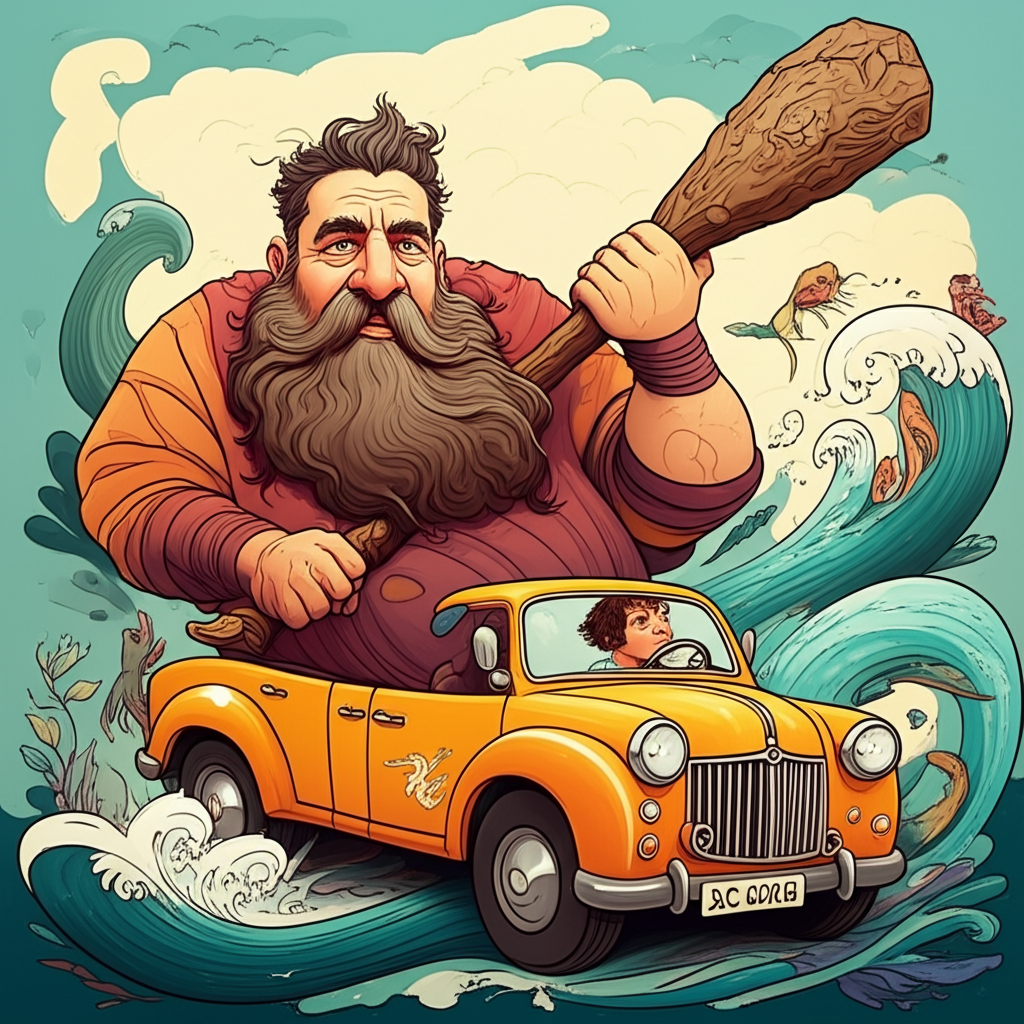
At the heart of this particular legend is Manannán mac Lir, a figure often depicted as a powerful sea deity, the King of the Otherworld of the Sea. It is important to understand that such figures, within their cultural context, were not seen as literal beings to be worshipped in the way that divine entities are understood in monotheistic traditions. Instead, Manannán embodied the very essence of the ocean – its vastness, its power, its elusive nature, and its capacity for both creation and destruction. His attributes often included a magical cloak that could transform into a ship, a mist-shrouding power to conceal his lands, and the ability to control the tides and storms. He was not a god to be prayed to for favors, but a personification of forces that were deeply respected and sometimes feared. His symbolic attributes represented the unpredictable and awe-inspiring power of the sea, its ability to conceal and reveal, and its role as a gateway to other realms.
The narrative of Manannán mac Lir and the Hidden Sea often centers on his otherworldly domain, a land of perpetual mist and magical islands, accessible only to those who possessed certain knowledge or were favored by the sea god himself. It is said that Manannán’s kingdom lay beneath the waves, or perhaps beyond the veil of ordinary sight, a place of beauty and wonder, yet also of profound mystery. Tales speak of him as a protector of his realm, a powerful sorcerer who could conjure illusions and protect his people from the intrusions of the mortal world. His presence was felt in the roaring of the waves, the eerie silence of the deep, and the shimmering mirages that danced on the horizon.
One recurring theme involves mortals who, through daring or fate, manage to glimpse or even enter Manannán’s hidden realm. These encounters often involve trials and tests, where the wisdom and courage of the mortal are measured against the magic and power of the sea king. Perhaps a fisherman, lost in a fog, stumbles upon a spectral island, or a warrior, seeking a lost love, embarks on a perilous journey across a seemingly endless ocean, only to find themselves in a land where time flows differently and the very air hums with magic. Manannán, in these stories, might appear as a majestic, perhaps even intimidating, figure, his form shifting like the sea itself, his voice like the murmur of the tides. He would often offer cryptic advice or set impossible tasks, reflecting the capricious nature attributed to the ocean. The stories are not about divine intervention in the sense of salvation, but about the interaction between the human world and the vast, powerful forces of nature, as understood through the lens of imaginative storytelling.
The symbolism embedded within these tales is rich and multifaceted. Manannán mac Lir, as the embodiment of the sea, represented the untamable aspects of nature. His hidden realm symbolized the mysteries of the unknown, the subconscious, and the spiritual dimensions that ancient peoples perceived beyond their everyday lives. The mist he conjured spoke to the elusiveness of truth, the blurring of reality, and the need for discernment. His power over the waters reflected the vital importance of the sea for survival, but also its capacity for overwhelming destruction. The stories might have served as a way to articulate fears of the unknown, to imbue the sea with a personality, and to explore themes of courage, wisdom, and the limits of human understanding when faced with the immense forces of the natural world.
In the modern era, the echoes of Manannán mac Lir resonate in various forms of creative expression. He appears in contemporary literature, often as a powerful, enigmatic character in fantasy novels that draw inspiration from Celtic mythology. His presence can be felt in video games that explore mythical landscapes and in films that weave tales of magic and the sea. For scholars and enthusiasts of folklore, Manannán remains a fascinating figure, offering insights into the worldview of ancient Irish societies, their relationship with their environment, and the enduring power of storytelling to shape cultural identity. These modern interpretations, however, are distinct from the original cultural context and are products of contemporary imagination.
It is crucial to reiterate that the tales of Manannán mac Lir are traditional narratives, woven from the threads of ancient imagination and cultural understanding. They are not factual accounts or religious doctrines. As Muslims, we hold the firm belief that only Allah (God) is the sole Creator and Sustainer of all that exists. Our understanding of the world is rooted in divine revelation and the absolute oneness of God. These ancient stories, therefore, are appreciated for their cultural heritage, their imaginative artistry, and their historical significance as windows into the minds and beliefs of past civilizations. They remind us of the enduring human impulse to create meaning, to understand the world around us, and to share stories that connect us to our past and to the vast landscape of human imagination. The whispers of the waves, carried on the wind from ancient Ireland, continue to tell a tale, not of divinity, but of the enduring power of human creativity and the stories we tell to make sense of the world.