fufufafa
In the mist-shrouded isles of ancient Ireland, where the emerald land meets the tempestuous Atlantic, a rich tapestry of myths and legends has been woven over centuries. These are not tales of historical fact, but rather the imaginative expressions of a people seeking to understand the world around them, their place within it, and the forces they perceived as shaping their destinies. Among these enduring narratives is the story of Manannán mac Lir, a powerful figure of the sea, and his legendary hidden city. This is a story passed down through generations, a testament to the enduring power of human storytelling and a window into the worldview of ancient Celtic societies.
The era in which such tales flourished was one deeply intertwined with nature. The environment was not merely a backdrop but a living, breathing entity, imbued with unseen powers. For the ancient Celts, the world was a place of constant flux, governed by forces that were both benevolent and fearsome. The sea, in particular, held a profound and often terrifying significance. It was a source of sustenance, a highway for trade, and a vast, unknowable abyss capable of both immense beauty and utter destruction. It was within this context of deep respect and awe for the natural world that the legend of Manannán mac Lir took root.
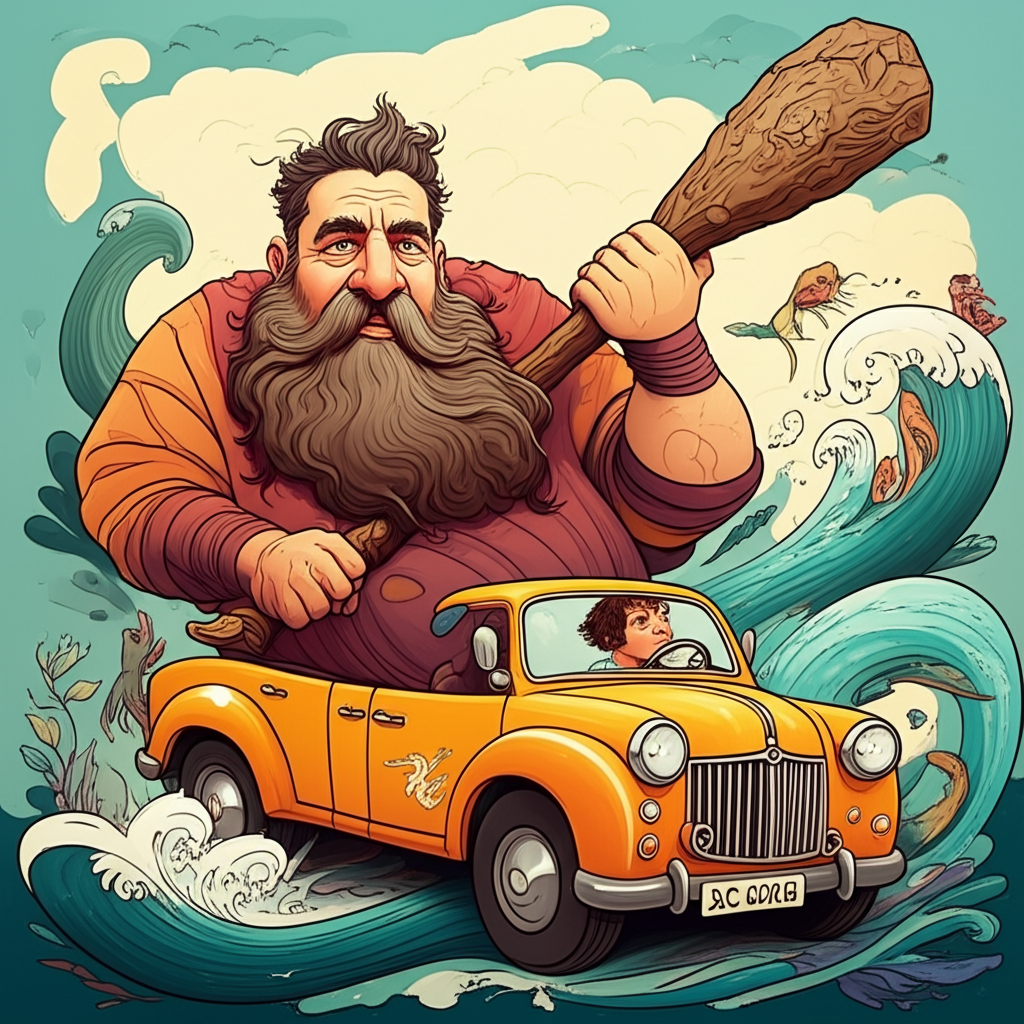
Manannán mac Lir, as he appears in these ancient narratives, is a being intrinsically linked to the ocean. He is often depicted as a god or a powerful spirit of the sea, an otherworldly figure whose domain is the churning depths and the boundless horizon. His attributes are symbolic of the sea’s dual nature. He might be described as possessing a cloak that could conjure mist, concealing his presence and ships from mortal eyes, much like the fogs that roll in from the ocean. His chariot, drawn by horses with manes of seafoam, represents the swift and relentless movement of the waves. He is also associated with the Otherworld, a parallel realm of spirits and magical beings, suggesting the sea as a gateway to mysteries beyond human comprehension. These are not to be interpreted as literal descriptions, but rather as symbolic representations of the sea’s power, its elusive nature, and the profound sense of wonder and trepidation it inspired.
The tale of Manannán mac Lir and his hidden city often unfolds as a narrative of the marvelous and the unattainable. Imagine, if you will, a time when the edges of the known world were still shrouded in mystery. Fishermen, venturing further than ever before, would speak of strange lights beneath the waves, of islands that appeared and disappeared with the tides, and of melodies carried on the wind that seemed to emanate from the ocean’s heart. These whispers, it was said, spoke of Tír Tairngire, the Land of Promise, or sometimes simply referred to as the hidden city of Manannán.
This city, according to the stories, was a place of unparalleled beauty and abundance, a realm of eternal youth and joy, concealed beneath the waves or beyond the farthest mists. It was a place that mortals could glimpse but rarely reach. Perhaps a lost sailor, caught in a storm and inexplicably guided to its shores, would find himself in a city of crystalline structures, where music perpetually played and feasting never ended. He might witness Manannán himself, a figure of majestic presence, perhaps cloaked in shimmering scales or wearing a crown of coral, presiding over this ethereal domain. The inhabitants of this city, if they were seen at all, were often described as possessing an otherworldly grace, their lives untouched by the hardships of the mortal world. However, the price of such beauty was often the inability to return to one’s own life, or the fading of mortal memory upon stepping back onto familiar shores. The city remained a tantalizing vision, a dream of perfection forever just out of reach, a place that existed more in the realm of imagination than in any physical reality.
The symbolism embedded within this myth is rich and multifaceted. The hidden city, accessible only through extraordinary circumstances or by the will of Manannán, could represent the unattainable ideals and desires that humans often hold. It might have symbolized the allure of a perfect afterlife, a respite from the struggles of daily existence. Manannán himself, as the lord of this realm, embodied the immense and often unpredictable power of the sea, a force that could nurture and destroy in equal measure. The mist and illusions associated with him could speak to the deceptive nature of appearances, and the idea that what seems real may be merely a fleeting illusion. The story, therefore, served as a way for people to process their awe and their anxieties about the vast, unknown forces that governed their world, particularly the powerful and mysterious ocean.
In contemporary times, the echoes of these ancient tales resonate in various forms of modern culture. Manannán mac Lir, as a figure of Celtic mythology, has found a place in literature, particularly in fantasy novels that draw inspiration from Irish folklore. He appears in games, where his powers and association with the sea are often translated into magical abilities or narrative elements. Scholars of folklore and mythology study these stories to understand the beliefs, values, and societal structures of ancient peoples. The enduring appeal of these narratives lies in their exploration of universal themes: the human yearning for paradise, the confrontation with the unknown, and the power of the natural world.
It is important to reiterate that the tale of Manannán mac Lir and his hidden city is a product of ancient storytelling, a rich vein of cultural heritage passed down through generations. These narratives, while imaginative and thought-provoking, are not to be considered factual accounts or religious dogma. As Muslims, we hold the firm belief that only Allah (God) is the true Creator and Sustainer of all that exists. He is the ultimate source of power and the only being worthy of worship.
Nevertheless, exploring these ancient myths offers a valuable perspective on the evolution of human thought and the diverse ways in which people have sought to interpret their existence. They highlight the enduring human capacity for imagination, the power of storytelling to convey complex ideas and emotions, and the profound connection that ancient societies felt with the natural world. The whispers of Manannán and his hidden city, though a legend from a distant past, continue to remind us of the richness of our cultural heritage and the timeless art of weaving tales.