fufufafa
In the rugged, mist-shrouded landscapes of ancient Ireland, where emerald hills met the tempestuous Atlantic, a tapestry of myths and legends was woven into the very fabric of life. These were not mere tales spun for entertainment, but profound narratives that helped people understand their world, their place within it, and the forces they believed shaped their destinies. Among these ancient stories, the legend of Morrigan and the Hidden Mountain stands as a testament to the rich imaginative spirit of the Celtic peoples, offering a glimpse into their worldview.
Origins and Cultural Background: A World of Spirits and Cycles
The stories of Morrigan emerged from the Iron Age Celtic cultures of Ireland, a time characterized by tribal societies, warrior traditions, and a deep reverence for nature. For these ancient peoples, the world was not a purely material place. It was believed to be imbued with a potent spiritual energy, alive with unseen forces and inhabited by a multitude of beings – gods, spirits, and mythical creatures. The natural world, from the rustling of leaves to the roar of the ocean, was seen as a manifestation of these divine and supernatural powers. Life itself was understood in cyclical terms: birth, death, and rebirth, mirrored in the changing seasons, the ebb and flow of tides, and the journey of the sun and moon. Their beliefs were intertwined with the land, with sacred groves, ancient stone circles, and hidden springs holding immense significance. It was within this context of a vibrant, spirit-filled world, where the veil between the mortal and the divine was thin, that tales like that of Morrigan flourished.
Character Description: The Raven of Prophecy
Central to this legend is Morrigan, a figure who, within the context of Celtic mythology, is often depicted as a complex and multifaceted entity. She is frequently associated with the raven, a bird often seen as a harbinger of fate, a watcher of battlefields, and a symbol of mystery and transformation. In these ancient narratives, Morrigan is not a single, static goddess but can manifest in various forms, appearing as a crow, a queen, or even a woman weaving the fates of warriors. Her symbolic attributes lie in her connection to prophecy, battle, sovereignty, and the wild, untamed forces of nature. She represents the cyclical nature of life and death, the inevitable march of destiny, and the raw power that can both create and destroy. Her presence is often felt rather than seen, a whisper on the wind, a shadow at the edge of vision, embodying the awe and trepidation that ancient peoples felt towards the unknown.
The Main Story / Narrative Retelling: The Quest for the Hidden Mountain
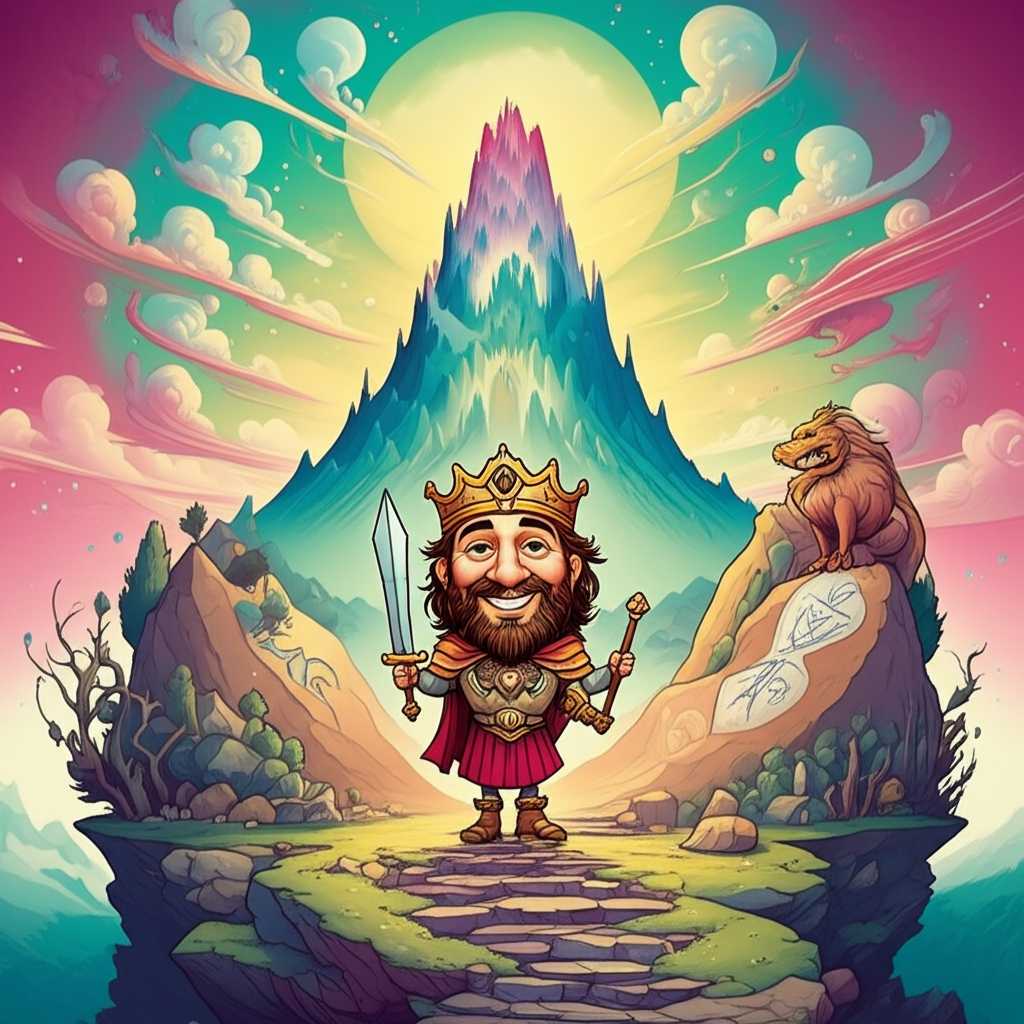
The legend of Morrigan and the Hidden Mountain often speaks of a great and fearsome mountain, veiled from mortal sight by an enchantment of Morrigan’s making. This mountain was said to be a place of immense power, holding ancient secrets and perhaps even the very wellsprings of destiny. It was a destination sought by heroes and kings, not for material wealth, but for wisdom, for the answer to a pivotal question, or for a boon that would secure their reign.
The story typically begins with a renowned warrior or a wise leader, perhaps a king named Conchobar or a chieftain named Finn, who feels the stirrings of a great challenge or a profound uncertainty. He has heard whispers of the Hidden Mountain, a place where the mists cling perpetually, obscuring its true form and location. Driven by a deep need or an unshakeable ambition, he embarks on a perilous quest.
His journey is not a straightforward one. The path to the Hidden Mountain is fraught with trials designed by Morrigan herself. He might encounter treacherous landscapes that shift and reform, rivers that run with illusions, and forests where the trees whisper riddles. Along the way, he may encounter the raven, Morrigan’s harbinger, perched on a crag, its obsidian eyes seeming to pierce his soul. The raven might croak a cryptic message, a warning or a clue, testing his resolve and his understanding.
As the hero draws nearer, the veil of enchantment becomes thicker. He might have to prove his worth through acts of courage, selflessness, or unwavering determination. Some versions of the tale suggest he might face a formidable guardian of the mountain, a creature of elemental force or a spectral warrior, whose defeat is essential to pass.
Finally, after enduring immense hardship, the hero might catch a glimpse of the Hidden Mountain through a parting of the mists. It is not necessarily a place of grand palaces, but perhaps a stark, majestic peak, its summit lost in the clouds. Upon reaching its base, he might find a solitary figure – Morrigan in one of her guises, perhaps a wise old woman or a regal warrior queen.
The encounter is not one of simple petition. Morrigan, as the keeper of fate, does not simply grant wishes. Instead, she might offer a prophecy, a challenging truth, or a choice that will forever alter the course of his life and his people. The wisdom gained is often difficult to bear, a revelation that forces the hero to confront the realities of power, sacrifice, and the cyclical nature of existence. The mountain, in essence, represents the profound and often harsh truths that lie at the heart of life, guarded by a force that understands the intricate dance of destiny. The hero returns, forever changed by his encounter with the Hidden Mountain and the enigmatic Morrigan.
Symbolism and Meaning: Echoes of the Ancient World
For the ancient Celts, the legend of Morrigan and the Hidden Mountain likely held a rich tapestry of symbolic meanings. The Hidden Mountain itself could represent the unattainable ideal, the ultimate truth, or the very heart of the spiritual realm, forever elusive to those not deemed worthy. Morrigan, in her various forms, embodied the potent forces of fate, the inevitability of change, and the dual nature of existence – creation and destruction, victory and defeat. Her connection to the raven underscored the importance of prophecy and the understanding that the future, though uncertain, was often foreshadowed.
The quest for the mountain symbolized the human yearning for knowledge, for guidance, and for the ability to navigate the complexities of life. The trials faced by the hero could represent the moral and spiritual challenges that individuals and leaders must overcome to achieve true understanding or to secure prosperity for their people. The legend may have served as a cautionary tale about the dangers of ambition without wisdom, or a reminder of the immense power that lies both within and beyond the human realm. It spoke to the belief that true strength lay not only in martial prowess but in the ability to understand and accept the unfolding of destiny.
Modern Perspective: Echoes in Contemporary Culture
While the belief in Morrigan and her hidden mountain belongs to the realm of ancient folklore, the imagery and themes of this legend continue to resonate in contemporary culture. In literature, fantasy novels often feature quests to hidden magical locations and encounters with powerful, enigmatic female figures who embody primal forces. The archetype of the warrior-goddess, capable of inspiring both awe and terror, can be seen in various fictional characters.
In video games, the concept of hidden realms, mystical guardians, and characters who offer cryptic guidance are staples of adventure and role-playing games. The raven as a symbol of mystery and prophecy is a recurring motif in visual arts and storytelling across various media. Furthermore, cultural studies scholars and mythologists analyze these ancient narratives to understand the psychological, social, and spiritual frameworks of past societies, offering insights into the enduring human fascination with mystery, fate, and the power of the unseen.
Conclusion: A Legacy of Stories
The legend of Morrigan and the Hidden Mountain, like so many other tales from ancient Ireland, is a precious piece of our shared cultural heritage. It is a testament to the power of human imagination, the innate desire to understand the mysteries of existence, and the enduring tradition of storytelling. As Muslims, we recognize that only Allah, the Exalted, is the true Creator and Sustainer of all things, the ultimate source of all power and knowledge. Yet, we can still appreciate these ancient narratives for their cultural significance, their artistic merit, and the window they provide into the minds and hearts of our ancestors. These stories, though not to be believed as divine truth, remind us of the rich tapestry of human experience and the timeless power of a well-told tale to illuminate, to inspire, and to connect us to the past.