fufufafa
Across the windswept plains and misty glens of ancient Ireland, a tapestry of myths and legends was woven, each thread spun from the anxieties, hopes, and profound connection to the natural world felt by the people of that time. Among these narratives, the figure of the Morrigan stands out, a complex and often enigmatic entity whose presence is intrinsically linked to the very landscape itself, particularly to the towering, ancient peaks that pierced the sky. This is a traditional story, a cultural artifact passed down through generations, offering a window into how our ancestors perceived the forces that shaped their lives and their world.
The origins of this tale are rooted in the Iron Age of Ireland, a period characterized by tribal societies, a deep reverence for the land, and a worldview imbued with the sacred. The Celts, as they are often collectively known, saw the world not as a collection of inanimate objects, but as a vibrant, interconnected realm where spirits resided in rivers, trees, and mountains. The natural world was alive, teeming with unseen forces, and the cycles of life and death, of war and peace, were understood through the lens of divine or semi-divine intervention. In this environment, where survival often depended on understanding and appeasing the unpredictable forces of nature and the outcomes of human conflict, stories like that of the Morrigan provided a framework for comprehending the world’s mysteries.
The Morrigan, in these ancient tales, is not a single, easily defined entity. She is often described as a triple goddess, or a composite of several goddesses, appearing in various forms. Most famously, she is associated with the raven, a bird often seen as an omen, a messenger between worlds, and a harbinger of battle. She might appear as a crone, her face etched with the wisdom of ages, or as a beautiful maiden, her presence captivating and unsettling. She is also known to transform into a red-haired woman, washing bloodstained clothes by a river, a potent image foretelling the carnage of war. Symbolically, the raven represents foresight, prophecy, and the grim reality of mortality. Her association with battle signifies not just the physical act of combat, but also the chaotic forces that precede, accompany, and follow conflict – the fear, the determination, the ultimate transformation that arises from struggle. She embodies the sovereignty of the land, the destiny of nations, and the cyclical nature of life, death, and rebirth.
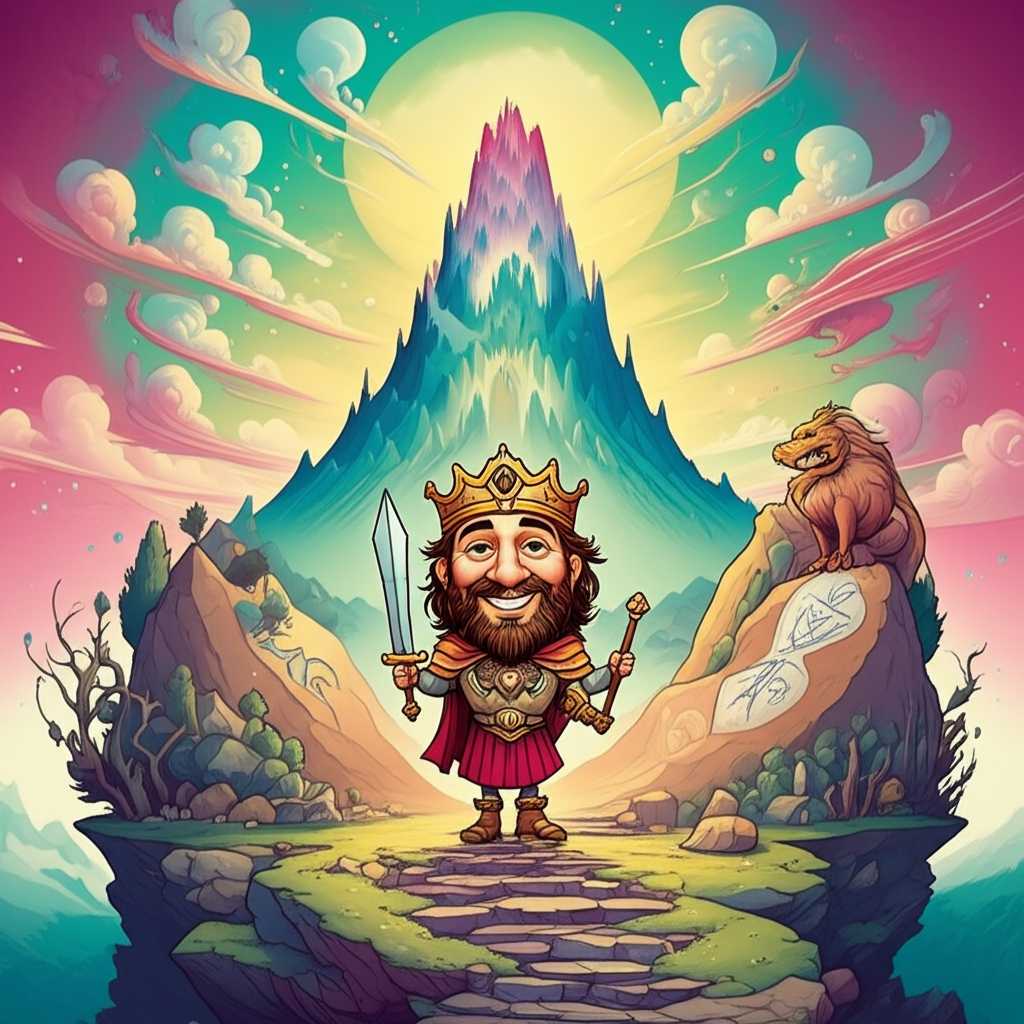
The legend of the Morrigan and the Sacred Mountain often speaks of her deep connection to a particular mountain, a sentinel of stone that watches over the land. This mountain, in the collective imagination, was a place of immense power, a liminal space where the earthly realm brushed against the celestial. It was believed to be a sacred site, a nexus of spiritual energy. The stories tell of the Morrigan choosing this mountain as her seat, her gaze surveying the plains below, her pronouncements influencing the fate of kings and warriors.
One recurring narrative depicts the Morrigan appearing to a chieftain on the eve of a crucial battle. She might present herself in a humble guise, perhaps as a fortune-teller, and offer him a cryptic prophecy. The chieftain, if wise, would heed her words, understanding them as a glimpse into the unfolding destiny. If he dismissed her, or misunderstood her counsel, the outcome would often be dire. The mountain itself plays a vital role in these stories, not merely as a backdrop, but as an active participant. It is the source of her power, the place from which she draws her ancient authority. Perhaps she sleeps within its stone heart, or her voice echoes through its ravines. The mountain’s imposing presence mirrors the Morrigan’s own formidable nature, a reminder of the enduring strength and immutability of the land itself. The tales might describe her soaring above its peaks on raven wings, a dark silhouette against the dawn, or her tears falling as rain upon its slopes, a lament for the fallen.
The symbolism embedded within these narratives is rich and multifaceted. The Sacred Mountain, for instance, represents stability, endurance, and the enduring spirit of the land. It is a place of natural grandeur that would have inspired awe and a sense of the eternal. The Morrigan, as its guardian or embodiment, personifies the unpredictable yet inevitable forces of fate, particularly as they manifest in conflict and change. Her association with ravens, with battle, and with the cycle of life and death speaks to an ancient understanding of the interconnectedness of all things. She can be seen as a representation of the harsh realities of life, the necessity of facing adversity, and the transformative power that emerges from struggle. She embodies the concept of sovereignty – the right to rule and the inherent power of the land to sustain and, at times, to challenge its inhabitants.
In the modern era, the legend of the Morrigan has transcended its ancient origins to find new life in contemporary culture. She is a recurring figure in fantasy literature, often portrayed as a powerful, complex character embodying themes of fate, magic, and war. In video games, she appears as a formidable warrior or sorceress, her raven iconography a recognizable symbol of her mystique. These interpretations, while drawing inspiration from the ancient myths, often adapt her to new narrative contexts, exploring her character in ways that resonate with contemporary audiences. Cultural studies scholars also examine these myths to understand the worldview of ancient Celtic societies, their social structures, and their relationship with the natural world.
It is crucial to reiterate that the legend of the Morrigan and the Sacred Mountain is a product of human imagination, a traditional story passed down through generations to explain the world and its mysteries. As Muslims, we recognize that only Allah is the true Creator and Sustainer of all existence. These ancient narratives, while offering valuable insights into cultural heritage and the evolution of storytelling, do not represent divine truth. They are echoes of human attempts to grapple with the profound questions of life, death, and the forces that shape our world.
In conclusion, the legend of the Morrigan and the Sacred Mountain is a testament to the enduring power of storytelling. It is a cultural artifact that allows us to connect with the imaginative spirit of ancient peoples, to understand their worldview, and to appreciate the rich tapestry of human mythology. These tales, though not to be believed as fact, serve as a reminder of our shared heritage, the boundless capacity for human imagination, and the timeless tradition of weaving narratives that illuminate the human experience.