fufufafa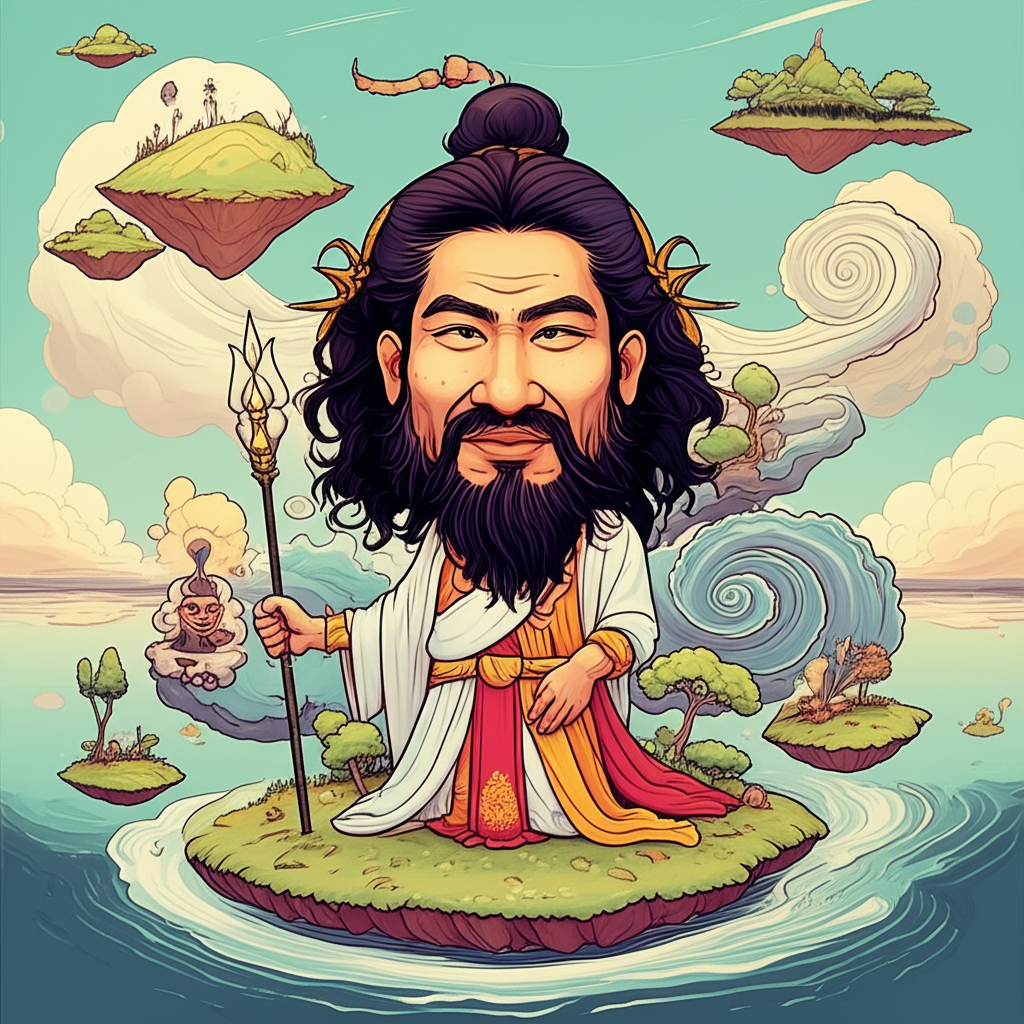
Across the vast, shimmering expanse of the Pacific Ocean, where the azure sky meets the endless blue, lie archipelagos like scattered emeralds. These islands, vibrant with life and steeped in ancient lore, are not merely geographical formations but the subjects of profound narratives passed down through generations. From the sun-drenched shores of Polynesia to the mist-shrouded peaks of East Asia, countless cultures have woven tales of their genesis, each offering a unique window into the human imagination grappling with the mysteries of existence. Among these, a particularly evocative legend originates from the rich tapestry of Japanese folklore, a story whispered through the ages, concerning the creation of the islands and a prophecy tied to the shadowy realm of Yomi.
This is not a chronicle of scientific fact, but rather a traditional story, a myth told by ancient peoples to explain the inexplicable, to give form to the formless, and to imbue their world with meaning and wonder. It is a testament to the enduring human drive to understand our origins, to connect with the forces that shaped our reality, and to contemplate the cyclical nature of life and what lies beyond.
Echoes of a Primordial World: Origins and Cultural Context
The myth of island creation, and the associated prophecy of Yomi, finds its roots in the Shinto tradition of Japan, a belief system deeply intertwined with nature and the veneration of spirits, or kami. The era in which these stories likely took shape was one where the forces of nature – the rumbling of volcanoes, the relentless crashing of waves, the fertile bounty of the land – were not merely phenomena to be observed, but potent entities to be respected and appeased. The world was viewed as a living, breathing entity, populated by divine beings and ancestral spirits, where the boundaries between the earthly and the spiritual were fluid and permeable.
In this ancient worldview, the creation of the islands would have been a monumental event, a testament to the power of divine beings and the very fabric of existence. The ocean, vast and untamed, represented both immense power and profound mystery. The land, emerging from its depths, symbolized stability, sustenance, and a haven for life. The concept of Yomi, the underworld or land of the dead, was also a crucial element. It represented a place of transition, a realm from which life might emerge, or to which it ultimately returned, a reflection of the cyclical understanding of existence that permeated many ancient cultures. The environment itself – a volcanic archipelago prone to seismic activity and surrounded by the immense power of the sea – undoubtedly fueled these narratives, providing a dramatic backdrop for tales of creation and destruction.
The Weaver of Worlds and the Shadowed Realm: Character Description
At the heart of this narrative lies the primordial divine couple, Izanagi-no-Mikoto and Izanami-no-Mikoto. These are not beings to be worshipped in the modern sense, but rather symbolic figures representing the primal forces of creation. Izanagi, often depicted as the male principle, embodies the active, generative aspect, while Izanami, the female principle, represents the receptive, nurturing force. Their union is the catalyst for the world’s formation.
Their story, however, also involves a descent into the shadowy realm of Yomi. Yomi, in this context, is not a place of active torment or divine judgment as found in some other mythologies. Instead, it is the land of the dead, a place of decay and stillness, but also a source from which new life could, paradoxically, spring forth. The symbolic attributes of Yomi are those of the unknown, the subterranean, the place where transformations occur, mirroring the processes of decay and regeneration observed in nature. It is a realm that evokes a primal fear of the unknown, but also a recognition of the essential role of death in the continuation of life.
The Descent and the Emergence: A Narrative Retelling
In the beginning, there was a formless void, a swirling expanse of primordial chaos. From this immensity, the heavenly pillars rose, and upon them stood Izanagi-no-Mikoto and Izanami-no-Mikoto, tasked by the celestial deities with solidifying the world. Grasping a jeweled spear, they stirred the brine of the ocean. As they lifted the spear, drops of saltwater fell back into the sea, coalescing and solidifying to form the first island, Onogoro-shima.
Joyful at their creation, they descended to this new land, built a palace, and through their sacred union, brought forth more islands. They created the island of Awaji, then Shikoku, then Kyushu, and then Honshu, the largest of them all. They populated these islands with spirits and gave them form and substance. The world was taking shape, a vibrant tapestry woven from the very essence of the divine.
However, their creative endeavor was not without its sorrow. In a tragic turn of events, Izanami-no-Mikoto died during the birth of the fire god, Kagutsuchi. Grief-stricken and desperate, Izanagi-no-Mikoto resolved to follow his beloved into Yomi, the land of the dead, to bring her back. He journeyed into the depths, a place shrouded in perpetual darkness and filled with the stench of decay.
He found Izanami, but she had already partaken of the food of Yomi and was irrevocably bound to its realm. In his desperation, Izanagi pleaded with her to return with him, but Izanami, though still loving, warned him that he had seen her in her current state, a state that no living being should witness. She begged him to leave and not to look upon her.
But Izanagi, overcome by curiosity and despair, broke his promise. He lit a torch and gazed upon his wife. What he saw was not the radiant Izanami he remembered, but a decaying corpse, inhabited by monstrous beings. Horrified, Izanagi fled, pursued by Izanami, now enraged and transformed by the horrors of Yomi. He blocked the entrance to the underworld with a massive boulder, forever separating the world of the living from the land of the dead.
From his escape from Yomi, Izanagi underwent a ritual purification. As he washed himself, new deities were born. From his left eye came Amaterasu, the sun goddess, and from his right eye came Tsukuyomi, the moon god. From his nose emerged Susanoo-no-Mikoto, the god of storms. Thus, even from the encounter with death and the underworld, new life and new divine powers emerged, reinforcing the cyclical nature of creation and destruction.
Echoes of Meaning: Symbolism and Interpretation
To the ancient people who told this story, the creation of the islands likely represented the establishment of order from chaos, the emergence of a stable and habitable world from the boundless ocean. The divine couple, Izanagi and Izanami, symbolized the fundamental forces of masculinity and femininity, their union the very act of procreation that sustains all life.
The journey into Yomi, while tragic, held profound symbolic weight. It represented the inescapable reality of death and the underworld, a place of transition and transformation. Izanami’s transformation within Yomi and Izanagi’s horrified reaction likely reflected an ancient understanding of the natural processes of decay and the fear of what lies beyond the veil of life. Yet, the subsequent birth of new deities from Izanagi’s purification underscored a powerful message of renewal and the idea that even from the depths of despair and death, new beginnings can arise. The story could have served as a way to process the inherent dangers of their island environment – volcanic eruptions, tsunamis – attributing them to the actions of powerful, albeit sometimes sorrowful, deities.
Whispers in the Digital Age: Modern Perspectives
Today, the myth of the creation of the islands and the prophecy of Yomi continues to resonate, albeit in different forms. In literature, these ancient tales provide rich source material for fantasy novels and historical fiction, offering a glimpse into a world steeped in mythology. In popular culture, the characters and themes find expression in video games, anime, and manga, where the figures of Izanagi, Izanami, and the concept of Yomi are often reinterpreted and reimagined for contemporary audiences. Cultural studies scholars delve into these myths to understand the historical development of Japanese society, its values, and its worldview. These interpretations, while often imaginative, serve to keep these ancient stories alive and accessible, allowing new generations to engage with the enduring power of human storytelling.
A Legacy of Imagination
In conclusion, the story of the creation of the islands and the prophecy of Yomi is a profound piece of Japanese folklore, a traditional narrative passed down through the ages. It is a testament to the ingenuity and imagination of ancient peoples as they sought to understand their world and their place within it.
As Muslims, we recognize that the ultimate and only true Creator and Sustainer of all existence is Allah (SWT). These ancient stories, while culturally significant and rich in symbolism, are understood within the framework of Islamic belief as narratives of human imagination and cultural heritage, not as divine revelations.
The enduring power of such myths lies not in their literal truth, but in their ability to evoke wonder, to explore fundamental questions about life, death, and creation, and to connect us to the rich tapestry of human experience and storytelling traditions that have shaped civilizations across the globe. These tales, like the islands they describe, stand as enduring monuments to the human spirit’s quest for meaning and understanding.