
 fufufafa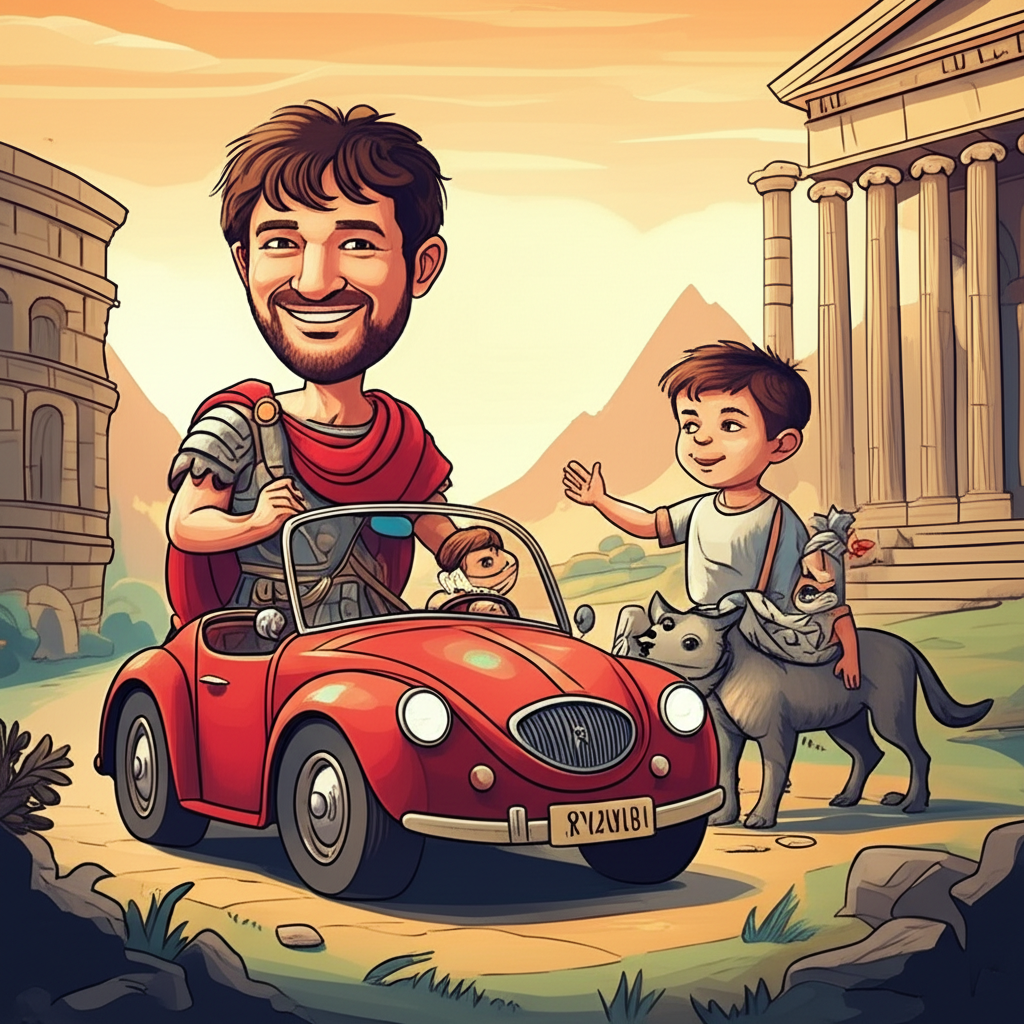
The very ground beneath our feet, they say, holds stories. In the fertile lands of ancient Latium, the region that would eventually cradle the mighty city of Rome, such stories were not mere tales but the very fabric of understanding. These were the myths and legends woven by the early inhabitants, a tapestry of divine intervention, heroic deeds, and the whispers of destiny. The founding of Rome, as recounted through these ancient narratives, is not a historical record in the modern sense, but a profound cultural expression, a way for people of that era to grapple with the origins of their world, their society, and the very essence of their identity.
In a time when the world was perceived as a place teeming with unseen forces, where the rustling of leaves could be the breath of a god and the rumble of thunder the pronouncements of celestial beings, the origins of significant places and peoples were often attributed to the extraordinary. The ancient Latins, the peoples who inhabited the Italian peninsula before the rise of Rome, lived in a world deeply intertwined with nature and the perceived will of the gods. Their environment, a landscape of rolling hills, winding rivers, and dense forests, was both a source of sustenance and a realm of mystery. They sought to explain the inexplicable, to imbue their existence with meaning, and to find order in the often chaotic flow of life. The myth of Rome’s founding, therefore, served as a powerful narrative framework, a way to understand how a single city could rise to such prominence and influence.
Central to this foundational myth is the figure of Rhea Silvia, a Vestal Virgin, and the divine parentage of her twin sons, Romulus and Remus. Rhea Silvia, in this ancient narrative, was a mortal woman of noble lineage, destined by fate, or perhaps by divine decree, to play a crucial role in the unfolding of Latium’s destiny. The god Mars, known to the ancient Romans as the god of war and the father of warriors, is depicted as the supernatural progenitor of the twins. Mars, in the context of Roman mythology, was not merely a deity of brute force, but also a symbol of primal energy, virility, and the inherent drive for conquest and expansion. His attributes were those of a powerful, often untamed, force of nature, representing the raw potential that lay dormant within the land and its people. Rhea Silvia, as a Vestal Virgin, represented purity, devotion, and the continuation of lineage. Her union with Mars, therefore, symbolizes a potent blend of divine power and earthly lineage, a celestial spark igniting the potential for a great destiny.
The narrative unfolds with a sense of predestination. Rhea Silvia, a priestess sworn to chastity, finds herself visited by Mars. This encounter, steeped in mythological symbolism, is not presented as a physical violation but as a divine intervention, a union that transcends mortal understanding. From this union, twins are born: Romulus and Remus. The story then takes a darker turn, revealing the cruelty of their great-uncle, Amulius, the usurper king of Alba Longa. Fearing the prophesied power of the twins, Amulius orders them to be abandoned in the Tiber River. However, the narrative posits that fate, or perhaps divine protection, intervenes. The twins are miraculously saved, cast ashore by the receding waters and discovered by a she-wolf. This she-wolf, a creature of the wild, becomes a symbol of nurturing resilience, of primal instinct providing succor where human cruelty failed. She nurses them, a powerful image of nature’s unexpected grace. Later, they are found and raised by a shepherd named Faustulus and his wife, Acca Larentia, who impart to them the practical skills and values of a more humble existence.
As the twins grow, their innate strength and leadership qualities become apparent. They are destined for more than a life of shepherding. The prophecy of Latium, a nebulous but potent force in the narrative, begins to manifest. Romulus and Remus, driven by a sense of justice and their own burgeoning ambition, eventually confront Amulius, reclaim their rightful heritage, and restore their grandfather Numitor to the throne. However, their paths diverge. Driven by the desire to found their own city, a new center of power, they clash over the precise location and the right to rule. The myth recounts their use of augury, the practice of interpreting omens from the flight of birds, as a means to determine divine favor. Romulus, observing a greater number of birds, claims the right to found the city and to name it after himself: Rome. His subsequent act of digging the furrow that would mark the city’s boundary, and his brother Remus’s defiant leap over it, leading to his death, is a stark illustration of the unforgiving nature of destiny and the brutal realities that can accompany the birth of power. Romulus, alone, becomes the first king, the sole architect of this burgeoning civilization.
The symbolism embedded within this myth is rich and multifaceted. The divine parentage of Romulus and Remus, particularly their connection to Mars, imbues them with an inherent martial prowess and a destined role in shaping the future through strength and expansion. The she-wolf, far from being a monstrous figure, represents the nurturing, untamed spirit of the land itself, a force that protected and sustained the future founders. The conflict between the brothers, while tragic, can be interpreted as a symbolic representation of the internal struggles and sacrifices that often accompany the establishment of order and authority. The augury signifies the ancient belief in the interconnectedness of the human and divine realms, where the actions of gods were sought for guidance in mortal endeavors. The very act of founding a city by digging a furrow speaks to the agrarian roots of early societies, the tilling of the land as a foundational act of civilization.
In the modern world, the founding of Rome, as recounted in this myth, continues to resonate. It is a cornerstone of classical literature, studied in schools and universities worldwide. It has inspired countless works of art, from ancient mosaics to contemporary sculptures and paintings. The epic poems of Virgil, such as the Aeneid, which traces Rome’s lineage back to the Trojan hero Aeneas, further embellishes and contextualizes these foundational narratives, linking Rome to a grander, heroic past. In popular culture, the story finds expression in historical dramas, films, and even video games, where the figures of Romulus, Remus, and the iconic imagery of the she-wolf are readily recognizable. These interpretations, while often fictionalized, highlight the enduring power of the myth to capture the imagination and to provide a narrative framework for understanding the origins of a civilization that profoundly shaped the Western world.
It is crucial to reiterate that this narrative is a product of ancient storytelling, a myth passed down through generations to explain origins and to imbue a place with a sense of profound destiny. As Muslims, we understand that the true Creator and Sustainer of all existence is Allah (God) alone. These ancient stories, while fascinating from a cultural and historical perspective, do not represent divine truth. Nevertheless, they offer a valuable window into the minds and beliefs of people from a bygone era. They showcase the human capacity for imagination, the deep-seated need to find meaning and order in the world, and the enduring power of narrative to shape identity and transmit cultural heritage. The whispers of Latium, the prophecy of Rome, serve as a testament to this rich tradition of storytelling, a reminder of the diverse ways in which humanity has sought to understand its place in the grand tapestry of existence.


