rifanmuazin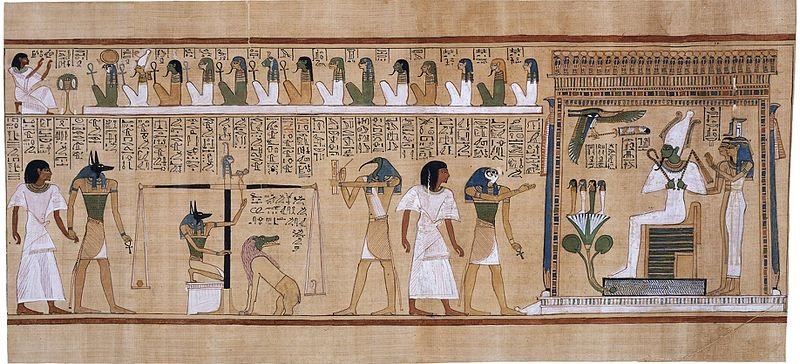
The sands of Egypt, ancient and vast, hold within them echoes of stories whispered under starlit skies, tales woven from the very fabric of human experience and the awe inspired by the natural world. Among these, the legend of Osiris, his divine birth, and the mystical role of a sacred mountain, stands as a testament to the intricate tapestry of ancient Egyptian mythology. These are not accounts of historical fact, but rather the creative expressions of a people seeking to understand the cosmos, the cycle of life and death, and the fundamental forces that shaped their world.
The cultural era in which these myths flourished was one where the Nile River was the lifeblood of civilization. The Egyptians lived in a land of stark contrasts: the fertile ribbon of green along the riverbanks against the unforgiving expanse of the desert. Their world was one of cyclical phenomena – the predictable flooding of the Nile, the daily journey of the sun, the waxing and waning of the moon – all imbued with a sense of divine orchestration. They saw the gods and goddesses not as distant deities, but as active participants in the world, their actions mirroring the forces of nature. The land itself was alive, imbued with a sacred energy, and the great mountain, a prominent feature in many landscapes, often served as a conduit to the divine, a place where the earthly and the celestial met.
At the heart of this particular narrative lies Geb, the god of the Earth, and Nut, the goddess of the Sky. Geb, often depicted as a reclining male figure, represented the solid, nurturing ground upon which life grew. His embrace was the foundation of existence, and his very being was the land itself. Nut, on the other hand, was the vast, arching expanse above, a celestial canopy dotted with stars, her body a vault of endless blue. She was the mother of the heavens, the ever-present, all-encompassing sky. Their union, a passionate embrace that separated the heavens from the earth, was the fundamental act of creation, giving birth to the cosmos as the Egyptians understood it.
The story of Osiris’s birth is intricately linked to a legendary sacred mountain, a primordial peak often referred to as the "Mountain of the Horizon" or the "Primordial Mound." This mountain was not merely a geological formation; it was a cosmic entity, a place where the divine energies were concentrated. It was believed to be the site where life first emerged from the primeval waters, a symbol of creation and rebirth. It was within the shadowy embrace of this sacred mountain, or perhaps upon its very summit kissed by the first rays of dawn, that Geb and Nut, in their divine intimacy, brought forth their firstborn, Osiris.
The birth itself is described with a sense of awe and wonder. As the celestial energies of Nut converged with the earthly solidity of Geb, a potent force of creation surged. Within the sacred mountain, a divine spark ignited, and from this union, Osiris began to take form. He was not merely a mortal being, but a divine child, destined for greatness. His emergence from the mountain was akin to the sun rising from the eastern horizon, bringing light and life. He was the embodiment of order, fertility, and the promise of renewal. The sacred mountain, therefore, served as the cradle and the catalyst for his divine existence, a place where the earthly and the celestial intertwined to birth a being of immense significance.
Osiris, as he grew, became a central figure in the Egyptian pantheon. He was often depicted as a mummy-like figure, his skin green or black, symbolizing fertility and the fertile soil of Egypt, and the underworld respectively. His headdress, the Atef crown, was a symbol of his royal authority and his connection to the divine. He was the benevolent king who brought civilization to Egypt, teaching his people agriculture, law, and the arts. His presence represented a golden age of prosperity and harmony. However, his story also encompasses the stark reality of death and the promise of resurrection, a theme deeply intertwined with the cyclical nature of the world they observed.
The symbolism inherent in this myth is rich and multifaceted. The sacred mountain itself represents the primordial creation, the emergence of order from chaos, and a connection to the divine. It is the anchor between the earth and the heavens, a place of spiritual significance. Geb and Nut, as the Earth and Sky, embody the fundamental duality of existence, their union the genesis of all. Osiris, born from this sacred union and the mountain, symbolizes fertility, kingship, and the vital cycle of life, death, and rebirth. His green skin signifies the verdant growth that sustained Egypt, while his association with the underworld points to the inevitability of death and the hope for an afterlife. The myth offered a framework for understanding the fundamental forces of their existence – creation, life, death, and the hope for renewal.
In the modern era, the legend of Osiris continues to resonate, albeit through a different lens. It is explored in literature, historical studies, and academic discussions of ancient religions and mythology. Films and video games sometimes draw inspiration from the rich imagery and narrative of Egyptian lore, reinterpreting these ancient stories for contemporary audiences. Scholars analyze the symbolism within these myths to understand the worldview, anxieties, and aspirations of the ancient Egyptians, offering insights into their societal structures, beliefs, and artistic expressions.
It is crucial to reiterate that this narrative is a traditional story, a product of ancient imagination and a way for people of that time to make sense of their world. As Muslims, we recognize that only Allah is the true Creator and Sustainer of all existence, and that all power and creation originate from Him alone. These ancient stories, while fascinating from a cultural and historical perspective, are not to be mistaken for divine truth or a system of worship. They offer a glimpse into the rich tapestry of human cultural heritage, the enduring power of storytelling, and the universal human quest to understand our place in the grand scheme of existence. The whispers of Geb and Nut, carried on the desert winds, remind us of the boundless creativity of the human mind and the enduring legacy of our shared past.


 admin
admin