fufufafa
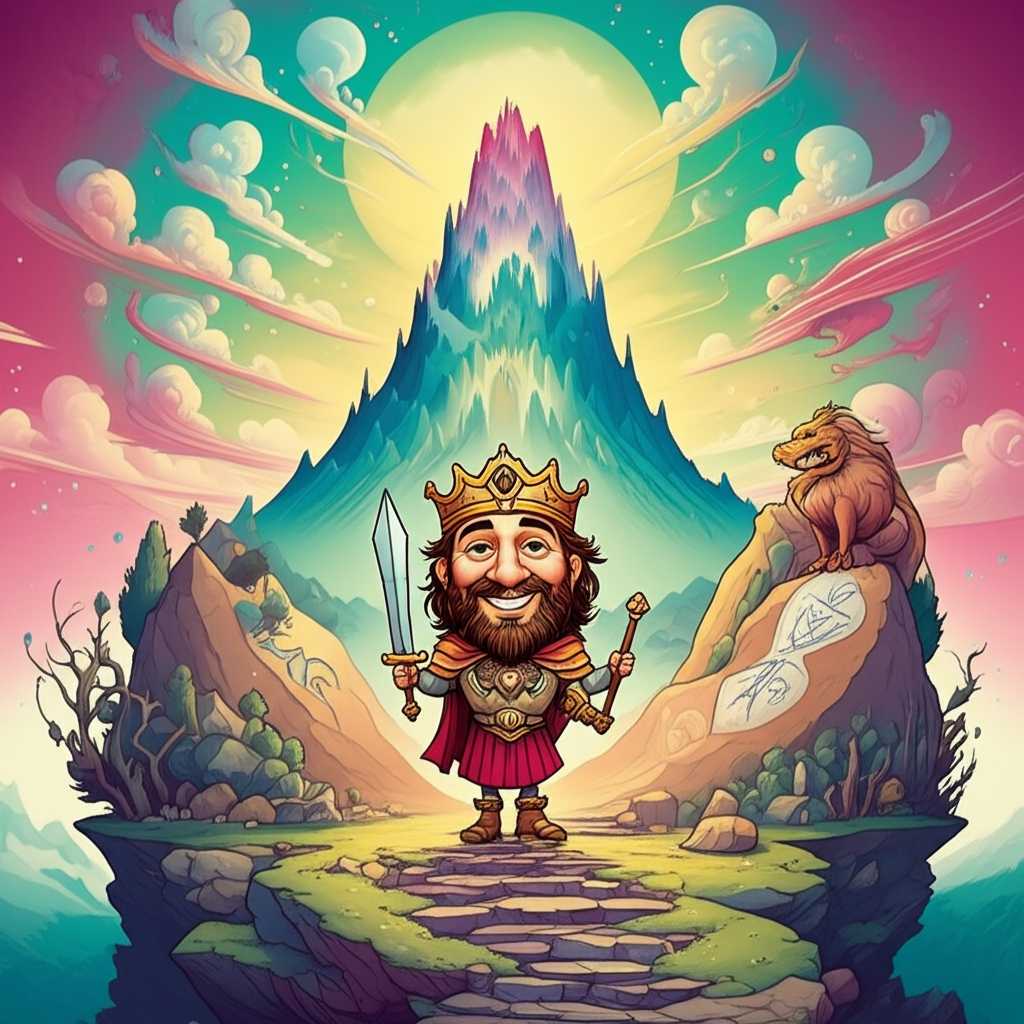
The mists that cling to the Emerald Isle, the winds that whisper through ancient standing stones, and the shadowed glens where the veil between worlds is said to be thinnest – these are the landscapes from which the rich tapestry of Irish mythology is woven. Among its most potent threads are the tales of the Tuatha Dé Danann, the "People of the Goddess Danu," a semi-divine race who, according to ancient lore, once inhabited Ireland before the arrival of the Milesians. Within this vibrant mythology lies the legend of Nuada, a king whose reign was marked by both triumph and tribulation, and a potent artifact tied to his destiny: Nuada’s Sword. And entwined with this legendary blade is the enigmatic figure of the Morrigan, a goddess of war, fate, and sovereignty, whose presence casts a long and complex shadow.
This is not a testament to divine power, but rather a glimpse into the imaginative world of ancient peoples, a story passed down through generations, reflecting their understanding of the cosmos, their fears, and their aspirations. It is a narrative to be explored for its cultural resonance and its enduring power as a piece of human storytelling.
Echoes of a Warrior Age
The myths surrounding Nuada’s Sword and the Morrigan are rooted in the Iron Age of Ireland, a period characterized by tribal societies, a deep connection to the land, and a worldview permeated by the supernatural. For the ancient Celts, the world was alive with spirits and forces, a dynamic interplay between the seen and the unseen. They perceived a pantheon of gods and goddesses who influenced the natural world, human affairs, and the very fabric of destiny. Their stories served as a means to understand these forces, to offer guidance on leadership, warfare, and the cycles of life and death. The Tuatha Dé Danann, with their magical prowess and connection to ancient wisdom, represented an idealized past, a time when the world was perhaps more ordered, or at least, more explicable through their heroic narratives.
The Sovereign and the Shadow Weaver
Nuada Airgetlám, or Nuada of the Silver Hand, is depicted as a noble and just king of the Tuatha Dé Danann. His name itself, "Nuada," is believed to derive from a Proto-Celtic word meaning "to grasp" or "to acquire," hinting at his role as a leader and possessor of power. His epithet, "Airgetlám," signifies a king who lost his hand in battle and had it replaced with one made of silver. This attribute, rather than diminishing his status, symbolized his resilience, his ability to overcome adversity, and the divine intervention that aided his recovery. He represents the ideal of a wise and valiant ruler, one who embodies courage and a commitment to his people.
The Morrigan, on the other hand, is a far more complex and often terrifying figure. Her name can be interpreted as "Great Queen" or "Phantom Queen," and she is not a single entity but often a trinity of goddesses, or a shapeshifting being whose form embodies different aspects of war and fate. She is the harbinger of battle, the one who presides over the blood-soaked fields, and the one who, through her visions and pronouncements, can influence the outcome of conflicts. Her symbolic attributes include the raven, often seen as an omen of death and a scout for battle, and the crow, another bird associated with the aftermath of war. The Morrigan embodies the primal forces of chaos and change that accompany conflict, but also the stark reality of fate and the power of prophecy. She is not a benevolent deity but a potent force of nature, a reminder of the inevitable consequences of human action.
The Sword That Gleamed and the Shadow That Watched
The legend of Nuada’s Sword, often referred to as Fragarach, the "Retaliator" or "Answerer," is intrinsically linked to his kingship and his struggles. It is said to be a magnificent weapon, crafted with such skill that it could cut through any shield or armor. More than just a physical implement of war, Fragarach was imbued with a mystical significance. It was one of the four great treasures of the Tuatha Dé Danann, artifacts that represented their power and their connection to the divine.
The narrative often begins with Nuada ascending to the throne of Ireland. However, his reign was soon challenged by the formidable fomorian king, Balor of the Evil Eye, a monstrous being whose gaze could bring ruin. In the ensuing epic Battle of Magh Tuired, Nuada, wielding Fragarach, fought bravely. Yet, in the brutal clash, Nuada’s hand was severed by Balor. This grievous wound threatened his kingship, as a leader with a physical infirmity was often seen as weakened in ancient societies. However, the Tuatha Dé Danann, with their mastery of magic and healing, fashioned Nuada a new hand of pure silver, a testament to their ingenuity and resilience. This restored his ability to rule, and he continued to lead his people.
It is in these moments of intense conflict and shifting fortunes that the Morrigan’s presence becomes most palpable. She is said to have observed the battles, her shadowy form flitting across the sky, a silent witness to the bloodshed. While Nuada fought with his sword, a symbol of his strength and his will to protect his people, the Morrigan represented the larger, often indifferent forces of fate that dictated the course of war. Some tales suggest she even appeared to warriors before battle, sometimes offering encouragement, other times weaving illusions or sowing discord, her motives always shrouded in an aura of mystery and potent power.
The sword, Fragarach, became a symbol of righteous power and the ability to defend one’s people. It was a tool that could bring order through decisive action. The Morrigan, in contrast, represented the wild, unpredictable nature of war itself, the inevitable dance with death and destiny. Her role was not to wield a sword in the same way as Nuada, but to embody the very spirit of the conflict, to whisper prophecies of victory or defeat, and to claim the souls of the fallen. The mystery of her connection to Nuada’s Sword lies in this duality: the tangible instrument of power versus the intangible, overarching force of fate that war unleashed.
More Than Steel and Shadow: The Deeper Resonance
To the ancient Celts, Nuada’s Sword and the Morrigan likely represented a complex interplay of concepts. Fragarach, the gleaming sword, could symbolize leadership, justice, and the defense of one’s people. It was the embodiment of a king’s responsibility to protect his realm, to wield authority with skill and purpose. The silver hand, a symbol of resilience and divine favor, highlighted the importance of overcoming challenges and maintaining sovereignty even in the face of immense hardship.
The Morrigan, with her association with war and fate, might have represented the uncontrollable aspects of life, the necessity of facing conflict, and the acceptance of mortality. She could have been a personification of the brutal realities of warfare, the fear it inspired, and the inevitability of death. Her enigmatic nature also speaks to the ancient understanding of mystery and the unknown, the forces that lay beyond human comprehension. She might have also represented the concept of sovereignty itself, the ultimate power that resides in a leader and the land they govern, a power that can be both fiercely protective and devastatingly destructive.
Whispers in Modern Echoes
In contemporary times, the myths of Nuada and the Morrigan continue to resonate, finding new life in literature, film, and video games. Fragarach, often reimagined as a legendary weapon, appears as a powerful artifact that heroes must seek or wield to overcome great evil. Its mystical properties are amplified, making it a coveted item in fantasy narratives.
The Morrigan, with her dark allure and formidable presence, has become a popular figure in fantasy fiction and gaming. She is often portrayed as a complex anti-heroine, a powerful sorceress, or a divine entity whose actions, though seemingly cruel, serve a greater, albeit mysterious, purpose. Her association with ravens and her prophetic abilities are frequently highlighted, making her a captivating character who embodies the darker, more primal aspects of fantasy worlds. These modern interpretations, while drawing from the ancient lore, often adapt the characters and their stories to suit contemporary storytelling conventions and thematic explorations.
A Legacy of Imagination
The legend of Nuada’s Sword and the mystery of the Morrigan stand as a testament to the enduring power of human imagination and the rich cultural heritage of Ireland. These are not stories to be believed as literal truths, but rather as profound narratives that ancient peoples used to explore their world, their values, and their understanding of the forces that shaped their lives.
As Muslims, we recognize that only Allah is the true Creator and Sustainer of all that exists. Our understanding of the universe is rooted in divine revelation and the unwavering belief in the oneness of God. Yet, we can still appreciate the beauty and complexity of these ancient stories, understanding them as expressions of human creativity and a window into the past. They remind us of the diverse ways in which humanity has sought to make sense of existence, to grapple with fear, and to celebrate courage. The tales of Nuada and the Morrigan, like so many others, serve as a vital part of our shared cultural heritage, a testament to the timeless human desire to tell stories and to find meaning in the echoes of the past.