fufufafa
The mists that cling to the emerald hills of Ireland, the ancient stones that stand sentinel against the passage of millennia, and the very winds that whisper through the glens – all are imbued with tales spun by generations long past. Among these enduring narratives is the legend of Lugh Lamhfada, the "Lugh of the Long Arm," a figure central to the rich tapestry of Irish mythology. This is not a chronicle of historical fact, but rather a traditional story, a vibrant echo from a time when the world was understood through myth and metaphor, a reflection of the human desire to explain the inexplicable and find meaning in the vastness of existence.
To understand the context of Lugh’s legend, we must journey back to the Iron Age in Ireland, a period characterized by tribal societies, a deep reverence for the natural world, and a worldview steeped in animism. For the people of this era, the sun was not merely a celestial body, but a powerful, life-giving entity, often personified as a divine force. The changing seasons, the bounty of the harvest, and the very rhythm of life were intimately connected to the perceived will of these powerful forces. They saw the world as a place where the veil between the mundane and the mystical was thin, where spirits resided in trees, rivers, and mountains, and where the actions of gods and heroes profoundly shaped the destiny of humankind. Their understanding was less about scientific inquiry and more about seeking order and purpose within the cycles of nature and the complexities of human interaction, often expressed through dramatic narratives of gods, heroes, and the forces that governed their lives.
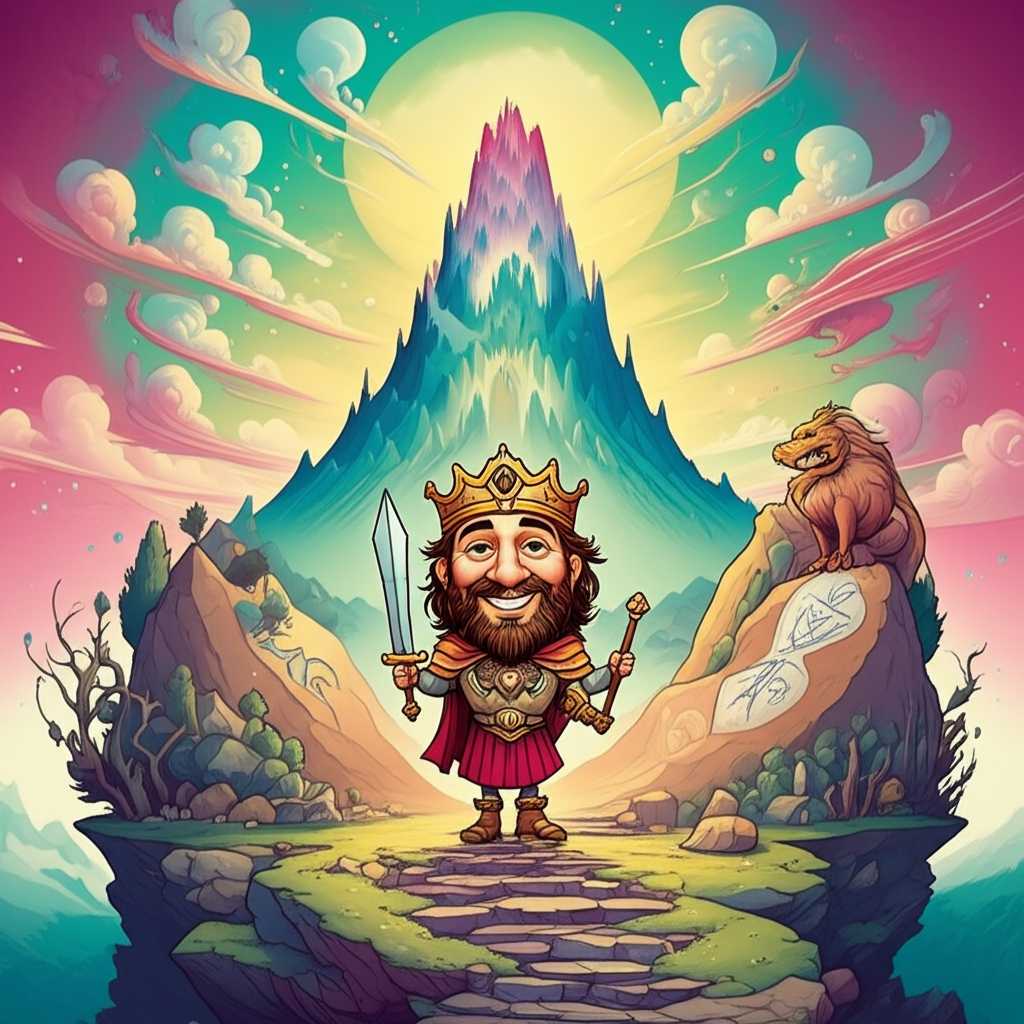
At the heart of this particular tale stands Lugh, a figure of immense significance in the ancient Irish pantheon. He is often depicted as a multi-talented warrior and craftsman, a master of every skill imaginable. His epithet, "Lamhfada," meaning "long arm," suggests his reach and influence, his ability to strike from afar, and perhaps his prowess in wielding weapons or his far-seeing gaze. Symbolically, Lugh embodies the concept of the ideal hero – brave, intelligent, skilled, and possessing a divine lineage. He is often associated with the sun, light, and the harvest, reflecting the vital importance of these elements to ancient agrarian societies. His multifaceted nature, his mastery of diverse crafts, represents the interconnectedness of different forms of knowledge and skill that were valued in a society where survival and prosperity depended on a wide range of abilities. He is a symbol of comprehensive competence, a beacon of multifaceted brilliance.
The legend of Lugh and the Eternal City, while perhaps not a single, universally codified narrative, often weaves itself into broader tales of his exploits, particularly his involvement with the Tuatha Dé Danann, the mythical inhabitants of Ireland. Imagine a time when the Tuatha Dé Danann, a race of powerful beings, faced a grave threat. Perhaps a darkness was encroaching, a decay threatening to consume their lands and their very essence. It is in this hour of need that Lugh, the radiant one, emerges. He is said to have arrived at the assembly of the Tuatha Dé Danann, his presence a dazzling spectacle. When asked what skills he possessed, he declared he was a smith, a carpenter, a warrior, a healer, a poet, a craftsman, and more – in essence, master of every art. This demonstration of his unparalleled abilities immediately set him apart, marking him as a leader destined to confront the encroaching gloom.
The "Eternal City" in this context, is not a physical place that can be found on any map, but rather a symbolic representation of a state of perfection, enduring power, and ultimate security. It is the ideal realm, the heart of the Tuatha Dé Danann’s dominion, a place of abundance and unblemished existence. The threat, therefore, was not just an external invasion, but an internal corruption or an external force that sought to shatter this idyllic state. Lugh’s role was to be the champion who would defend this ideal, who would use his "long arm" of skill and power to push back the encroaching shadows and ensure the continued radiance of their world. His battles, his strategic genius, and his unwavering resolve would be the means by which the Eternal City, and by extension, the prosperity and safety of his people, would be preserved. He would be the bulwark against oblivion, the one who could orchestrate the complex efforts needed to maintain order and harmony against disruptive forces.
The symbolism embedded within this legend is multifaceted. Lugh, as the sun-god figure, represents enlightenment, knowledge, and the vital energy that sustains life. His mastery of myriad skills speaks to the importance of versatility and comprehensive understanding in navigating life’s challenges. The Eternal City, in its abstract form, could symbolize the ideal society, a realm of peace, prosperity, and spiritual fulfillment. The conflict with encroaching darkness or decay represents the eternal struggle between order and chaos, light and shadow, creation and destruction that ancient peoples observed in the world around them. Lugh’s triumph would signify the triumph of intelligence, skill, and divine favor over adversity, offering a narrative of hope and resilience.
In modern times, the legend of Lugh and the themes associated with him continue to resonate. While no literal "Eternal City" exists, the concept of an ideal or enduring sanctuary is a recurring motif in literature, fantasy gaming, and popular culture. Lugh himself, as a powerful, multi-talented hero, has inspired countless characters in fantasy novels and video games, often embodying the archetype of the wise, skilled warrior. His stories contribute to our understanding of ancient Irish culture, offering insights into their values, their worldview, and their imaginative landscape. Scholars of mythology analyze these tales to understand the symbolic language of ancient societies and the universal human concerns they addressed.
It is important to reiterate that the legend of Lugh and the Eternal City is a product of ancient storytelling, a rich cultural inheritance passed down through oral tradition and later recorded in texts like the Lebor Gabála Érenn (The Book of Invasions). These narratives, while captivating and insightful, are not to be interpreted as factual accounts. As Muslims, we recognize that only Allah (God) is the true Creator and Sustainer of all that exists. Our understanding of reality is firmly rooted in divine revelation and the immutable truths of Islam.
Nonetheless, these ancient myths serve as a powerful testament to the enduring human capacity for imagination, storytelling, and the creation of meaning. They offer us a window into the minds of our ancestors, revealing their hopes, their fears, and their profound connection to the world around them. The legend of Lugh, with its echoes of light, skill, and the pursuit of an enduring ideal, reminds us of the rich tapestry of human cultural heritage and the timeless power of a well-told story. It is through understanding these narratives that we can appreciate the diversity of human expression and the enduring quest for understanding that has characterized our species throughout history.