fufufafa
In the mists of antiquity, long before the widespread adoption of Abrahamic faiths, people across the vast plains and forests of Eastern Europe sought to understand the world around them through vivid stories and rich folklore. Among the most enduring figures of Slavic mythology is the Vodyanoy, a formidable water spirit whose tales originate from the traditional beliefs of ancient Slavic peoples. This narrative explores the Vodyanoy not as an entity to be believed in or worshipped, but as a fascinating cultural artifact – a traditional story spun by ancient communities to explain the mysteries and dangers of their natural environment. It is a testament to the imaginative spirit of a bygone era, presented here purely for cultural, historical, and educational understanding.
Origins and Cultural Background: Echoes from a Pre-Christian World
The myth of the Vodyanoy emerged from pre-Christian Slavic societies, deeply rooted in an agrarian lifestyle and an intimate connection with the natural world. This was an era when human existence was largely dictated by the rhythms of the seasons, the fertility of the land, and the unpredictable power of rivers, lakes, and marshes. Life revolved around communal living, subsistence farming, and a profound respect, often tinged with fear, for the untamed wilderness.
For these ancient people, the world was alive with spirits. Every forest had its Leshy, every hearth its Domovoy, and every body of water its Vodyanoy. Their worldview was animistic, perceiving life and consciousness in natural phenomena, animals, and even inanimate objects. The unseen forces of nature were personified into powerful beings who could either bestow blessings or inflict curses. Rivers were not merely sources of water and food; they were living entities with temperamental guardians. The Vodyanoy, therefore, was a cultural construct born from a desire to comprehend, and perhaps even influence, the profound and often perilous relationship between humanity and water – a vital, yet sometimes deadly, element of their daily lives.
Character Description: Master of the Deep
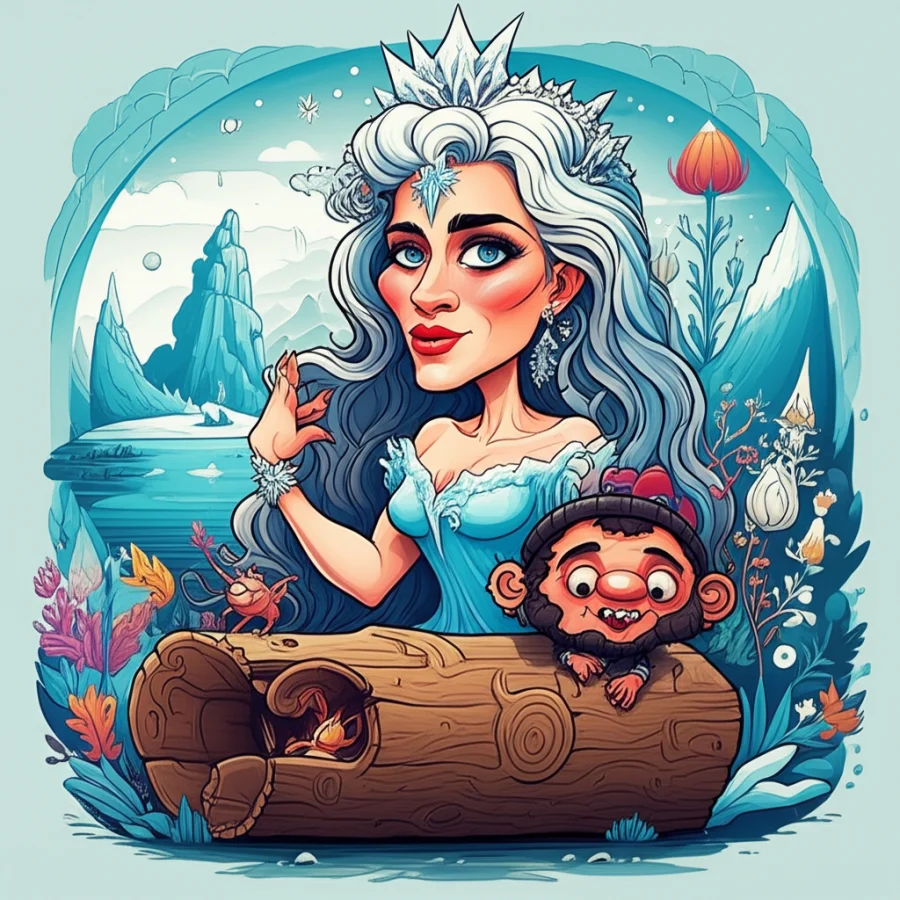
The Vodyanoy, often depicted as an ancient, grotesque old man, is the quintessential master of the waters. His appearance is a chilling reflection of the murky depths he inhabits: skin often green with algae, a long, tangled beard of reeds and slime, and eyes that glow like embers in the dark. His body might be bloated from constant immersion, with webbed fingers and toes, and sometimes even fish-like scales or fins. He is said to ride upon large fish, particularly catfish, or to appear as a log floating ominously in the water.
Symbolically, the Vodyanoy embodies the untamed, unpredictable, and often dangerous aspects of water. He is not merely a benevolent protector of fish and rivers; he is capricious, prone to fits of rage, and deeply territorial. He represents the duality of nature: life-giving when water nurtures crops and provides sustenance, but also life-taking when floods rage or unwary swimmers are dragged beneath the surface. His symbolic attributes speak volumes about the ancient Slavic reverence and fear of the elements, reminding people of water’s power and the necessity of respecting its boundaries.
Main Story: The Miller’s Bargain and the River’s Wrath
Deep within the ancient Slavic lands, where dense forests met winding rivers, stood the village of Zarechye. Its lifeblood was the river Myr, which also powered the old mill at the village’s edge. Generations of millers had tended it, but the current miller, old Yaroslav, was troubled. His millstones often jammed, his nets frequently tore, and the river seemed to churn with an unnatural malice. The villagers whispered of the Vodyanoy, the grumpy water spirit who resided in the deepest parts of the Myr.
One particularly harsh winter, the Myr froze solid, threatening the village’s survival. Yaroslav, desperate, remembered the old tales of offerings. He left a freshly baked loaf of bread and a flask of mead at the river’s edge, whispering pleas for the Vodyanoy’s mercy. For a time, the river seemed calmer, the mill ran smoothly, and the fish were plentiful. Yaroslav, emboldened, began to believe he had appeased the spirit.
But Yaroslav grew complacent. He stopped the regular offerings, thinking the Vodyanoy had forgotten him. The river, however, had a long memory. One stormy evening, as Yaroslav worked late, the Myr began to swell, its waters rising with terrifying speed. A low, guttural laugh echoed from the churning depths, a sound that seemed to mock the very foundations of the mill. Yaroslav saw it then, a hulking figure rising from the spray, its eyes glowing with cold fury. It was the Vodyanoy, his face contorted in a sneer, his green beard tangled with debris.
"You forget your master, old man!" the Vodyanoy roared, his voice like grinding stones. "You take my bounty, but offer nothing in return!"
Fear gripped Yaroslav. He pleaded, promised renewed offerings, begged for his life. The Vodyanoy, however, was in no mood for supplication. With a mighty sweep of his webbed hand, he unleashed the river’s full fury. The mill groaned, timbers splintered, and the current dragged Yaroslav into the icy depths. The next morning, the villagers found the mill shattered, and Yaroslav was gone, swallowed by the river he had once sought to tame. From that day on, no one dared to neglect the offerings to the Myr, for the tale of Yaroslav served as a grim reminder: the Vodyanoy was a powerful guardian, quick to anger, and demanding of respect from those who lived by his waters.
Symbolism and Meaning: Nature’s Unseen Power
The legend of the Vodyanoy, like many ancient myths, served multiple symbolic functions for the people who shared it. Primarily, it represented the raw, untamed power of nature, particularly the unpredictable and often perilous force of water. Rivers and lakes were sources of life – providing sustenance, transportation, and power – yet they could also bring death through drowning, floods, or treacherous currents. The Vodyanoy personified this duality, giving a tangible form to the invisible forces that governed their lives.
The myth also served as a moral compass, emphasizing the importance of respect and reciprocity with the environment. Yaroslav’s story, for instance, is a cautionary tale against complacency and greed, teaching that nature’s bounty is not to be taken for granted. It underscored the ancient belief that humans were not masters of the world, but rather co-inhabitants who must live in harmony with its spirits. The fear of the Vodyanoy instilled caution, encouraging safe practices around water and promoting a profound, albeit fear-driven, reverence for the natural world. It was a way for ancient people to explain the inexplicable, to attribute agency to the unknown, and to derive meaning from the chaotic beauty of their surroundings.
Modern Perspective: Echoes in Contemporary Culture
While the Vodyanoy is no longer regarded as a literal entity, his legend continues to resonate in modern culture, interpreted through various lenses. In literature, he often appears as a fascinating character in fantasy novels and folklore collections, providing a rich source of inspiration for writers exploring themes of nature, magic, and ancient beliefs. In the realm of entertainment, the Vodyanoy and similar Slavic water spirits have found their way into video games (such as The Witcher series, where Drowners and other water monsters draw heavily from Slavic lore) and occasionally into films, often depicted as menacing but visually striking figures.
Academically, the Vodyanoy is a valuable subject for cultural studies and folklore research. Scholars examine his myth to understand pre-Christian Slavic spirituality, the relationship between ancient communities and their environment, and the evolution of storytelling. Today, the Vodyanoy stands as a powerful symbol of cultural heritage, a testament to the human imagination’s ability to personify the world’s mysteries, and a reminder of the enduring power of ancient narratives to captivate and inform.
Conclusion: A Legacy of Imagination
The Vodyanoy, a formidable water spirit from Slavic folklore, remains a compelling figure in the tapestry of human storytelling. As we delve into his tales, we gain a deeper appreciation for the ancient cultures that wove such intricate narratives to explain their world. It is crucial to remember that these stories, while rich in imagination and cultural significance, are products of human creativity and ancient perspectives, not reflections of divine truth.
As Muslims, we recognize that only Allah is the true Creator and Sustainer of all that exists, and that His power is absolute and singular. The Vodyanoy, like all mythological beings, exists purely within the realm of human imagination and cultural heritage. Nevertheless, these stories, born from humanity’s innate desire to understand, to teach, and to connect with the world, serve as valuable cultural artifacts. They remind us of the enduring power of storytelling, the diversity of human thought across history, and the profound ways in which different civilizations have sought to make sense of the universe around them.