fufufafa
Among the misty, emerald hills and ancient standing stones of Ireland, a rich tapestry of myths and legends has been woven over centuries. These are not tales of historical fact, but rather the vibrant expressions of a people grappling with the mysteries of the natural world, the complexities of human nature, and the perceived forces that shaped their lives. One such enduring narrative, echoing from the dim reaches of Irish folklore, is the tale of Morrigan and the Forgotten Mountain. This story, passed down through generations by word of mouth, offers a glimpse into the worldview of ancient Celtic societies, a world where the veil between the mundane and the magical was often perceived as thin.
The origins of this myth lie deeply rooted in the pre-Christian era of Ireland, a time often referred to as the Gaelic or Celtic period. The people of this era lived in close communion with the land. Their lives were dictated by the seasons, the fertility of the soil, and the unpredictable forces of nature – the storms that raged, the rivers that swelled, the ancient forests that held both sustenance and shadow. Their understanding of the world was animistic; they believed that spirits, deities, and powerful forces resided in natural phenomena – in the rustling leaves of an oak, the crashing waves of the Atlantic, and the silent, imposing presence of mountains. The world was not merely a physical space but a living, breathing entity imbued with potent energies. This worldview fostered a rich storytelling tradition, a way to explain the inexplicable, to imbue the landscape with meaning, and to explore the human condition through the lens of the supernatural.
At the heart of this particular tale stands Morrigan, a figure who, in Irish mythology, is often associated with war, fate, and sovereignty. In this narrative, she is not a benevolent goddess, but a formidable and enigmatic entity. Her attributes are symbolic of the raw, untamed aspects of existence. She is often depicted as a being of transition, capable of shapeshifting, appearing as a raven, a wolf, or even a beautiful woman, her form reflecting the ever-changing nature of destiny and the unpredictable currents of conflict. Her presence signifies power, a force that commands respect and inspires awe, much like the formidable mountains that punctuate the Irish landscape. She is a manifestation of primal forces, representing not a singular deity to be worshipped, but a potent archetype of power and change.
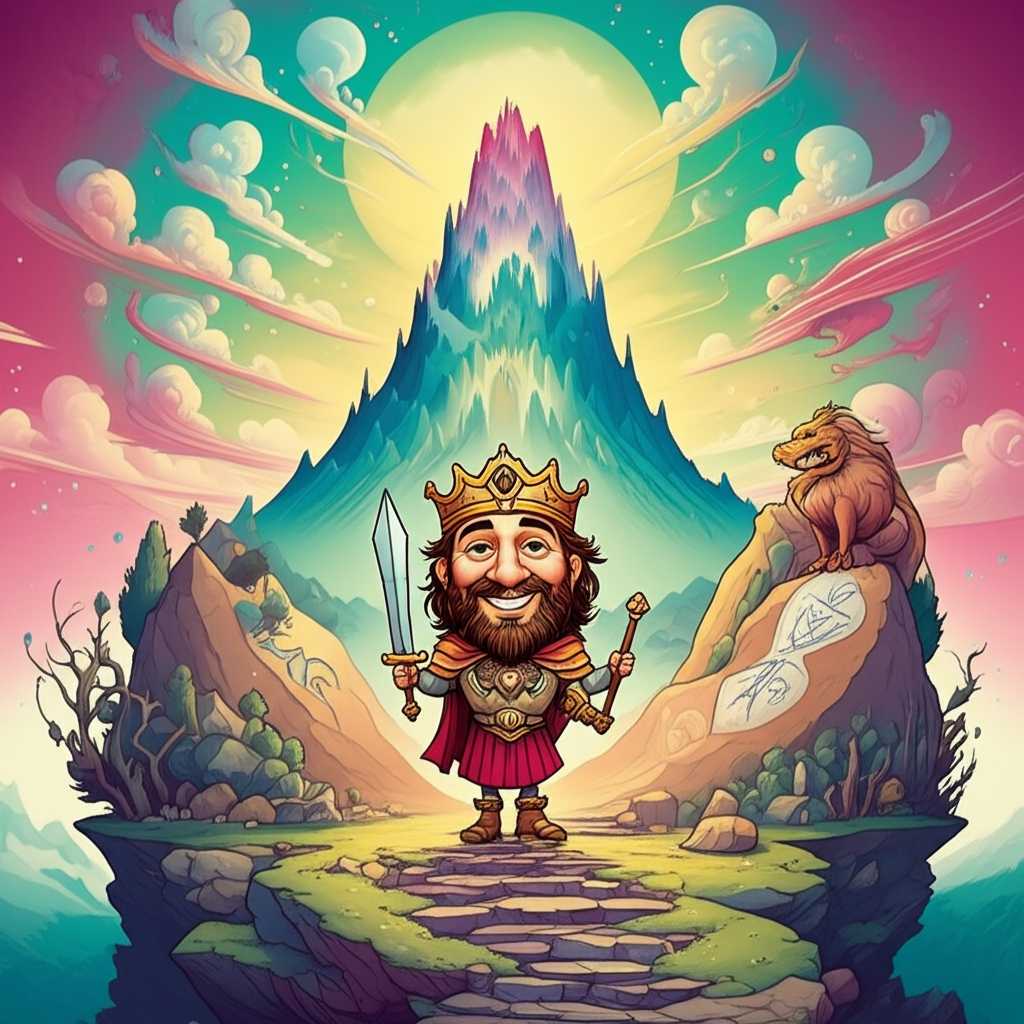
The tale of Morrigan and the Forgotten Mountain unfolds thus: Long ago, in a time when the earth was younger and the boundaries between realms were less defined, there stood a mountain unlike any other. It was known not by name, but by its profound silence and its ability to absorb all sound, rendering it truly forgotten by the clamor of the world. This mountain was said to hold a great power, a slumbering energy that could either nurture or destroy. It was a place where the veil between worlds was rumored to be thinnest, a gateway to unseen forces.
Morrigan, drawn by the unique stillness and the potent energy emanating from this mountain, sought it out. She was not a seeker of peace, but a harbinger of change, a catalyst for events that would reshape the land and its inhabitants. She saw in the Forgotten Mountain a reflection of her own nature – a force that could disrupt the established order, that held both immense potential and terrifying consequence.
Upon reaching the mountain, Morrigan did not conquer it, nor did she seek to tame it. Instead, she communed with its essence, her own powerful spirit resonating with the ancient, dormant energy. It is said that she whispered secrets into its stony heart, tales of conflict, of the rise and fall of kingdoms, of the eternal dance of life and death. Her presence, rather than disturbing the mountain’s silence, seemed to amplify it, weaving a narrative of power into its very fabric. She became the mountain’s voice, the echo of its forgotten purpose.
The legend goes on to describe how Morrigan’s influence began to ripple outwards. The land around the Forgotten Mountain, once fertile and peaceful, started to experience subtle shifts. The winds grew more tempestuous, the rivers more unpredictable, and whispers of discord began to stir amongst the people. It was not that Morrigan directly caused these events, but rather that her connection to the mountain awakened a dormant power, a primal force that mirrored the inherent cycles of conflict and renewal in the world. The Forgotten Mountain, once a place of passive stillness, became a focal point of unseen energies, its silence now a pregnant pause before inevitable change.
The symbolism within this tale is multifaceted. The Forgotten Mountain itself can be seen as representing the subconscious, the hidden depths of power and potential that lie dormant within nature and within individuals. Its silence signifies a power that is not overtly expressed, but is nonetheless profoundly influential. Morrigan, as the embodiment of war and fate, represents the disruptive yet necessary forces of change. Her interaction with the mountain suggests that even the most serene or forgotten aspects of existence can be awakened and imbued with purpose by potent, active forces. The tale may have served as a cautionary reminder that power, whether natural or personal, needs to be understood and respected, and that stillness can be a prelude to profound upheaval. It spoke to the cyclical nature of existence, the constant interplay of creation and destruction, peace and conflict, that defined the world as they understood it.
In contemporary times, the echoes of Morrigan and the Forgotten Mountain resonate in various forms of modern media and cultural studies. She is a recurring figure in fantasy literature, often depicted as a powerful, morally ambiguous entity associated with destiny and battle. Her archetypal qualities have inspired characters in video games, where her formidable presence can represent a significant challenge or a source of ancient power. In academic circles, scholars of Celtic mythology analyze these stories to understand the religious beliefs, social structures, and psychological landscapes of ancient Ireland. The enduring appeal of these myths lies in their ability to tap into universal human themes of power, change, and the unknown, filtered through the unique imaginative lens of a specific culture.
It is crucial to reiterate that the tale of Morrigan and the Forgotten Mountain is a product of ancient storytelling, a rich tapestry woven from imagination and cultural interpretation. It is a testament to the enduring power of myth to explain the world and to explore the human experience. As Muslims, we recognize that the ultimate Creator and Sustainer of all existence is Allah (God) alone. Our understanding of reality is grounded in divine revelation and the absolute oneness of God. Yet, we can still appreciate these ancient narratives for their cultural significance, their artistic merit, and the insights they offer into the history of human thought and imagination. These stories, like the ancient stones they are associated with, stand as markers of our shared cultural heritage, reminding us of the enduring human need to tell stories, to seek meaning, and to connect with the vast, mysterious world around us.