fufufafa
Across the windswept plains and mist-shrouded glens of ancient Ireland, where the veil between the mundane and the magical was often perceived as thin, stories of heroes and gods echoed through generations. Among these timeless narratives, the tale of Lugh and the concept of a sacred city stands as a vibrant testament to the rich tapestry of Celtic mythology. This is not a historical account of verifiable events, nor a doctrine to be believed, but rather a traditional story, woven from the threads of human imagination by the people of a bygone era, offering a glimpse into their worldview.
Origins and Cultural Background: A World Alive with Spirit
The myths surrounding Lugh, and the notions of sacred places within the Celtic tradition, emerged from a society deeply intertwined with the natural world. This was an era, roughly spanning from the Iron Age through the early centuries of the Common Era, where the rhythms of the seasons, the power of the elements, and the presence of unseen forces were central to daily life. The Celts were not a monolithic entity, but a collection of tribes and peoples spread across Western Europe, sharing common linguistic roots and a rich spiritual landscape.
Their understanding of the world was animistic, meaning that spirits and consciousness were believed to inhabit not only living beings but also natural phenomena – rivers, mountains, trees, and stones. These spirits were not necessarily malevolent or benevolent in a human sense, but powerful entities that demanded respect and understanding. The landscape itself was imbued with significance, with certain locations holding particular sanctity. These weren’t necessarily cities in the modern, urban sense, but often natural formations or important tribal centers that served as focal points for ritual and community. The concept of a "sacred city" in this context likely represented a place of ultimate spiritual power, a nexus where the earthly and the divine were most accessible.
Character Description: Lugh, the Master of Many Skills
Central to this narrative is Lugh, a figure of immense importance in the Irish pantheon. He is not a single, easily defined entity, but a complex deity embodying a multitude of powers and attributes. Often referred to as Lugh Lámhfhada, meaning "Lugh of the Long Arm," this epithet speaks to his far-reaching influence and his mastery in diverse domains.
Lugh is symbolically associated with the sun, light, and the summer solstice, representing brilliance, warmth, and abundant harvest. His symbolic attributes extend to his multifaceted talents. He is renowned as a master of all arts and crafts – a skilled warrior, a cunning craftsman, a wise bard, and a proficient sorcerer. This universality of skill highlights the ideal of a well-rounded individual, capable of excelling in all aspects of life, from the battlefield to the forge, from the spoken word to the hidden arts. He is a figure of immense intellect and charisma, a leader who can inspire and unite. His symbolic significance lies in his representation of divine potential, human achievement, and the interconnectedness of knowledge and power.
Main Story / Narrative Retelling: The Gleaming Citadel of Tara
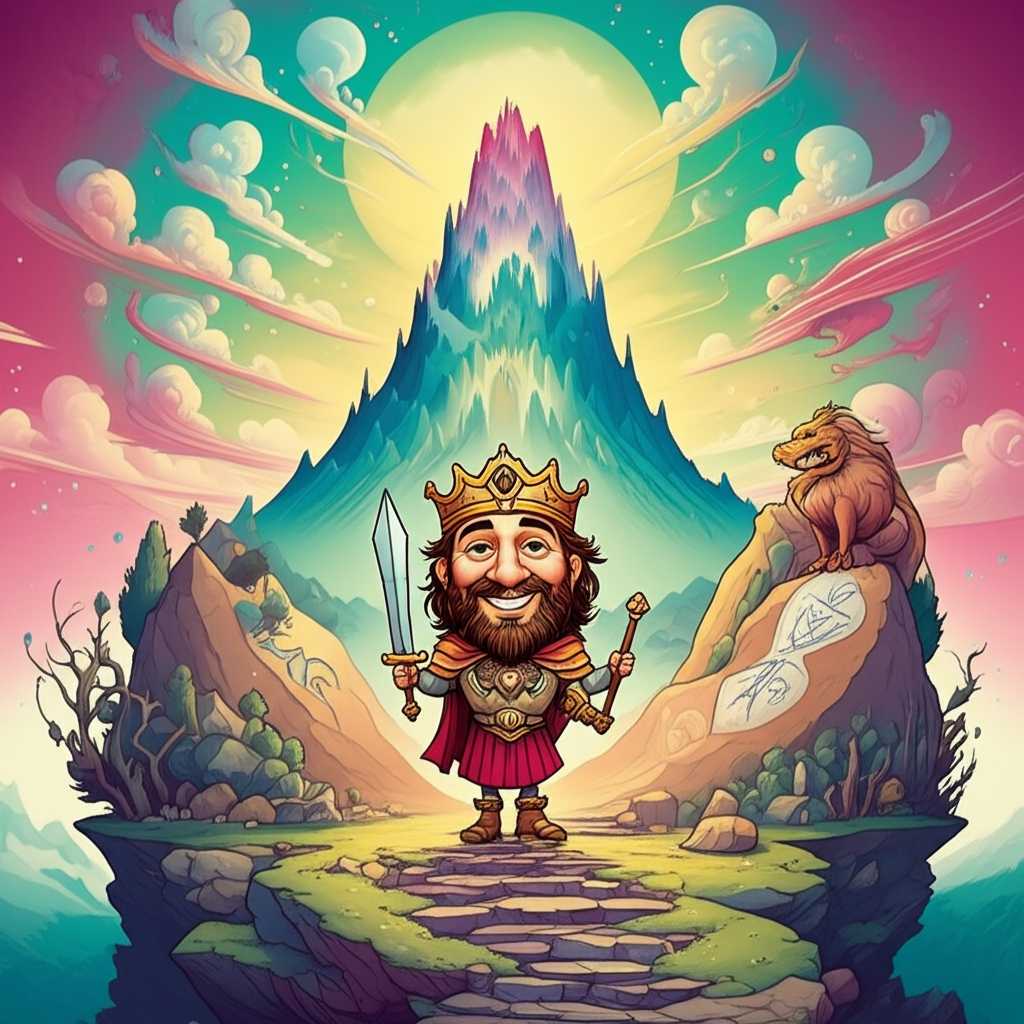
The tale of Lugh and the sacred city, often woven into broader narratives of the Tuatha Dé Danann, the supernatural race of gods who inhabited Ireland, speaks of a place of profound spiritual and political importance. Imagine, then, a time when the Tuatha Dé Danann held sway over the Emerald Isle. Their power was immense, and their connection to the land was profound. Among their most revered sites was a place that, in the collective imagination, represented the heart of their dominion – a sacred city, often identified with the Hill of Tara, a real archaeological site that served as an ancient seat of kingship and ritual.
This sacred city, in the story, was not built of mere stone and mortar. It was a place shimmering with an ethereal glow, its foundations laid not just on earth but on layers of spiritual energy. Its walls were said to be constructed from the very essence of sunlight and the whispers of ancient trees. Within its precincts, the air hummed with a potent magic, and the boundaries between the mortal and the divine blurred. This was a place where the wisdom of the ages was said to reside, where prophecies were uttered, and where the destinies of the land were shaped.
Lugh, with his radiant presence and his mastery over countless skills, was intrinsically linked to this sacred city. He was seen as its protector, its embodiment, and its ultimate champion. When threats arose, whether from invading forces or internal strife, it was Lugh, with his long arm reaching across the land and his keen intellect guiding his actions, who would defend its sanctity. He might have been depicted journeying to the city, his arrival heralded by a surge of light, to consult with the ancient spirits or to rally his people.
The narrative might describe Lugh standing atop the highest rampart of the sacred city, his gaze sweeping over the verdant landscape. He would draw upon his vast array of skills – perhaps using his spear to ward off unseen dangers, his voice to inspire courage in his followers, or his knowledge of the earth’s secrets to ensure the prosperity of the land. The city itself would respond to his presence, its light intensifying, its protective aura strengthening. It was a symbiotic relationship: the city drawing strength from Lugh’s presence, and Lugh drawing upon the city’s deep wellspring of spiritual power. It was a vision of harmony, where the divine leader and the sacred heartland were one, a beacon of strength and spiritual resilience.
Symbolism and Meaning: Harmony, Leadership, and the Sacred Landscape
For the ancient Celts, the tale of Lugh and the sacred city likely held profound symbolic meaning. The sacred city, as an idealized location, represented the pinnacle of spiritual and political order. It was a place of ultimate connection to the divine, a nexus of power and wisdom. Its sanctity mirrored the reverence the Celts held for their natural surroundings, suggesting that the very land was sacred and imbued with spiritual significance.
Lugh, with his diverse skills and sun-like radiance, embodied the ideal leader – one who possessed not only martial prowess but also wisdom, artistry, and a deep understanding of the world. His connection to the sacred city symbolized the harmonious relationship between a righteous ruler and the spiritual heart of their domain. The story could have served to reinforce the importance of unity, leadership, and respect for the sacred elements of their world. It spoke to their understanding of how a strong, wise leader could draw strength from and protect the spiritual core of their community, ensuring its well-being and prosperity.
Modern Perspective: Echoes in Culture and Storytelling
Today, the myths of Lugh and the rich tapestry of Celtic lore continue to captivate imaginations. In literature, Lugh appears as a recurring character in fantasy novels, often portrayed as a powerful, wise, and enigmatic figure. His multifaceted nature makes him an appealing archetype for writers exploring themes of heroism, destiny, and the intersection of magic and humanity.
In video games, Lugh’s attributes of mastery and divine power are frequently translated into formidable characters with unique abilities, drawing players into worlds steeped in Celtic mythology. The concept of sacred places also finds resonance in game design, where ancient ruins and mystical locations serve as important quest hubs and sources of lore. Film and television have also drawn inspiration, offering visual interpretations of these ancient tales, bringing the heroes and their mythical landscapes to life for a global audience. Beyond entertainment, these myths are invaluable for cultural studies, providing insights into the beliefs, values, and worldview of ancient peoples.
Conclusion: A Legacy of Imagination and Tradition
The tale of Lugh and the sacred city, as we have explored it, is a beautiful example of the rich oral traditions and imaginative landscapes of ancient Ireland. It is a cultural story, a testament to the creativity and spiritual depth of the people who conceived it. As Muslims, we recognize that only Allah (God) is the true Creator and Sustainer of all existence. Our understanding of this narrative is solely within the realm of appreciating cultural heritage, the power of storytelling, and the enduring human impulse to create meaning and explore the mysteries of existence through myth and legend. These stories, though not to be taken as literal truth, offer a valuable window into the minds of our ancestors and remind us of the enduring legacy of human imagination.