fufufafa
Across the verdant landscapes and mist-shrouded hills of ancient Ireland, where the veil between the mundane and the mystical was often perceived as thin, tales of powerful beings and their interactions with the natural world were woven into the very fabric of life. These stories, passed down through generations by bards and storytellers, served not as literal accounts of divine intervention, but as imaginative explorations of humanity’s place within a grand and often untamed cosmos. Among these enduring narratives is the tale of Dagda and the Eternal Mountain, a story that speaks to the ancient Irish worldview and its profound connection to the land.
The cultural era in which such myths flourished was one deeply intertwined with the rhythms of nature. The early Irish people lived in a society where the seasons dictated their lives, where the fertility of the land was paramount to their survival, and where the vastness of the untamed wilderness inspired awe and sometimes fear. Their understanding of the world was animistic, imbuing natural phenomena – rivers, trees, mountains, and the very earth itself – with a spirit or essence. The divine was not confined to a distant, abstract realm but was often perceived as immanent, present in the world around them. This perspective fostered a rich tapestry of folklore, filled with beings that represented the forces of nature, the cycles of life and death, and the enduring human quest for understanding and meaning.
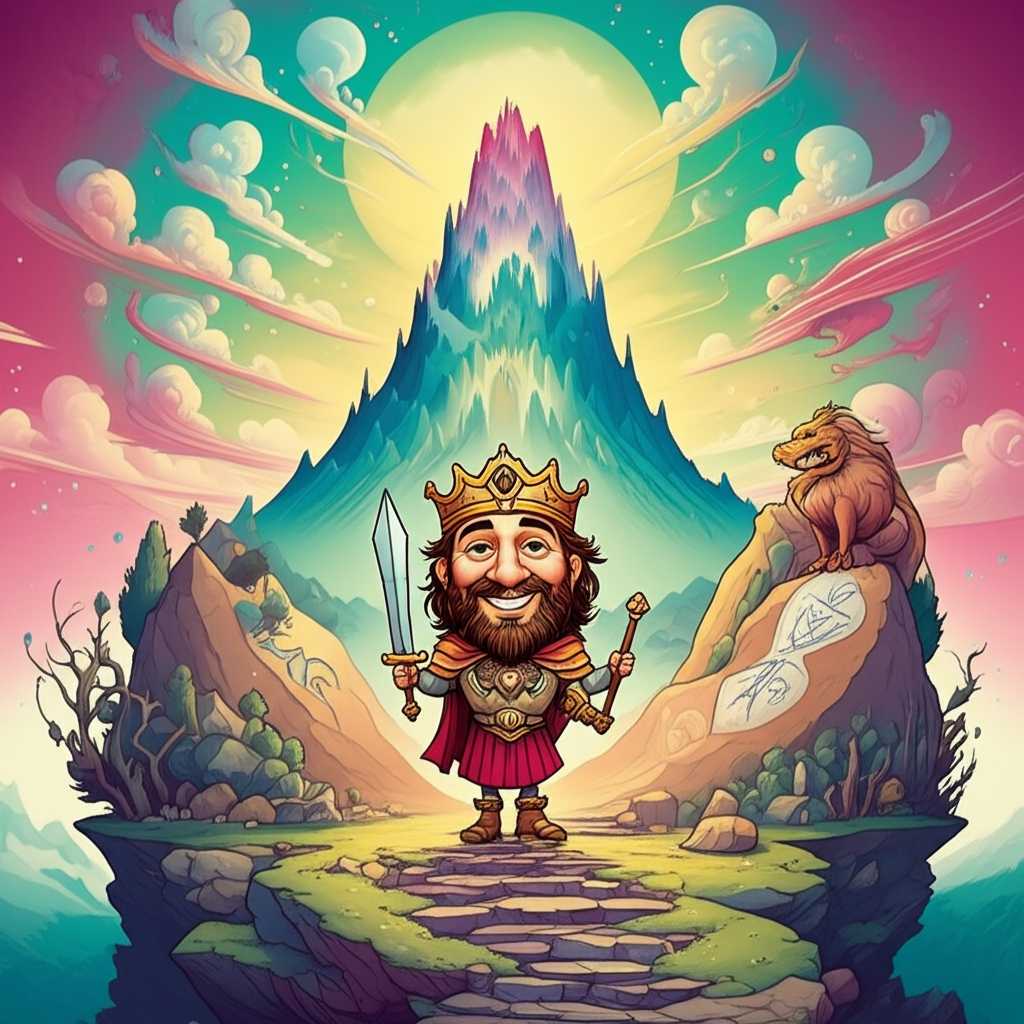
At the heart of this particular tale stands Dagda, a figure who, within the context of Irish mythology, is often depicted as a chief deity, a powerful and benevolent leader of the Tuatha Dé Danann, the mythical race of gods who inhabited Ireland before the arrival of humans. Dagda is not presented as a singular, monolithic entity, but rather as a multifaceted character. He is known as the "Good God," possessing immense strength, wisdom, and a profound connection to the bounty of the earth. His symbolic attributes often include a massive club, capable of both destruction and resurrection, and a cauldron that never runs empty, signifying abundance and sustenance. He is a protector, a provider, and a figure embodying the essential forces of life and leadership. The Eternal Mountain, in this context, is not simply a geological formation but a personification of the enduring, unyielding power of the earth itself, a symbol of permanence and the primal forces that shaped the landscape.
The narrative unfolds with Dagda, the benevolent deity, gazing upon a land often plagued by hardship and scarcity. The Eternal Mountain, a colossal and ancient peak, stood as a sentinel over the land, its slopes often shrouded in mist and its presence commanding respect. While the mountain was a source of wonder, it also represented a challenge, a barrier, and a reminder of nature’s untamed might. It was said that the mountain held within its core a secret, a source of unparalleled vitality and nourishment that, if harnessed, could bring prosperity to the land.
Dagda, ever the protector of his people and the land, felt a deep responsibility to uncover this secret. He approached the Eternal Mountain not with force, but with respect and understanding. Legend tells of his long journey, a pilgrimage of sorts, where he conversed with the winds that whispered around its crags, listened to the murmurs of the ancient stones, and observed the tenacious life that clung to its steep inclines. He understood that the mountain’s power was not to be commanded, but to be understood and, perhaps, appeased.
One account suggests that Dagda, through his profound connection to the earth, learned the mountain’s true nature. It was not a hostile entity, but a vital organ of the world, holding the earth’s lifeblood within its stony heart. He discovered that the mountain’s “vitality” was not a tangible object to be plundered, but a flowing force, a constant renewal that nourished the surrounding lands. Dagda’s task, therefore, was not to conquer the mountain, but to become its steward, to ensure its continued flow of life-giving energy. Through his wisdom and gentle persuasion, or perhaps through a symbolic act of deep reverence, Dagda is said to have established a balance, allowing the mountain’s bounty to seep into the earth, enriching the soil and bringing forth an era of abundance. This narrative does not depict a literal battle or a magical theft, but a harmonious integration, where the divine leader works in concert with the primal forces of nature.
The symbolism within this tale is rich and multifaceted. The Eternal Mountain can be seen as representing the raw, untamed power of nature, a force that is both awe-inspiring and potentially destructive if not respected. Dagda, as the wise and benevolent leader, embodies the human capacity for understanding, stewardship, and the ability to work in harmony with natural forces. His club, representing power, and his cauldron, representing sustenance, suggest that true leadership lies not in domination, but in the responsible use of power to ensure the well-being and prosperity of all. The tale may have served to teach ancient peoples about the importance of respecting the natural world, understanding its cycles, and recognizing the interconnectedness of all living things. It could also be interpreted as a myth of origin for the fertility of the land, attributing its bounty to the benevolent actions of a divine figure.
In the modern world, myths like the tale of Dagda and the Eternal Mountain continue to resonate, albeit through different lenses. They are no longer viewed as literal accounts of divine beings, but as profound expressions of cultural heritage, human imagination, and ancient wisdom. In literature, these figures and their stories are reimagined, offering insights into the human psyche and our enduring fascination with the supernatural. In popular culture, elements of Irish mythology find their way into video games, movies, and art, sparking new interpretations and keeping these ancient narratives alive. Cultural studies scholars explore these myths to understand the values, beliefs, and social structures of the societies that created them.
It is crucial to reiterate that the tale of Dagda and the Eternal Mountain is a traditional story, a product of the rich cultural tapestry of ancient Ireland. It is a testament to the power of human storytelling and the way in which our ancestors sought to understand their world and their place within it. As Muslims, we recognize that only Allah (God) is the true Creator and Sustainer of all that exists, the ultimate source of power and life. These ancient myths, while fascinating from a cultural and historical perspective, do not alter this fundamental truth. They offer a glimpse into the diverse ways in which humanity has sought meaning and connection, reminding us of the enduring power of imagination and the rich legacy of cultural heritage that continues to shape our understanding of the world. The echoes of these ancient tales, like the enduring presence of the mountains themselves, serve as a reminder of the human desire to connect with something larger than ourselves, a desire that transcends time and culture.