fufufafa
In the rich tapestry of ancient European folklore, particularly within the vibrant traditions of Celtic mythology, lies a fascinating array of deities, heroes, and powerful artifacts. Among these tales, a compelling narrative emerges concerning the legendary king Nuada of the Tuatha Dé Danann and his magnificent weapon, the Sword of Light. This article delves into a speculative interpretation, exploring a narrative that intertwines Nuada’s destiny with the enigmatic figure of Cernunnos, the Horned God, presenting a "mystery" that bridges the realms of divine kingship and primeval nature. It is crucial to understand that this is a traditional story, told by ancient people to explain their world, and is presented here purely for cultural, historical, and educational understanding, not as truth or divine revelation.
Origins and Cultural Background: Echoes of an Iron Age World
The myths surrounding Nuada and the Tuatha Dé Danann find their roots primarily in early Irish mythology, preserved in medieval manuscripts, though their origins predate Christianity and speak of a pre-Roman Iron Age Celtic society. This era, stretching across Ireland, Britain, and Gaul, was characterized by tribal communities deeply connected to the natural world. Forests were not merely resources but sacred spaces, rivers were vital arteries, and the changing seasons dictated life and death.
People of this time viewed the world through an animistic lens, believing spirits inhabited natural features and that the divine permeated every aspect of existence. Their worldview was cyclical, reflecting the eternal rhythm of nature: birth, growth, death, and rebirth. Oral traditions, passed down through generations of bards and storytellers, were the primary means of preserving history, law, and religious belief. In such a society, stories of powerful deities, magical weapons, and heroic quests served not only to entertain but also to impart moral lessons, explain natural phenomena, and solidify cultural identity, offering a framework for understanding a world both wondrous and perilous.
Figures of Legend: Nuada and the Enigmatic Cernunnos
At the heart of our story stand two powerful, yet distinct, mythological figures.
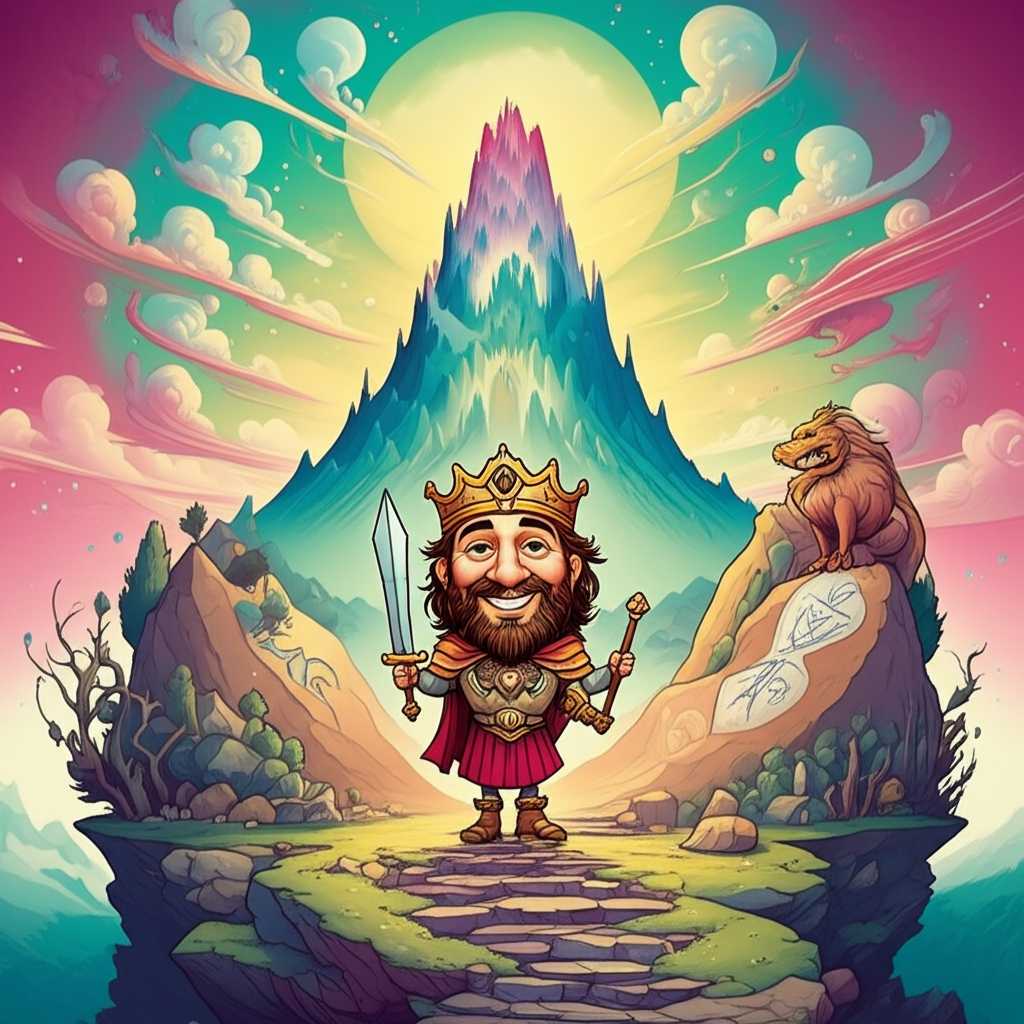
Nuada Airgetlám, or Nuada of the Silver Hand, was the revered first king of the Tuatha Dé Danann, a race of god-like beings who were said to have arrived in Ireland bearing four magical treasures. Nuada was initially depicted as a formidable warrior and a just ruler, wielding the legendary Claidheamh Solais, the Sword of Light, a weapon that could not be resisted once drawn from its scabbard. His story is one of profound resilience and transformation. In the First Battle of Mag Tuiredh, he lost his hand in combat, an injury that, by ancient Celtic law, rendered him unfit for kingship. He was temporarily replaced by Bres, a half-Fomorian king, whose tyrannical rule brought hardship to the Tuatha Dé Danann. Nuada’s eventual restoration, aided by the master craftsman Dian Cécht who fashioned him a miraculous silver hand (and later a fully restored arm by Miach), symbolized divine craftsmanship, the triumph of justice, and the cyclical nature of power and leadership.
Cernunnos, the Horned God, is a much older, more primordial deity, predominantly known from Gaulish (Continental Celtic) iconography, though his presence likely resonated across all Celtic lands. Often depicted with magnificent antlers, seated cross-legged, and surrounded by animals like stags and serpents, Cernunnos embodies the wild, untamed aspects of nature. He is frequently associated with fertility, abundance, the wilderness, animals, and the mysterious cycles of life, death, and regeneration. He is seen as the "Lord of the Animals" or the "Master of the Hunt," a chthonic figure who connects the earthly realm with the underworld. Cernunnos represents the ancient, deep wisdom of the forest, the hidden energies that pulse beneath the surface of the world, and the eternal balance between creation and decay. His symbolic attributes speak of the raw power and mystery of the natural world, rather than the organized, divine order represented by figures like Nuada.
The Sword of Nuada and the Mystery of Cernunnos: A Speculative Narrative
The canonical myths do not explicitly link Nuada’s Sword of Light with Cernunnos. However, the prompt invites us to explore a "mystery" that connects these two powerful figures, suggesting a narrative interpretation that weaves their stories together. Let us imagine a tale, born from the whisperings of ancient bards, that sought to explain the profound power of Nuada’s sword and its deeper origins.
When the Tuatha Dé Danann arrived in Ireland, they brought with them the four great treasures, chief among them the Claidheamh Solais, a blade that shimmered with an inner light, capable of cutting through any defense and ensuring victory for its wielder, Nuada. For a time, it seemed the sword’s power was absolute, a symbol of the Tuatha Dé Danann’s divine right to rule.
Yet, during the calamitous First Battle of Mag Tuiredh, as Nuada fought valiantly against the Fomorians, the mighty sword, for all its brilliance, could not prevent the severing of his hand. This grievous wound, a physical and spiritual blow, cast Nuada from his throne. As Bres’s tyranny darkened the land, Nuada, humbled and stripped of his kingship, sought solace not in the halls of his kin, but in the ancient, shadowed forests that covered the heart of Éire. He wandered, a king without a crown, a warrior without his full strength, pondering the true nature of power and the limits of even a divine weapon.
It was in the deepest, most primordial groves, where the canopy was so thick that the Sword of Light’s radiance could not pierce through, that Nuada encountered the Horned God. Cernunnos sat upon a moss-covered stone, antlers like ancient oak branches rising from his brow, his eyes holding the silent wisdom of a thousand winters. Around him, stags grazed fearlessly, and serpents coiled in tranquil repose. He was the spirit of the untamed wilderness, the deep pulse of the earth.
Nuada, still grappling with his loss, felt the overwhelming presence of the ancient deity. He spoke not of battles or kingship, but of the sword – its light, its power, and yet its inability to protect him from a wound that cost him his throne.
Cernunnos, with a gaze that seemed to penetrate Nuada’s very soul, did not speak in words but in impressions and visions. He revealed that the Claidheamh Solais, while imbued with divine light and the craft of the gods, drew its ultimate, sustaining power not solely from the heavens, but from the earth itself. Its brilliance was a reflection of the sun, but its cutting edge, its unyielding strength, was rooted in the primal energies of creation and decay, the ceaseless cycle of life and death that Cernunnos embodied. He showed Nuada that true power was not merely in conquest, but in understanding the ebb and flow of nature, in acknowledging the ancient spirits of the land.
The sword, Cernunnos conveyed, was not just a weapon of light; it was a conduit, a harmonizer between the divine will of the Tuatha Dé Danann and the raw, enduring spirit of the land. Its initial power was fierce but perhaps unbalanced. Nuada’s loss of his hand, therefore, was not a weakness, but an initiation. It forced him to delve deeper, to seek understanding beyond mere physical prowess.
When Nuada finally returned to his people, not only was his silver hand forged, a marvel of divine craftsmanship, but his spirit was also transformed. He understood that the Sword of Light, when wielded by a king who honored the ancient rhythms of the earth as much as the divine mandate, possessed a deeper, more integrated power. The mystery of the sword, therefore, was not just in its radiant light, but in its hidden connection to the primal, enduring forces of the land, a connection revealed by the silent wisdom of Cernunnos.
Symbolism and Meaning: A Tapestry of Ancient Beliefs
This narrative, whether a forgotten myth or a bard’s imaginative interpretation, is rich with symbolism for the ancient people. The Sword of Nuada, the Claidheamh Solais, represents not just divine power and justice, but also the aspiration for enlightened leadership. Its temporary failure, and Nuada’s subsequent journey, symbolizes the idea that even divine authority must acknowledge the deeper, older forces of the world. The silver hand (or arm) represents resilience, adaptation, and the ingenuity of divine craftsmanship, suggesting that setbacks can lead to greater strength and wisdom.
Cernunnos, in this context, embodies the primal, untamed aspects of nature, the ancient wisdom that predates organized divine pantheons. His presence signifies the necessity for rulers to be connected to the land, its cycles, and its deep, enduring energies. The "mystery" of their connection through the sword suggests a synthesis: that true, lasting power and effective leadership for the Tuatha Dé Danann (representing a more structured, divine order) must be rooted in and harmonious with the fundamental, chthonic forces of the land, personified by Cernunnos. It speaks to the balance between the light of civilization and the shadow of the wild, between innovation and tradition, between divine right and natural law.
Modern Perspective: Echoes in Contemporary Culture
Though these tales originate in antiquity, their themes continue to resonate in modern culture. The Sword of Nuada, as a legendary artifact of immense power and significance, finds parallels in countless fantasy novels, films, and video games, inspiring iconic weapons wielded by heroes. Nuada’s journey of loss and redemption, particularly his silver hand, has influenced character archetypes representing resilience, overcoming adversity, and the integration of prosthetics into heroic narratives.
Cernunnos, with his striking imagery and association with nature, has become a potent symbol in literature, art, and ecological movements, representing the untamed wilderness and the call for environmental stewardship. His image is frequently invoked in fantasy settings as a wise, ancient guardian of forests or a deity of the hunt. Cultural studies continue to examine these figures to understand pre-Christian European belief systems, exploring how ancient societies perceived nature, power, and the divine, offering insights into the human imagination’s enduring quest for meaning.
Conclusion: A Legacy of Storytelling
The speculative tale of Nuada’s Sword and its connection to Cernunnos stands as a testament to the enduring power of mythology. It is a cultural story, not a belief, reflecting the values, fears, and aspirations of ancient peoples. As Muslims, we recognize that only Allah (God) is the true Creator and Sustainer of the universe, and that all power and wisdom ultimately reside with Him.
Nevertheless, these ancient narratives serve as invaluable cultural heritage, offering windows into the human imagination across millennia. They remind us of the universal human need to understand our world, to explore the boundaries of good and evil, leadership and chaos, and the deep, often mysterious, connection between humanity and the natural world. The "Sword of Nuada: Mystery of Cernunnos" endures not as truth, but as a vibrant thread in the rich tapestry of human storytelling, inviting us to reflect on the imaginative spirit that shaped the worldviews of our ancestors.