fufufafa
Introduction
Deep within the verdant landscapes and mist-shrouded hills of Ireland lies a rich tapestry of ancient tales, passed down through generations. Among these cherished narratives is the fascinating saga of the Tuatha Dé Danann, a mythical race of divine beings said to have ruled Ireland in a distant past. This particular legend, which speaks of the formidable Sword of Nuada and the enigmatic power of Dagda, emerges from the very heart of Celtic mythology. It is a traditional story, woven by the creative minds of ancient peoples, reflecting their worldview, their heroes, and their understanding of power and sovereignty. This article will explore the cultural significance and narrative depth of this captivating myth, presenting it purely for cultural, historical, and educational understanding, and not as a subject of belief, worship, or practice.
Origins and Cultural Background
The myths surrounding the Tuatha Dé Danann, including the tales of Nuada and Dagda, were primarily shaped during the pre-Christian Iron Age and early medieval period in Ireland. This was a time when society was largely tribal, agrarian, and deeply connected to the natural world. Oral tradition was the primary means of transmitting knowledge, history, and entertainment, with skilled bards and storytellers holding a revered place in society.
For the people of this era, the world was alive with unseen forces and powerful entities. They viewed the natural environment—the forests, rivers, mountains, and seas—as imbued with spirits and magical energy. Their worldview was polytheistic, populated by a pantheon of gods and goddesses who embodied various aspects of nature, human endeavors, and cosmic order. These deities were not distant observers but active participants in the affairs of mortals, capable of immense creation and destruction. Honor, martial prowess, wisdom, and magical ability were highly valued, and the stories often revolved around battles for supremacy, the establishment of kingship, and the acquisition of powerful, often magical, artifacts that symbolized authority and destiny.
Character Descriptions: Sovereignty, Wisdom, and Unyielding Power
At the heart of our tale stand two paramount figures of the Tuatha Dé Danann, alongside a legendary artifact.
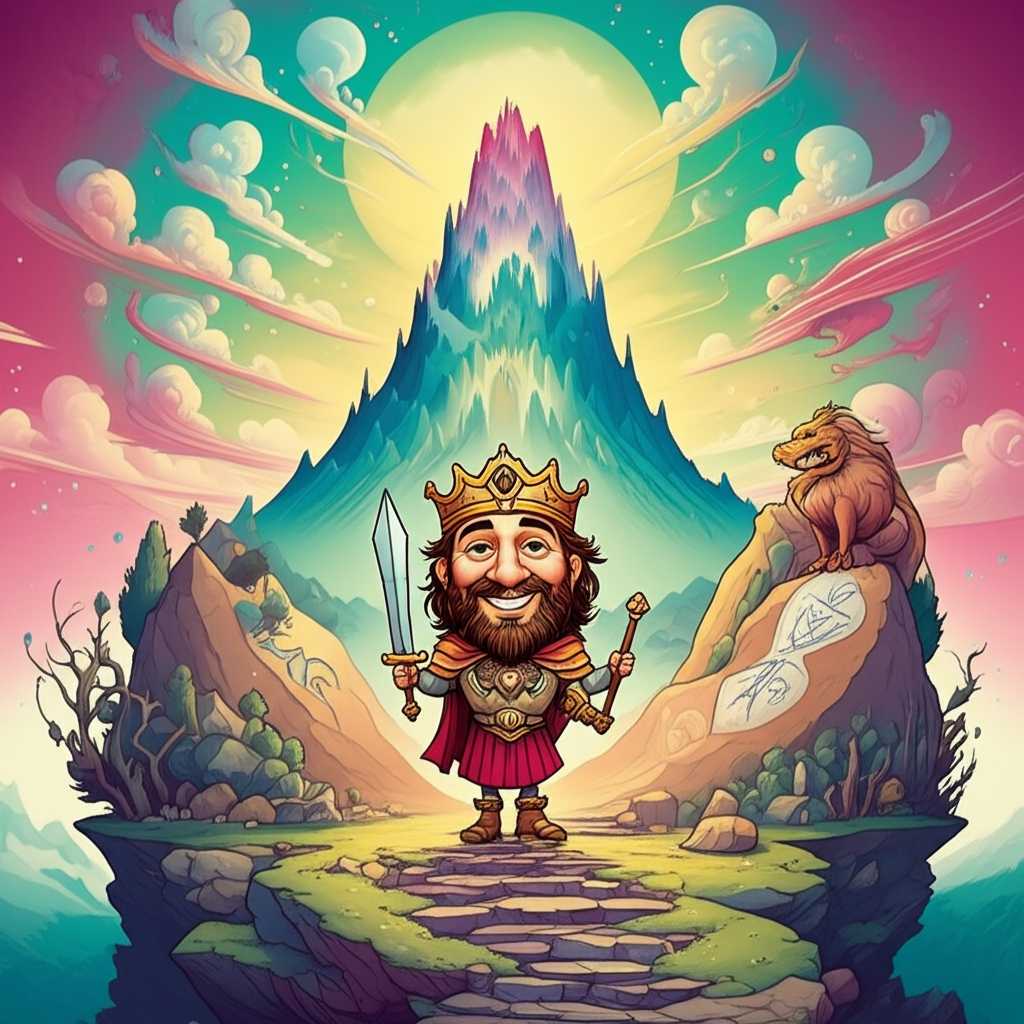
Nuada, the King of the Silver Arm: Nuada Airgetlám, meaning "Nuada of the Silver Arm," was the first king of the Tuatha Dé Danann upon their arrival in Ireland. He is often depicted as a noble and just leader, symbolizing rightful sovereignty and the embodiment of royal authority. His most famous attribute, the silver arm, comes from a pivotal moment in his story where he loses his natural arm in battle. This injury, according to ancient law, temporarily disqualified him from kingship due to physical imperfection. His eventual restoration with a magically crafted silver arm symbolizes resilience, the ability to overcome adversity, and the enduring nature of true leadership, even when faced with physical limitations. His divine right to rule was not merely physical prowess but a deeper connection to the land and its people.
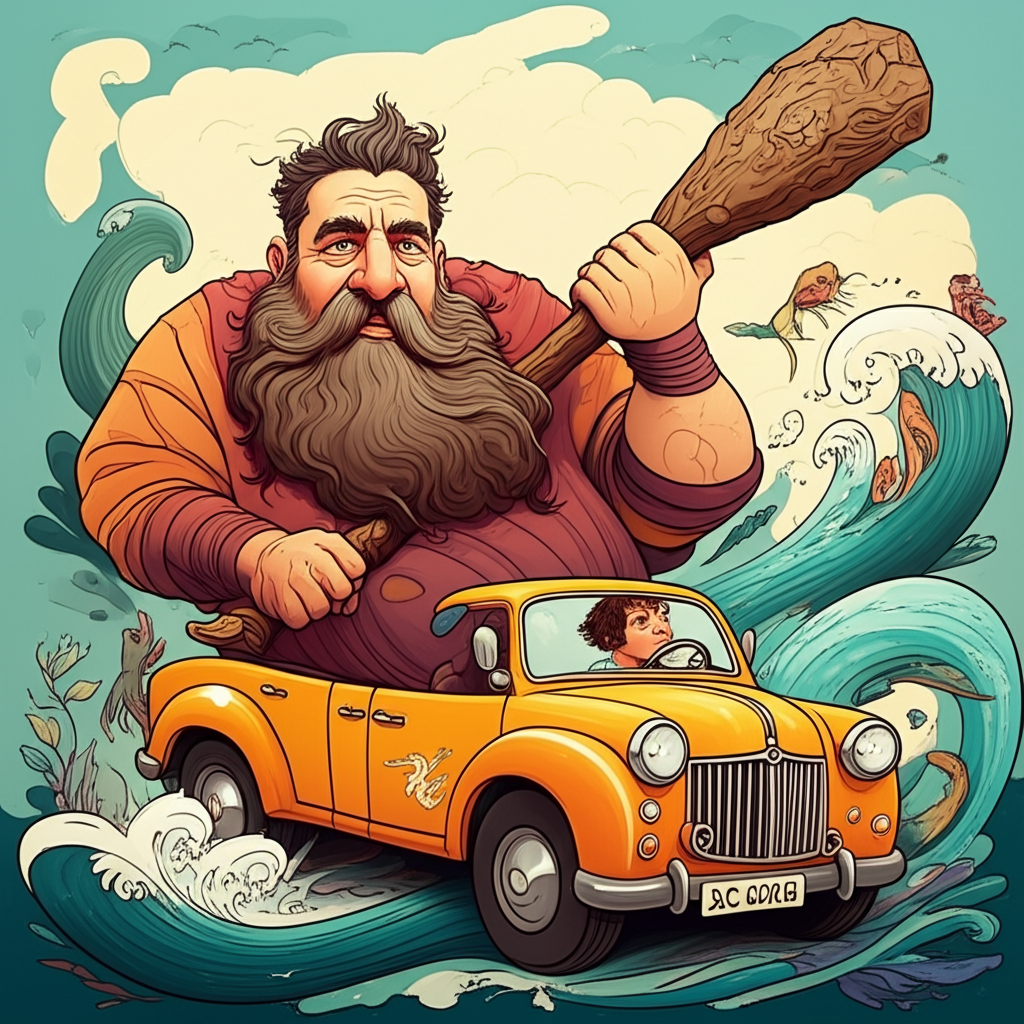
Dagda, the Good God: The Dagda, whose name means "the Good God" or "the Great God," was one of the most powerful and revered figures among the Tuatha Dé Danann. He is often portrayed as a colossal, jovial, and immensely wise chieftain, a father figure who possessed vast magical abilities. Dagda is associated with abundance, fertility, life, death, and the very cycles of nature. He famously owned three potent magical artifacts: a bottomless cauldron (Coire Ansic) that could feed an army, a magical harp (Uaithne) that could command emotions and seasons, and a massive club (Lorg Mór) that could both kill and restore life. Dagda’s symbolic attributes speak to immense power, profound wisdom, and a connection to the fundamental forces of existence, embodying a balanced yet formidable authority.
Claíomh Solais, The Sword of Light: Nuada’s legendary weapon was the Claíomh Solais, the "Sword of Light" or "Shining Sword." This artifact was one of the four great treasures the Tuatha Dé Danann brought with them from their mythical cities of origin. It was said to glow with an inner radiance and was unstoppable in battle, capable of cutting through any defense and ensuring victory for its wielder. More than just a weapon, Claíomh Solais symbolized truth, justice, and the inviolable sovereignty of the rightful king. It was an emblem of divine authority, an extension of Nuada’s own power and destiny, representing the ultimate tool for upholding order and defending the realm.
The Main Story: A Struggle for Sovereignty
According to the ancient narratives, the Tuatha Dé Danann arrived in Ireland veiled by mists, descending from the sky or sailing from the Northern Isles, bringing with them their unparalleled magic and their four great treasures. Ireland, at that time, was ruled by the Fir Bolg, an earlier race. A great conflict was inevitable, culminating in the First Battle of Mag Tuired (Moytura).
Nuada, as the king, led his people into this titanic struggle. Wielding his magnificent Claíomh Solais, he was a beacon of light and courage on the battlefield. The Sword of Light, it is said, flashed and hummed with power, cutting down countless foes and inspiring the Tuatha Dé Danann to fight with unwavering resolve. Its very presence was a testament to the divine right of Nuada to lead. However, in the brutal melee, Nuada encountered Sreng, a champion of the Fir Bolg. In a fierce exchange, Nuada’s right arm was severed by Sreng’s blade.
Though the Tuatha Dé Danann ultimately triumphed, Nuada’s injury presented a grave challenge to his rule. According to their ancient laws, a king had to be physically perfect. With his arm gone, Nuada was deemed unfit to rule, and he was temporarily replaced by Bres, a half-Fomorian prince. This period of Bres’s reign proved disastrous for the Tuatha Dé Danann, marked by oppression and hardship.
It was during this time of turmoil that Dagda, with his immense wisdom and magical prowess, played a crucial role behind the scenes. While not directly involved in the immediate healing of Nuada – that credit often goes to the physician Dian Cécht and the craftsman Creidhne who fashioned the silver arm – Dagda’s presence and counsel as a powerful chieftain and sorcerer were vital. He was the anchor of the Tuatha Dé Danann, ensuring their survival through difficult times and contributing his immense power to maintaining their morale and eventual resurgence. Dagda’s influence was like the deep roots of a great tree, supporting the very fabric of his people.
With a new, magically crafted silver arm, Nuada was restored to physical perfection and reclaimed his throne, once again wielding his Claíomh Solais, though the original power of the sword may have been tied to his initial, unblemished sovereignty. The "mystery of Dagda" in this context isn’t a direct puzzle related to Nuada’s sword, but rather the profound and often understated power and wisdom that Dagda possessed. It’s the mystery of how such a formidable being, with his own awe-inspiring artifacts, played a foundational role in the overall destiny of the Tuatha Dé Danann, providing the balance and underlying strength that allowed Nuada’s sovereignty and the power of his sword to manifest fully. The combined might of Nuada’s righteous leadership and Dagda’s foundational power defined the golden age of the Tuatha Dé Danann.
Symbolism and Meaning
For the ancient people who shared these myths, the story of Nuada’s Sword and Dagda’s influence resonated with deep symbolic meanings. Nuada’s Claíomh Solais represented the ultimate authority of a just ruler. Its radiance symbolized truth and the clarity required for wise judgment, while its unstoppable nature spoke to the unwavering power of rightful sovereignty. The temporary loss of Nuada’s arm and his subsequent restoration with the silver arm served as a powerful metaphor for the cyclical nature of leadership – that even a king might face periods of vulnerability or imperfection, but true leadership could be restored through ingenuity, skill, and the support of the community.
Dagda, the benevolent and mighty "Good God," embodied the essential forces that sustain life and society. His vast knowledge and magical abilities symbolized wisdom, abundance, and the careful balance between life and death. His club, capable of both killing and healing, illustrated the dual aspects of power – its capacity for destruction, but also its potential for restoration and renewal. His cauldron, ever-full, represented the endless bounty of the land and the importance of hospitality and generosity in leadership. Together, Nuada and Dagda symbolized the ideal of governance: a king who embodies justice and fights for his people (Nuada with his sword), supported by a wise, powerful, and provident figure who ensures the well-being and magical strength of the community (Dagda with his artifacts).
Modern Perspective
Today, the myths of Nuada, Dagda, and the Tuatha Dé Danann continue to capture the human imagination. While no longer believed as literal historical accounts, these stories are cherished as rich cultural heritage. In modern literature, these figures and their legends inspire countless fantasy novels, often appearing as powerful archetypes or direct characters. They are frequently adapted into movies, television series, and especially video games, where the allure of magical artifacts, powerful gods, and epic battles finds a natural home.
Academically, these myths are a fertile ground for cultural studies, folklore research, and comparative mythology. Scholars analyze them to understand the psychology of ancient peoples, the evolution of storytelling, and the universal themes of heroism, leadership, and the struggle between order and chaos. The Claíomh Solais, as an archetype of a magical, truth-revealing sword, has influenced countless fictional weapons, while Dagda’s blend of power and wisdom offers a compelling model for characters in various media. These stories remind us of the enduring human capacity for wonder and the timeless appeal of grand narratives.
Conclusion
The tale of Nuada’s Sword and the mystery surrounding Dagda’s profound power is a testament to the extraordinary creativity of ancient Celtic storytellers. It is a narrative deeply embedded in the cultural fabric of Ireland, offering glimpses into the values, beliefs, and aspirations of a people who lived millennia ago. As Muslims, we recognize that Allah alone is the true Creator and Sustainer of all existence, and that these mythological narratives are products of human imagination and cultural expression, not divine truth. Yet, they hold immense value as a legacy of human ingenuity, offering insights into historical societies and their profound engagement with the mysteries of life and the world around them. This enduring cultural heritage, passed down through generations, continues to enrich our understanding of human imagination and the timeless power of storytelling.