fufufafa
In the mists that once cloaked the emerald isle of Ireland, where ancient stones stood sentinel over a land vibrant with life and lore, a rich tapestry of myths and legends was woven. Among these timeless tales, deeply embedded in the cultural memory of the Celtic people, is the compelling narrative surrounding the Sword of Nuada and the enigmatic figure of Lugh. This is a traditional story, not a factual account, but rather a profound exploration of human understanding of the world, leadership, and destiny, as told by ancient people.
Origins and Cultural Background: A World Shaped by Myth
The myth of Nuada and Lugh originates from the rich body of Irish mythology, primarily recorded in early medieval texts such as the Lebor Gabála Érenn (The Book of Invasions). This monumental collection chronicles the successive waves of mythical peoples who were believed to have settled Ireland, culminating in the arrival of the Tuatha Dé Danann—the "People of the Goddess Danu"—who are often depicted as skilled artisans, poets, and warriors possessing supernatural abilities.
In the pre-Christian era, the people of Ireland lived in a world where the veil between the mundane and the magical was believed to be thin. Their society was tribal, agricultural, and deeply connected to the cycles of nature. Rivers, mountains, and forests were not merely geographical features but imbued with spiritual significance, home to unseen forces and powerful beings. Kingship was paramount, often carrying a sacral aspect; a king’s physical perfection and ability to lead in battle were considered vital for the prosperity and well-being of his people and the land itself. Honor, prowess in combat, and the possession of magical artifacts were central to their worldview, shaping their understanding of power, justice, and the cosmic order. These myths served not only as entertainment but also as moral guides, explanations for natural phenomena, and validations of social structures.
Character Descriptions: Kings, Warriors, and Sacred Blades
At the heart of this particular myth stand three pivotal elements: Nuada, Lugh, and the legendary Sword of Nuada itself.
Nuada Airgetlám (Nuada of the Silver Arm): Nuada was the revered king of the Tuatha Dé Danann, known for his wisdom, courage, and just rule. He embodied the ideal of kingship, a figure whose physical wholeness was intrinsically linked to his ability to govern. When a king was physically blemished, it was believed to bring misfortune upon the land. His symbolic attribute, which became his defining characteristic, was his replacement silver arm, a testament to both his injury and the healing magic of his people. He represents the established order, the steadfast leader, and the sacral nature of kingship.
Lugh Lámhfhada (Lugh of the Long Arm/Skillful Hand): Lugh is one of the most prominent and multifaceted figures in Irish mythology. He is often depicted as a youthful, radiant warrior-god, a master of every art and craft imaginable – from carpentry and poetry to harp playing and warfare. His epithet, "Lámhfhada," signifies his far-reaching skill or his mastery over various domains. Lugh embodies innovation, strategic genius, and a destiny that transcends traditional lineage. He arrives as a beacon of hope and change, a champion whose diverse talents are exactly what is needed in a time of crisis.
Claíomh Solais (The Sword of Light): Often referred to as the Sword of Nuada, Claíomh Solais was one of the four great treasures the Tuatha Dé Danann brought with them from the mythical city of Falias. This sword was no ordinary weapon; it was said to glow with its own light, and once drawn from its scabbard, no foe could escape it, nor could any withstand its power. It was a weapon of absolute victory, a symbol of righteous authority, and a manifestation of the Tuatha Dé Danann’s inherent power and their claim to the land. Its symbolic attributes were absolute power, invincibility, and the divine right of kingship, particularly Nuada’s.
The Main Story: A King’s Sacrifice and a Champion’s Rise
The saga begins with the arrival of the Tuatha Dé Danann in Ireland, clashing with the resident Fir Bolg in the First Battle of Mag Tuiredh. In this fierce conflict, King Nuada led his people with unwavering courage. However, during a desperate charge, Nuada’s arm was severed by the Fir Bolg champion, Sreng. Though the Tuatha Dé Danann ultimately triumphed, Nuada’s injury presented a grave problem. According to their ancient laws, a king with a physical imperfection could not rule, as it was believed to bring blight upon the land.
With heavy hearts, the Tuatha Dé Danann dethroned Nuada, replacing him with Bres, a half-Fomorian prince, in a bid for peace with the formidable Fomorians, a race of monstrous, oppressive beings who often represented chaos and destruction. Bres, however, proved to be a tyrannical and miserly ruler, taxing his people heavily and neglecting their prosperity.
Meanwhile, the skilled healer Dian Cécht fashioned a wondrous silver arm for Nuada, earning him the epithet "Nuada Airgetlám." Later, Dian Cécht’s son, Miach, even more skilled, magically grew back a living arm of flesh and blood for Nuada. With his physical perfection restored, Nuada could rightfully reclaim his throne, and the oppressive Bres was deposed.
Yet, a new, greater threat loomed. The Fomorians, led by their fearsome King Balor of the Evil Eye, prepared for a devastating war against the Tuatha Dé Danann. As the Tuatha Dé Danann gathered their forces, a stranger approached the royal hall of Tara. He was Lugh, a young man of unparalleled skill and radiant presence. The gatekeeper, accustomed to receiving visitors of renown, challenged Lugh, asking what craft he possessed that was worthy of entry into the king’s court.
"I am a wright," Lugh declared. "We have a wright," replied the gatekeeper.
"I am a smith." "We have a smith."
"I am a champion." "We have a champion."
Lugh listed every craft and skill imaginable – harpist, poet, historian, sorcerer, physician, cup-bearer, brazier – and each time, the gatekeeper asserted that the Tuatha Dé Danann already possessed such a master.
Finally, Lugh posed a pivotal question: "Do you have anyone," he asked, "who possesses all these skills at once? Do you have a samildánach – a master of all arts?"
The gatekeeper was stumped. No one in the court, not even the great Nuada, possessed such a comprehensive range of talents. Recognizing the extraordinary nature of this visitor, Lugh was granted entry. Once inside, he demonstrated his prodigious abilities, outsmarting the court in a game of fidchell (an ancient board game) and displaying his martial prowess.
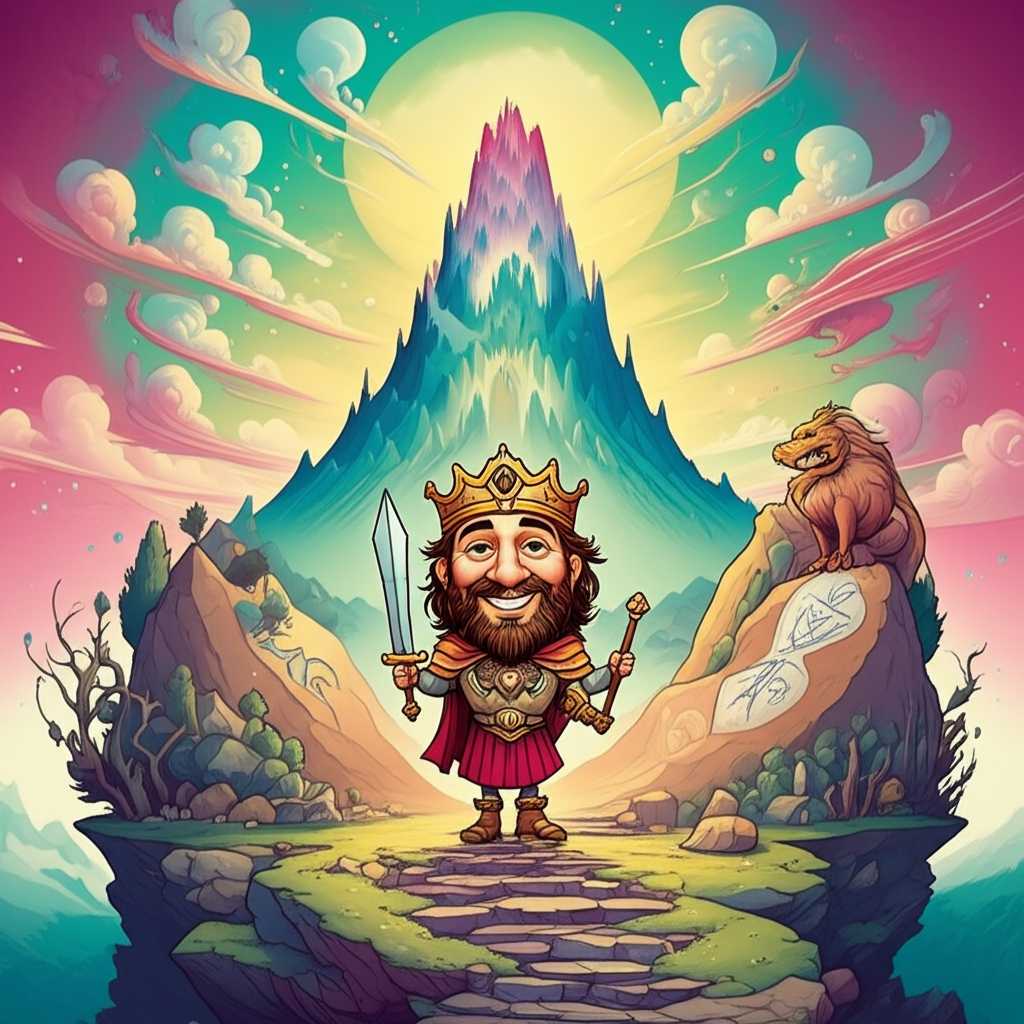
Nuada, wise and discerning, recognized in Lugh not just an extraordinary individual, but the prophesied savior of his people. Seeing that Lugh’s unparalleled, multifaceted skills were precisely what was needed to defeat the Fomorians, Nuada made a profound decision. He voluntarily stepped down from his throne once more, offering leadership of the Tuatha Dé Danann to Lugh for the duration of the war. Nuada understood that while his own legendary Sword of Light, Claíomh Solais, was an unbeatable weapon, the coming battle required more than just physical prowess; it demanded strategic genius, adaptability, and a leader capable of inspiring and coordinating every facet of his people’s strengths.
Thus, the "mystery of Lugh" unfolds not as his direct claim to Nuada’s sword, but rather his emergence as a leader whose own formidable abilities and legendary weapons (such as his magical spear, Gae Assail) eclipsed even the power of the Claíomh Solais. Lugh became the strategist and the general, guiding the Tuatha Dé Danann to victory in the Second Battle of Mag Tuiredh, where he personally slew Balor with his sling-stone, fulfilling a prophecy and securing the future of his people. Nuada, though no longer king, fought bravely alongside Lugh, demonstrating his unwavering loyalty and commitment to his people.
Symbolism and Meaning: Ancient Lessons for Leadership
This captivating myth is rich with symbolism, offering insights into the values and beliefs of ancient Irish society.
- Kingship and Sacrifice: Nuada’s initial dethronement and his later voluntary abdication highlight the sacral nature of kingship. A leader’s perfection was crucial, and Nuada’s willingness to step aside for the greater good of his people underscores the theme of selfless sacrifice for the welfare of the community.
- The Sword of Nuada (Claíomh Solais): This weapon symbolizes righteous authority, inherent power, and the legacy of the Tuatha Dé Danann. Its invincibility reflects the perceived divine right and might of the ruling class, but also implies that even the greatest power needs the right hand to wield it effectively, and perhaps, a new kind of leadership to truly thrive.
- The Mystery of Lugh – Innovation and Multifaceted Leadership: Lugh represents a new paradigm of leadership. His samildánach quality symbolizes the importance of diverse skills, adaptability, and intellectual prowess over brute force or singular talent. His arrival and subsequent leadership demonstrate that true strength lies not just in a powerful weapon or an established lineage, but in strategic thinking, innovation, and the ability to unite various talents towards a common goal. He embodies the idea that a crisis demands a leader who can think beyond traditional boundaries.
- Regeneration and Hope: Nuada’s silver arm and then his restored flesh arm symbolize healing, resilience, and the enduring spirit of the Tuatha Dé Danann. Lugh’s emergence brings hope in the face of overwhelming odds, signifying that even in the darkest times, a solution can arise from unexpected places.
- Good vs. Evil: The conflict between the Tuatha Dé Danann and the Fomorians serves as a classic mythological trope representing the eternal struggle between order and chaos, creation and destruction, justice and oppression.
Modern Perspective: Echoes in Contemporary Culture
While rooted in antiquity, the myth of Nuada and Lugh continues to resonate in modern culture. The archetypes found within this story – the king who sacrifices for his people, the versatile hero, the magical weapon, and the existential threat – have profoundly influenced fantasy literature, film, and gaming. Authors like J.R.R. Tolkien drew inspiration from Celtic myths, and elements of Nuada’s golden arm or Lugh’s multi-skilled heroism can be seen in countless fictional characters.
Video games often feature powerful, legendary swords (like Claíomh Solais) or heroes who must master multiple abilities to overcome challenges (like Lugh). Academic fields such as cultural studies and comparative mythology analyze these tales to understand ancient worldviews, human psychological patterns, and the universal themes that transcend time and geography. The story of Lugh, in particular, highlights the enduring appeal of the "master of all trades" archetype, a figure whose comprehensive abilities are uniquely suited to overcome complex problems.
Conclusion: A Legacy of Imagination
The story of the Sword of Nuada and the Mystery of Lugh stands as a magnificent testament to the imaginative power of ancient Irish culture. It is a narrative woven from the threads of human experience, reflecting a society’s aspirations, fears, and understanding of leadership and destiny. It is imperative to remember that this tale, like all myths, is a cultural artifact—a story passed down through generations—and not a historical or religious truth to be believed or practiced.
As Muslims, we firmly recognize that Allah, the One and Only, is the true Creator and Sustainer of the universe, and that all power, wisdom, and might belong solely to Him. Our faith teaches us to look to His divine revelation for guidance and truth, and to appreciate the rich diversity of human imagination and cultural expression without attributing divine qualities to created beings or fictional narratives. The myth of Nuada and Lugh, therefore, serves as a valuable window into a vibrant cultural heritage, a reminder of humanity’s innate desire to make sense of the world, and the enduring power of storytelling to transmit wisdom, values, and the spark of imagination across the ages.